


Coordonat de E.S. Tamar BERUCHASHVILI și Sabin DRĂGULIN
Volum XIV, Nr. 1 (51), Serie nouă, decembrie 2025-februarie 2026
Romanian political discourse: from arguments to algorithmic legitimacy
Valeriu ANTONOVICI
Abstract: This study investigates the profound metamorphosis of political discourse in Romania, tracing its shift from traditional institutional oratory to a communicative model governed by platform logics and algorithmic visibility. Using a mixed-method design, the research bridges the gap between citizens’ expectations and actual digital political performance. Data was gathered via an exploratory diagnostic survey (N=446), a longitudinal content analysis of 100 political speeches (2014–2025), and 15 years of engaged participant observation within state institutions. Findings reveal a stark discrepancy: while citizens prioritize honesty, clarity, and evidence-based argumentation, current political practices privilege emotional appeals and populist framing optimized for virality. This tension reached a systemic crisis in 2024, when Romania became the first nation to witness the annulment of a presidential election due to coordinated TikTok manipulation. The study concludes that the transition toward “algorithmic legitimacy”- where authority is derived from engagement metrics rather than substantive deliberation – presents a fundamental challenge to democratic resilience in post-communist contexts.
Keywords: Political discourse, Algorithmic legitimacy, Social media, Romania, Affective publics, 2024 election crisis.
Introduction
The digital restructuring of the public sphere has fundamentally altered the relationship between political representatives and the electorate, redefining the very nature of democratic communication1. In Romania, a post-communist democracy characterized by high internet penetration but declining institutional trust, this transformation has accelerated the transition toward a “regime of visibility.” In this new paradigm, political power is derived from the capacity to be seen and recognized within perceptual fields organized by platform algorithms2.
The 2024–2025 Romanian political cycle offered a global precedent for these dynamics. The unexpected rise of candidate Călin Georgescu – from marginal polling numbers to a first-round victory via a coordinated TikTok campaign – led to the first-ever annulment of a presidential election by a Constitutional Court due to cyber warfare and algorithmic manipulation3.This event underscored the vulnerability of democratic deliberation to “algorithmic legitimacy,” where visibility metrics replace procedural credibility.
This research addresses three core gaps identified in current scholarship: the specific interactional expectations of Romanian citizens, the impact of platform affordances on discursive structure, and the longitudinal shift from rational institutional appeals (2014) to affective-populist registers (2025). We hypothesize that a significant dissonance exists between the rational, honest discourse desired by the public and the simplified, emotional content delivered by politicians to ensure algorithmic survival.
The profound transformations of the public sphere in the digital age have radically reshaped political discourse, redefining the relationship between the political class and the electorate. A more complex forms of decentralized activism, movements that function without centralized leadership, is made possible by such emerging technologies4. The emergence of social media has not only democratized political communication, but also led to an unprecedented acceleration of emotional polarization and ideological fragmentation. In this context, the research concerning the political discourse of Romanian politicians in the digital environment using qualitative and quantitative methods, including comparative analysis of the tone, coherence, and subjects of the messages, as well as the analysis of exploratory survey involving 446 respondents that clarifies the population’s perceptions on the evolution of this discourse and their expectations of politicians becomes not only timely but also imperative. This is a new “regime of visibility”5, in which image, emotional reaction, and online performance often replace the rational content of the political message. The systematic study of this phenomenon can provide valuable data for understanding new forms of political legitimacy, but also for recalibrating democratic communication strategies in an environment subjected to hyperacceleration and algorithmic manipulation.
Politicians receive real-time feedback from people and can shape their discourse based on the number of comments and likes. It should not be overlooked that many politicians pay to promote their appearances on social media so that their message reaches the “right” social bubbles/echo chambers and then show (in internal party struggles or in comparison with political opponents and the media) that they are a popular/influential and appreciated politician. Due to manipulation on social media, the Constitutional Court canceled the 2024 presidential elections, a world first, and they were repeated in 2025 after a major political and social crisis. Romania was forced to acknowledge the defeat of democracy by social media. A presidential candidate who appeared in opinion polls with a 6% voting intention managed to come first in the 2024 presidential elections with 22.94% of the votes. His campaign on TikTok went under the radar of any polls. The Superior Council for National Defense declassified a secret report by the Romanian Intelligence Service showing that the online promotion of candidate Călin Georgescu was coordinated by a state actor, using approximately 25,000 TikTok accounts, including some created as early as 2016 and activated two weeks before the elections, indicating a deliberate and well-organized digital campaign. These actions were not declared as required by the electoral legislation in force. At the same time, the SRI found extensive cyber attacks – including DDoS and attempts to exfiltrate data from the electoral infrastructure – operated in a manner characteristic of an actor with state resources, endangering the integrity of the Romanian electoral process6.
In a society where trust in institutions is declining7 and public discourse is fragmented into information bubbles, the longitudinal and cross-platform analysis of politicians’ communication offers an innovative tool for democratic diagnosis. This research proposes not only a new methodological framework based on affective and semantic analysis and people’s expectations of politicians’ discourse on social media, but also a model that can be replicated in other socio-political contexts. In this context I intend to answer the following research question: (I) How do Romanian citizens relate to online political discourse in relation to their expectations of honesty, clarity, and data-based arguments? (II) To what extent do social media algorithms influence the form and content of political discourse, favoring emotion and polarization over rational argumentation? (III) How did Romanian political discourse evolve between 2014 and 2025 in terms of tone, structure, and legitimacy as perceived by the public? I start my research from two central assumptions: (I) There is a significant discrepancy between citizens’ expectations (clear, honest, data-based discourse) and the current practices of politicians on social media (emotional, simplified, algorithmically optimized messages) and (II) Politicians’ presence and activity on social media directly influence public perception of their legitimacy, but this legitimacy is often built on visibility and emotion, not on consistent argumentation. The research is multidisciplinary, drawing on studies of democracy, political communication, sociology, and new media.
The scientific relevance lies in identifying patterns of interaction and narrative that could anticipate populist deviations, discursive radicalization, or phenomena of institutional delegitimization. In addition, the contribution of such research is crucial for the development of public policies regulating online communication, as well as for digital civic education. In the era of post-truth and digital populism, scientific understanding of the dynamics of political discourse on social networks is becoming a matter of global interest.
Theoretical Framework: From Deliberation to Affective Publics
The theoretical evolution of digital communication power must be understood through the lens of “connective action”8. This concept marks a fundamental shift from organized institutional participation toward personalized digital networks. This transition is inextricably linked to the formation of “affective publics”-communities organized around shared emotional intensities rather than formal ideological debate9. In these digital spaces, feeling often precedes reasoning. Consequently, the “emotionalization” of communication becomes a strategic necessity for political actors seeking to acquire, maintain, or reclaim power10.
Central to this analysis is the concept of “algorithmic legitimacy”. Traditional legitimacy relies on legal-procedural frameworks or charismatic authority. However, in the digital arena, authority is increasingly perceived through the lens of engagement metrics, such as likes, shares, and views. This labor of becoming “algorithmically recognizable”11 forces politicians to adapt to platform logics. These systems reward visual immediacy and controversy over argumentative depth or ideological consistency.
As Tufekci12 warns, the pressure for virality inherently distorts the moral priorities of leaders. This leads to oversimplification and strategic polarization. Politicians are subsequently transformed from traditional orators into digital influencers. They seek to “break the bubble” through short, emotionally charged messages. This shift is driven by the desire for real-time feedback and the simulation of emotional proximity with the electorate13.
Political discourse has migrated from the deliberative sphere to the affective realm14. Previously, discourse was mediated through formal channels, such as press releases or televised interviews. Today, politicians communicate directly via platforms like Facebook, TikTok, and Instagram. These platforms constitute the stage where politics is performed and contested.
The expansion of social media has redefined the relationship between representatives and citizens. Communication is no longer unidirectional; it is interactive and often reactive. Algorithms exert an invisible pressure on discourse. They select content based on the emotional response of the audience rather than its quality or truthfulness. Thus, political discourse is increasingly produced for algorithms rather than for citizens.
This research identifies a persistent gap between citizen expectations and political practices. Empirical data indicates that the public values honesty, clarity, and evidence-based arguments. However, the dominant online style privileges emotional appeals and populist frames.
Politicians adopt the role of influencers to ensure visibility within information-saturated environments. This strategy aims for narrative control through rapid reactions15. However, this practice undermines representative democracy by eroding ideological substance. Ultimately, the study demonstrates that legitimacy in the digital age is often constructed through visibility and emotion rather than consistent argumentation.
The transition from collective to connective action has fundamentally personalized political participation, fostering the emergence of affective publics that prioritize emotional intensity over rational deliberation. This shift is further amplified by platform algorithms that systematically reward polarization and virality at the expense of substantive policy debate. Consequently, the Romanian case serves as a critical laboratory for understanding how these digital dynamics expose democratic vulnerabilities to large scale manipulation.
Materials and Methods
The Survey as an Exploratory Diagnostic Instrument
To capture the cognitive and affective filters of the electorate, we conducted an online survey with 446 respondents (May–June 2025). The survey16 was distributed online via social media platforms and through direct contact lists, reaching over 7000 individuals. Addressing reviewer concerns regarding representativeness, we explicitly define this sample not as a national proxy, but as a diagnostic instrument designed to identify trends and tendencies within the “digitally active” population. This approach is methodologically valid for exploratory research on emerging digital phenomena where non-probability sampling allows for mapping relationships and preferences in specific, high-influence sub-groups. The sample was heterogeneous but educated (N=211 higher education, N=200 postgraduate), reflecting the demographic most likely to serve as information gatekeepers in digital networks.
Engaged Participant Observation (Native Ethnography)
This research leverages over 15 years of immersion within the Romanian Parliament and Government. This “engaged participant observation” (or native ethnography) provides emic insights into the day-to-day production of political messaging17. By witnessing the shift from formal institutional moderation to the current pressure for digital virality from the inside, the researcher acts as a primary instrument of data collection. This longitudinal perspective is validated by previous peer-reviewed works18 and ensures that theoretical claims are grounded in practical institutional reality.
Longitudinal Content Analysis
We analyzed 100 political artifacts (speeches, press releases, and social media posts) from two periods: 2014 (the maturation of Facebook) and 2025 (the TikTok crisis era). Using a coding scheme inspired by LIWC19, artifacts were evaluated on three dimensions:
- Dominant Themes: (Public policy/budgeting vs. Identity/ populism).
- Tone: (Procedural/neutral vs. Aggressive/polarizing).
- Rhetorical Appeal: (Rational/logos vs. Emotional/ pathos).
The selection of the 100 speeches was conducted through a rigorous multi-stage systematic sampling process to ensure representativeness and eliminate selection bias. First, a systematic sampling frame was applied to the parliamentary members of each political party, selecting every fourth individual from an alphabetical list. This method ensured an even distribution across the entire legislative spectrum and prevented the over-representation of high-profile leadership figures. For each selected legislator, a diverse corpus of digital and traditional outputs was analyzed, including formal political declarations, legislative interventions, press releases, and social media posts.
To capture the temporal evolution of this discourse, the years of analysis were chosen through a defined random statistical step. This randomization was implemented to account for both electoral and non-electoral cycles, thereby mitigating the risk of data distortion caused by temporary campaign-related surges. By using a randomized interval for year selection, the study captures a longitudinal perspective that reflects consistent communication patterns rather than isolated political events. This methodical approach provides a robust empirical foundation, linking individual legislative performance with the broader digital shift toward algorithmic legitimacy.
Romanians’ trust in social media and institutions vs. politicians
The rise of social media as the main channel for political communication represents one of the most significant transformations of the public sphere in the last two decades. In this context, the speed of information dissemination is more important than relevance, and politicians have had to adapt quickly to the new rules imposed by platforms such as Facebook, Twitter/X, Instagram and TikTok. These platforms, originally designed as spaces for reconnecting with former colleagues or close friends, have gradually transformed into central arenas of public debate, where the struggle for visibility, influence and legitimacy takes place in real time with an impact that is difficult to control.
In view to contextualize and explain the situation in Romania, the article will highlight: (1) where Romania stands in terms of its presence on social networks20 and (2) the results of the main statistical studies on Romanians’ trust in institutions and politicians.
(1) Social media in Romania
At the beginning of 2025, a report by DataReportal21 showed that 13 million Romanians were on social media, equivalent to 68.6% of Romania’s total population. There were also 11.6 million users over the age of 18 using social media, representing 75.5% of the total adult population. 73% of the total internet user base in Romania (regardless of age) used at least one social media platform. It is important to note that social media users may not represent unique individuals and that a single person may have multiple accounts.
In January 2025, there were 17.8 million internet users in Romania. This means that the internet penetration rate in Romania was 94% of the total population at the beginning of the year.
Facebook users: approximately 9.9 million users. Meta only allows people aged 13 and over to use Facebook, so it is worth noting that 60.3% of the “eligible” audience in Romania uses Meta in 2025.
YouTube users: 13.0 million users.
Instagram users: 5.45 million users.
TikTok users: 8.51 million users aged 18 and over in Romania at the beginning of 2025.
LinkedIn users: 4.9 million users in Romania at the beginning of 2024.
The report also analyses the number of users of other social media platforms. Thus, at the beginning of the year, there were 2.65 million Snapchat users, 1.63 million X (Twitter) users and 2.83 million Pinterest users in Romania.
(2) How Romanians rank in terms of trust
The latest INSCOP22 survey was conducted on 1,150 people using the CATI method (telephone interviews). The data obtained between June 20 and 26, 2025, with a confidence level of 95% shows that 63% of respondents trust the Army, which is also the entity in which Romanians have the highest level of trust. The Army is followed by the Church (57.7%) and the Romanian Academy (46.8%). The City Hall is trusted by 38.9% of those interviewed, and the Presidency by 34.8% respondents. 26.9% of Romanians said they had confidence in the press, and the Government and Parliament are at the bottom of the ranking with 20.4% and 14.5% respectively. This is roughly the order of institutions in most of the statistics available in recent years. The explanation is that people have greater trust in institutions/people who are closer to them, to their community. The government and parliament are “more distant” institutions, and the unknown brings with it a degree of mistrust and fear23.
Perceptions, behaviors and expectations of the digital audience
50% of survey respondents conducted for this study mentioned that they had followed the politicians’ activity on social media daily, 22.2% several times a week, 6.1% once a week, 16.4% rarely, and 5.4% said they did not follow politicians on social media at all. Basically, only one in five is very little or not at all interested in politics and the activities of politicians, while the rest believe that they can find out what parliamentarians or local elected officials have been doing directly from social media, where they can also interact with them.
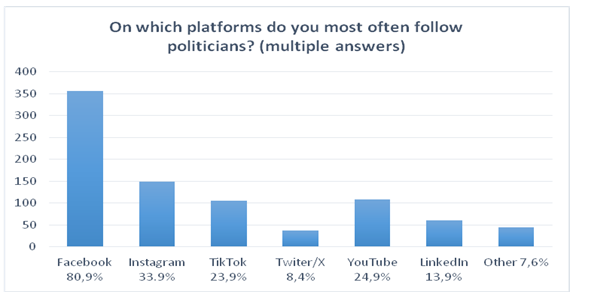
Figure 1: Social media follower trends for political actors
Source: Author’s own work
It is relevant that 71% of those who follow politicians on social media do so with the intention of learning about their activities, 32.6% do so out of curiosity and 10% for entertainment. Politicians also attract followers because they make jokes, insult others, parody others, or become the subject of amusement themselves, or because their posts only receive ironic or malicious comments, or even because they provoke internet users to mock other politicians. In many cases, the written messages are accompanied by entertaining pictures or videos (in view to capture attention). However, some politicians also make mistakes by altering pictures of other politicians and laughing at certain characteristics. It should be noted that when a politician crosses this line and posts such altered photos that suggest that another politician has a moustache like Hitler or Stalin, or looks like someone with Down syndrome, they are sanctioned in the public sphere and forced to delete the image. Herewith, the press becomes a true “watchdog of democracy.” Often, even though the image is deleted from social media, it continues to circulate on other private messaging apps.
One in five respondents is involuntarily exposed to politicians’ posts, either because they have interacted with a politician’s post in the past or because they are part of the target audience for promotional campaigns. Only 11.4% of respondents say they follow certain politicians because they like their personality and are inspired by their posts. Obviously, political issues polarize and create camps, which is why over 64.9% of people seek to see how a politician has reacted to one topic or another.
However, there is also a filter for verifying the information posted by politicians on social media. Over 92.3% respondents also get info about politicians’ activities from other sources. Only 7.7% of respondents regard the information presented on politicians’ pages as true. Traditional media, TV, radio, and print media have lost ground in recent years, and this is obvious. All studies on the media market in Romania show that online media has surpassed or is on par with TV. What is interesting in this study is that almost one in four respondents verify information from “friends.” In other words, if a friend shares something or says that this is true, they tend to believe that it is genuine and it has been verified by that friend. Let’s not forget that our sample consisted mainly of people with higher education, which makes this even more worrying. Eurostat figures (2024) show that only 17.4% of adults aged 25 to 74 had higher education in 2022, just over 60% had secondary education, and almost 22% did not even have high school education.
Verifying information from the primary source such as from the websites of public institutions, has not yet become common practice among consumers of news and information about politics. Very few people who see an alarmist news story about a bill search the Parliament or Government website in view to check that piece of legislation and compare the extent to which the information in the news story is correct or not. This is also the basis for fake news campaigns or exaggerations in political messages, as people find it difficult to verify and tend to believe alarmist messages.
Public discourse between people’s expectations and the way it is “delivered”
As mentioned above, politicians’ public communication has changed radically in recent years. They no longer just send press releases to media outlets, which make them known to the public; now they have started to communicate directly with citizens through social media, being a cheaper and a more trustworthy connection. This has led them to adapt their communication style: to place more emphasis on emotion, easy-to-understand arguments, shorter texts and videos (the short video revolution24), to throw in strong words in the first few sentences to be promoted by algorithms, etc. They no longer have speeches with arguments, logical questions and answers, demonstrations with figures, facts, comparisons of articles of law, or other classic rhetoric25.
Through participation and direct observation in the Romanian Parliament, we have noticed the following important aspect: at present, a speech or public statement is no longer prepared by three advisors over several days, most of the time, they are drafted in a few minutes and posted on social media. There is also a race against time: who will be the first to take a position on a particular issue. In a way, we can say that today’s politicians synthesise and decipher the “old communiqués” instead of journalists and political analysts, who until a few years ago were the intermediaries between politicians and the people.
In the questionnaire used for this study, we asked respondents in the sample how they usually interact with politicians’ posts on social media. We started from the hypothesis, which proved to be true, that many are “passive observers”, without interacting much with politicians, having certain fears of exposing themselves in the public space, of receiving negative reactions from other users, or even of avoiding the risk of polarizing their friends and family members. The results are as follows:
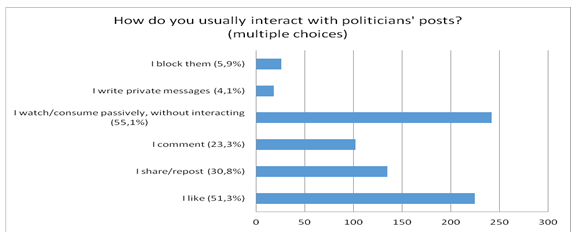
Figure 2: Trends in respondent engagement with politicians’ social media posts
Source: Author’s own work
Therefore, 55.1% of respondents are “passive consumers”, and 10% are even more “discreet,” blocking their posts so they no longer see what they post or writing to them privately when they have something to say. Basically, they do not expose themselves publicly, do not comment, and do not interact with them openly. However, more than half often just give a simple “Like” to posts. The motivations are diverse, as shown by the qualitative analysis of the open-ended questions: some give a like because they like the photo, without reading the message, others because they like the politician or as a sign that they are familiar with the subject and appreciate the message. Likes do not automatically mean a commitment to vote for them or to get involved in politics for one ideology or another.
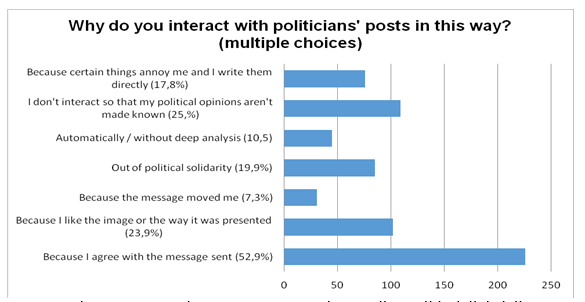
Figure 3: Respondent engagement trends regarding political digital discourse
Source: Author’s own work
The data collected reveals an essential aspect of digital-political behavior: interaction with politicians’ posts is no longer exclusively rational or based on deliberation, but is increasingly mediated by emotional affinities, aesthetic reactions and algorithmic automatisms. The fact that 52.9% of respondents say they react “because they agree with the message” still suggests a certain ideological component, but this is significantly complemented by secondary factors such as visual appeal (23.9%) and the emotion generated by the message (7.3%). This diversification of reasons for interaction confirms the observations of Chadwick and Dennis26 regarding the transition to a “hybrid media system” model in which political content is consumed and redistributed not only for what it says, but for how it feels and how it looks.
Also, the fact that 25% of participants say they intentionally avoid interaction so as not to expose their beliefs indicates the existence of a form of digital self-censorship, a phenomenon widely documented in the literature27. This behavior can be understood through the lens of the digital “spiral of silence”28, which suggests that the perception of a dominant opinion or the risk of social sanction leads to withdrawal from public expression. At the same time, 10.5% of respondents say they react “automatically, without hesitation”, confirming the dominance of passive and algorithmic content consumption, in line with Klinger and Russmann’s hypotheses regarding the pressure of platform-mediated visibility29.
Another significant aspect is the reaction out of frustration: 17.8% of respondents say they interact only to convey their dissatisfaction directly to politicians. This type of interaction can be associated with the phenomenon of “rage participation”30, in which platform users no longer seek deliberation, but only the channeling of negative emotional energy.
In this context, digital political communication is fragmented between identity confirmation, emotional reactivity and strategic non-interaction, which leads to a latent polarization of the digital space. Politicians are thus forced to construct messages that not only convince, but are also felt and visible a radical transformation from the tradition of rational argumentative discourse.
Discursive preferences and information processing mechanisms
Respondents’ preferences indicate a clear equation between conciseness, argumentation, and visual impact. The high percentage for short and clear messages (60.3%) and argumentative, data-based messages (81.3%) reflects the appeal to the central route of the Elaboration Likelihood Model (ELM). It assumes that an audience considered motivated and capable of cognitive elaboration prefers relevant, well-structured, and evidence-laden information. However, the significant preference for visual messages (14.4%), even if numerically smaller, highlights the relevance of peripheral routes, where powerful images and videos can act as “cognitive heuristics”, quickly synthesizing information and increasing the visibility of the message in crowded feeds (ELM adapted to social media). The electorate has begun to prefer messages that come directly with the “verdict or conclusion”, to the detriment of speeches that require effort to follow, analyze, and think on the part of those who listen or read them.
At the same time, the call for civic mobilization (30%) and humor or self-irony (17.2%) reflect the integration of digital political marketing strategies. Recent studies suggest that political leaders are no longer just sources of information, but “civic influencers”, capable of generating action through emotional framing and personal tone. Calls to action prove effective in increasing engagement and electoral mobilization, and humor serves as an accessible form of proximity, reducing the perceived distance between politician and voter31.
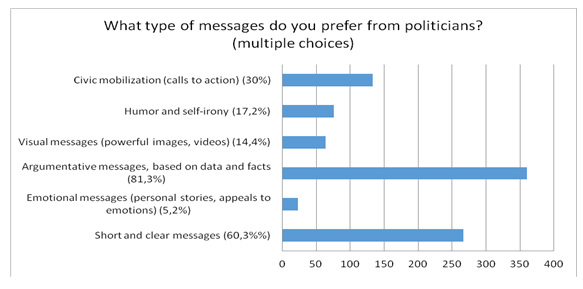
Figure 4: Survey results regarding respondent engagement patterns with politicians’ online posts
Source: Author’s own work
The importance of the visual component cannot be underestimated. Research in the field of visual political communication emphasizes that images and videos can generate immediate emotional reactions and increase the perception of credibility and authenticity, even when the explanatory text is minimal. A strong visual impact can amplify the message and facilitate virality32.
From the perspective of Media Richness Theory (MRT), visual and multimodal formats (video, images accompanied by short text) offer a higher level of clarity and reduce the ambiguity of political discourse. Visually rich messages allow for rapid transfer of meaning, especially in contexts where attention span is limited. And right now, all economic, social and political actors are fighting for a single limited resource the attention of potential customers. Thus, the combination of clear, well-argued text and powerful visual support increases the ability to capture and attract the target audience.
This emergence of the new digital political discourse requires a synergy between cognitive relevance (solid argumentation), immediate accessibility (concise message) and visual force (images/video), complemented by persuasive applications (mobilization, humor). Successful online politicians are those who combine these elements within an integrated form, adapted to the algorithmic logic of platforms and the fragmented attention of the contemporary audience.
When respondents are faced with a single choice regarding the evaluation of a political post, 92.1% of them indicate “message content” as the dominant criterion. This choice reflects a declarative preference for clarity, rationality and argumentative information. According to the Elaboration Likelihood Model33, this behavior suggests an activation of the “central route” of information processing individuals evaluate the message based on the logical content and coherence of the arguments. Such situations are common in political contexts where the public feels personally involved or informed and, as such, engages cognitively in the evaluation of messages34.
However, the importance of emotion and aesthetics should not be underestimated. The low percentages for “emotion conveyed” (4.3%), “aesthetics of the post” (2.7%) and “popularity of the post” (0.9%) can be explained by the social pressure to appear rational in public elections35. In a single response, most subjects feel the need to validate behaviors considered “rational” in a political context. This dissonance between actual and stated behavior is known in planned behavior theory as “social desirability bias”36. In real-life contexts of social media use, as recent research shows, users often react emotionally, visually, or impulsively, even if they declaratively emphasize content37.
The data from our study (analyzed above) show that 81.3% respondents prefer “argumentative, data-based messages,” and 60.3% choose “short and clear messages.” This overlap indicates a clear trend toward concise but rationally constructed messages, in line with the “hybridized logic media” model proposed by Chadwick38, which emphasizes how effective political messages must combine digital clarity with factual substance.
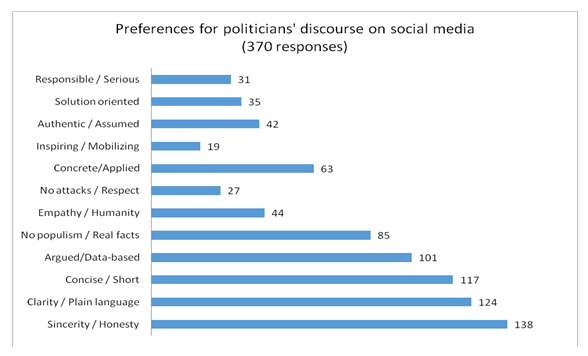
Figure 5: Public perception of essential attributes in political discourse: A priority analysis
Source: Author’s own work
The next question in the questionnaire was an open-ended one, for which we summarized, analyzed and grouped the 370 responses into 12 main categories, based on the frequency of similar ideas.
When respondents were asked openly what trait they considered most important in politicians’ discourse on social media, 138 mentions of sincerity/honesty dominated, followed by clarity (124), conciseness (117), and data-based arguments (101). This stated priority reflects the public’s demand for credibility and authenticity. According to theories of source credibility (ethos), the perception of honesty, transparency, and integrity is central to public trust in political actors39. Recent research shows that politicians perceived as authentic and consistent are evaluated more favorably even in the absence of sophisticated messages40 a finding that is also valid in the Romanian context, where political scandals have greatly eroded institutional trust, as shown above.
Preferences for clear/simple language (124), concise messages (117), and data-based arguments (101) signal a public orientation toward rational and accessible discourse. These preferences correspond to the Elaboration Likelihood Model (ELM): the cognitively engaged Romanian public prefers well-structured, reasoned and concise messages that allow for critical evaluation41. In a national context where the average literacy level is low42, clarity and conciseness become essential in view to avoid misinterpretations and ensure effective reception of the political message.
We also note the rejection of populism (85 mentions) and the desire for concrete/applied discourse (63), responsible and serious (31). This confirms the theory of ethical political marketing, in which the public seeks discourse focused on solutions and real facts, not slogans or emotional manipulation43. In Romania, where populist rhetoric has had an impact, respondents demand articulate policies, not facile commitments or populist promises a trend visible in polls on political trust.
The rest of the preferences reflect the need for empathy (44), assumed authenticity (42), and discourse without attacks (27). These aspects highlight the emotional and narrative dimension, but in a context where meaningful messaging takes precedence. According to studies on political authenticity, perceptions of proximity and personal transparency strengthen civic engagement and reduce political cynicism44. In Romania, leaders perceived as authentic often active on social media gain additional credibility45.
Results drawn from the integrated analysis of quantitative and qualitative data highlight the emergence of a model of digital political communication that privileges honesty, clarity, conciseness, and factual basis, to the detriment of populism, attacks, or rhetorical excesses. Social networks are not just channels for disseminating messages, but media with their own logic algorithmic, affective, reactive that transforms both the form and content of political discourse46. In the Romanian context, these transformations intersect with a high degree of institutional mistrust, but also with an acute social need for authenticity and responsibility.
The model of effective discourse outlined by respondents suggests an ideal digital politician who combines the ethos of honesty with argumentative logos and controlled pathos empathy without melodrama, emotion without manipulation. The online presence of such a leader must offer transparency, concrete solutions and clear, easy-to-process language, without excluding the aesthetic dimension or the ability to mobilize. Often, these political leaders also take the initiative to post materials (video or text) in order to educate the public in one area or another. Thus, they slightly exceed their role by wanting to become social media influencers. However, the public reacts this behavior by ignoring the messages or by commenting and mocking them. In other words, an effective digital leader is neither a cold technocrat nor a charismatic influencer devoid of content, but a hybrid figure who performs authenticity, explains data, avoids slogans, and maintains a continuous, interactive relationship with citizens47.
Politicians who attain government positions often abandon this model of digital communication once they become prime minister, president, or minister. Within their new job, they enter the “classic” communication format: press conferences, press releases, TV appearances, or live broadcasts of government meetings or other public events. Public institutions are still reluctant to embrace such a communication model for bureaucratic, legal, or personnel reasons, as showed in an older study48.
These findings allow us to outline an equation manager for communication efficiency in the digital age: Perceived credibility (honesty + consistency) + Communication clarity (language + conciseness) + Factual basis (arguments + data) + Appropriate visual content (images + video) + Narrative mobilization (tone, emotion, calls to action) = Political discourse relevant to the logic of social networks. This formula can serve as a theoretical framework applicable not only in the analysis of Romanian political communication, but also in the design of ethical and effective public communication strategies in similar contexts.
The presence of politicians on social networks and the impact of social media on political discourse
Theorists such as Habermas warned that the digital public sphere could become a field of deliberative fragmentation, dominated by the logic of show and popularity at the expense of critical rationality49. However, numerous empirical studies have shown that social media shapes perceptions, voting behavior and even political polarization50.
Almost 94% of respondents (68.9% + 24.8%) believe that the active presence of politicians on social media influences public opinion, with varying degrees of intensity. This massive percentage validates the central hypothesis of contemporary political communication: social networks are perceived as an active vector for shaping citizens’ beliefs.
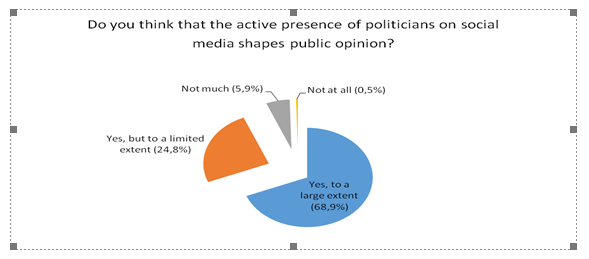
Figure 6: Comparative analysis of citizen expectations versus perceived reality
in political discourse
Source: Author’s own work
The above data support theories of “digital agenda-setting”51, according to which politicians who communicate effectively online can set the dominant themes of public conversation, especially in the context of a fragmented audience.
In the context of direct communication through social media, the public perceives a greater “proximity” to political leaders, which increases the level of engagement and may favorably influence the perception of their authenticity52. This perception is reflected by 68.9% respondents who consider the influence of social media to be “significant.”
On the other hand, 24.8% respondents do not deny the influence, but temper it, indicating a critical or more selective category, possibly more digitally educated, which filters political messages and is aware of the manipulative dimension of platforms. This segment could correspond to “reflective users”53.
Only 6.4% of the total (5.9% + 0.5%) believe that social media does not play a significant role in shaping public opinion. This marginal group could be made up of people who are not active on social media, have low trust in the digital environment, or rely predominantly on alternative sources of information (print media, traditional TV, small groups).
Thus, politicians who are not active or do not communicate coherently on social media risk losing ground in the symbolic competition for visibility. Multi-platform strategies, supported by professional communication teams are needed.
Those figures confirm the urgency of media education and the development of critical thinking among the public in order to understand the difference between honest political communication and digital propaganda. At the same time, the entire social media field must comply with a set of clear rules on the transparency of sponsored messages, combating disinformation, and responsibility in expression. This is becoming a critical area for democratic regulation54.
As the above figures show, we can conclude that the active presence of politicians on social media is perceived as a major factor influencing public opinion, which reconfirms the centrality of these platforms in the communication space. Theoretical correlations and practical implications converge to the need to professionalize digital political communication and civic education adapted to the algorithmic era.
It is very curios that among those who participated in the study and provided the above answers, 52.4% say that after interacting with politicians online, they have changed their opinion about that politician, and 47.6% say they did not change their opinion.
In the classical tradition, the political leader was a distant figure, representing an authority built through institutional rituals and formal legitimacy. In the digital age, this authority is “humanized,” becoming a performative actor in an open and unstable symbolic space55.
The online presence of political leaders implies a continuity of performance56, but in a more volatile setting, where the boundaries between “role” and “person” are blurred. This interaction with citizens through comments, responses, or even symbolic gestures such as shares or “likes” contributes to the reconfiguration of the political imaginary, and the change in opinion is a symptom of this identity reconstruction. Moreover, this volatility of perception can be framed within what Clifford Geertz called the “symbolic dramaturgy of power”57, where leaders must constantly regenerate their authority in front of a participatory, not passive audience. Digital platforms thus become liminal spaces58, where political status is (re)negotiated through repetitive symbolic gestures that have a profound impact on the collective imagination.
The analysis of the open-ended responses to the question “How would you describe the overall impact of social media on political discourse?” offers a rich and nuanced qualitative perspective, complementing the previous quantitative data and confirming a predominantly critical public perception, but one that is aware of the irreversible and fundamental nature of the influence of digital platforms. From the 322 responses summarised, seven clear thematic categories emerge, reflecting a complex understanding of the phenomenon, as follows:
- Major/Overwhelming Impact (with predominantly negative or mixed undertones): Approximately 50-55% respondents described the impact as “immense”, “very large”, “strong”, “decisive”, “major”, “essential”, “overwhelming” or “radical”. Many of those responses were supplemented by details indicating either a negative perception or the complex nature of this influence.
- Manipulation, Disinformation and Fake News: This is by far the most prominent negative theme, accounting for about 30-35% of all critical responses. Frequently used terms include “manipulative”, “fake news”, “misinformation”, “propaganda”, “deceptive”, “distort discourse”, and “false realities”. Respondents emphasize the vulnerability of the uneducated and undiscerning masses to such practices.
- Superficialization and Emotionalization of Discourse: Approximately 15-20% responses criticize the erosion of the quality of political discourse, noting that it has become “short, dry and unfounded”, “losing depth”, tending to be “consumerist”, relying on “shouting”, “clickbait” or turning into an “attention spectacle”. The emphasis is shifting from arguments to emotion and the “tyranny of the like”.
- Polarization, Aggression and Hatred: A significant proportion, approximately 10-15% responses highlight the contribution of social media to “polarization”, “widespread hatred”, “aggression”, “personal attacks” and the creation of “information bubbles” and “echo chambers”.
- Accessibility and Direct Communication (positive aspects/ benefits): Approximately 10-12% responses mention positive aspects, such as the fact that social media “opens up politics to ordinary people”, allows for “direct communication”, “faster transmission of messages”, “humanizes” politicians or provides “feedback” for calibrating discourse.
- Mixed/Nuanced Impact: About 10-15% respondents offer a balanced view, acknowledging both the benefits (e.g., information, access) and disadvantages (e.g., misinformation, polarization), suggesting that the impact depends on usage or context.
- Specific Observations/ Criticism Addressed to Politicians: Some responses, although integrated into the above themes, offer direct criticism or examples, such as politicians who “lose their morality” in the race for likes, adapt “cleverly” to online language or, in contrast, the example of Călin Georgescu (the former candidate in the 2024 presidential elections who entered the second round using TikTok and was supported by “dark forces” through non-transparent campaign financing) as evidence of the decisive impact of social media on political visibility59.
These categories of qualitative responses validate and deepen the theoretical frameworks presented in the introduction and discussion section of this study, providing empirical confirmation of the transformations within the political discourse.
The overwhelming perception of a major impact confirms the transition to a “regime of visibility”60 where online presence is indispensable. Respondents intuit that social media is no longer just a channel, but the main arena of political discourse itself, aligning with the idea that “social networks are political discourse itself” (a direct observation from one response). This dependence is amplified by the speed of dissemination and the unique accessibility of the platforms.
The themes of manipulation, misinformation and superficiality are fully consistent with the warnings issued by Papacharissi about the “degradation of political language”61 and by Tufekci62 about the “pressure for virality that distorts the moral priorities of leaders”. The public directly feels the impact of algorithmic logic63, which privileges emotional and controversial content over reasoned content, contributing to an environment of “post-truth” and “digital populism”. The observation about the “uneducated masses” highlights a critical deficiency in media literacy and a vulnerability to peripheral persuasion tactics64. Responses regarding awareness of polarization and aggression are also very important and echo the concept of affective polarization65. Social networks, by creating “information bubbles” and “echo chambers” exacerbate ideological and affective divisions, limiting exposure to different perspectives. Expressions such as “generalized hatred” or “people’s court” reflect manifestations of “rage participation”66, where interaction is motivated by negative emotions rather than rational deliberation.
The positive aspects highlighted by respondents are in line with Castells’67 vision of a more “interactive, decentralized, and emotionally sensitive” political space. The potential for democratization of political communication, as demonstrated by campaigns such as Obama’s68 is recognized, even if it is often overshadowed by negative effects. The ability to provide feedback to politicians suggests an attempt to restore a model of two-way communication, even if this may, in turn, be influenced by confirmation biases or social desirability.
Respondents clearly note that politicians “had to adapt”. This adaptation, while effective in gaining visibility69, is also perceived as a cause of superficiality and loss of authenticity70, transforming discourse into an “Instagrammable” or “consumerist” product, guided by “vote hunters (like hunters)”. The dynamics signals a tension between communicative effectiveness and discursive integrity.
The qualitative findings of this study carry significant practical implications for several categories of actors. In terms of political communication, politicians and their advisors must recognize that digital messages short, visual, and emotionally charged are essential for achieving visibility. However, audiences are capable of detecting superficiality and manipulative intentions. Effective and ethical strategies should integrate digital accessibility with substantive argumentation, navigating the complexities of what Chadwick describes as “hybridized logic media”71. Emphasizing discourse grounded in facts, actionable solutions, and accountability, even when adapted for digital formats, may contribute to restoring eroded public trust.
Regarding civic education and media literacy, respondents frequently highlighted concerns about the manipulative and disinformative potential of social media. These observations underscore the urgency of investing in media education programs, particularly for younger populations. Such programs should equip citizens to critically evaluate online information, identify misinformation, understand platform algorithms, and manage their own information environments. Comments on functional illiteracy and the tendency to rely on friends for verification further reinforce the necessity of developing these competencies.
In the realm of digital platform development and regulation, respondents’ reflections on algorithmic influence, polarization, and examples of electoral manipulation indicate that social media platforms should assume greater responsibility for moderating political content and promoting algorithmic transparency. Measures such as establishing clear rules and restrictions for political content could contribute to a healthier public discourse.
Finally, the role of traditional media and civil society remains crucial. Many respondents continue to depend on alternative sources for verification, highlighting the enduring function of traditional media as a gatekeeper. Civil society organizations and NGOs are increasingly important in fostering informed public discourse and countering misinformation, particularly in contexts where parts of the press are financially dependent on political actors. In Romania, civil society has assumed some of the traditional press’s responsibilities, acting as a watchdog for democratic accountability.
In conclusion, qualitative responses confirm that the impact of social media on political discourse is perceived as overwhelming and complex, with a balance tilted toward negative consequences such as manipulation, superficiality and polarization. However, there is recognition of the positive potential for accessibility and direct communication. This public awareness is a crucial starting point for efforts to recalibrate democratic communication in the digital age.
Comparison with the past
People are tempted to compare and relate to situations and things they have experienced or are familiar with. For this reason, we asked them what sources they have used in order to obtain information ten years ago. Many of them did not have such interests a decade ago, given their age, but social networks were already a source of information for 31.3% of them. 83.7% got their information from TV, 35.4% from radio and 55% from print media. Almost 25% obtained information from the official websites of public institutions. If we compare this with the above figures, today, almost twice as many people, 44.6% of respondents, get their information from official websites. This proves that with the rise of mistrust and the acceleration of disinformation and fake news campaigns, people tend to verify information and be more cautious.
Question 15 in the questionnaire was: “What was different then compared to now in the structure and content of messages?” It was an open-ended question to which we received 318 fairly extensive and well-argued answers, with concrete examples. The analysis of the responses indicates a substantial shift in the way politics is produced and consumed. Respondents identify a transition from more formal and controlled communication to digital, fast-paced, and often superficial communication.
Summarizing the qualitative data, three major pillars of differentiation can be distinguished, which converge towards a common understanding of the phenomenon, supported by concrete examples from those who answered the question:
Change in content and tone: from substance to emotion and polarization
A significant majority of respondents (over 50%) highlight a fundamental change in content and tone. Political messages from ten years ago are perceived as being more serious, elaborate, and focused on program content. One respondent noted that “the messages were more elaborate, more consistent, and less emotional,” while another stated that “there were ideas / today there are not.” In contrast, contemporary discourse is described as superficial and emotion-based. A considerable number of respondents (an estimated 20-25%) criticizes this superficiality. A relevant example is the observation that “now there is an avalanche of messages, the vast majority of which are stupid” and that “political discourse tends to become ‘consumerist’, losing its depth”. The tone is considered more aggressive, hateful, and populist, a trend illustrated by the comment that “they are now much more aggressive. Decency and respect are lacking”. Other respondent stated: “if before the message was well-argued, based on facts and experiences, now it is short, dry and unfounded.”
Structural and formal adaptation: from oratory to fragmented communication
A notable proportion (over 30%) of respondents notes structural changes. In the past, speeches were longer and more formal. Now, messages are shorter, concise and personalized, adapted to the visual and short-form formats of social media. This is highlighted by comments such as “now the speed at which information is transmitted is essential” and that “now elections are won with TikTok.” One respondent described the evolution as moving from “pragmatic messages” to “electoral marketing messages” and “personalized, relational with followers”.
The role of technology: the disappearance of filters and the amplification of risks
This is the third major trend, highlighted by a significant proportion of respondents (approximately 25-30%). Respondents ten years ago noted the presence of journalistic filters. In contrast, the disappearance of filters has led to an increase in fake news and the risks of manipulation. One response perfectly summed up this difference: “Filters have disappeared from social media. TV, radio, and print media used to act as filters. Now everyone posts whatever comes to mind or whatever suits their own interests”. Another respondent pointed out that “now post-truth is being distributed” and that “perhaps it brought people closer together, not the interests of parties masked as national interests”. Another respondent descrybed the situation with the phrase: “…now we have even more things said openly to sound good on social media, so even more lies or untruths, whatever you want to call them”.
In conclusion, qualitative analysis of the responses shows that the public perceives a deterioration in the quality of political discourse, marked by a shift from a form of communication that mimicked rational deliberation to a model centered on performance, emotional reaction and adaptation to the logic of digital media. This observation is in line with studies documenting the rise of a new type of political communication, in which image and online interaction often replace the rational content of the public message.
Social networks have become the main medium for expressing and shaping political discourse in Romania. Despite all the democratic benefits, the perception prevails that these platforms amplify manipulation, superficiality and radicalization. Politicians react rather than lead, and the public is often a prisoner of emotions rather than reason.
Analysis of classical vs. digital discourse (2014 and 2025)
This study explores the evolution of public political discourse in Romania, conducting a comparative analysis of two sets of press releases, transcripts from parliamentary sessions and speeches by the President of Romania from 2014 and 2025. We used an adapted methodology of computer-assisted content analysis (similar to that offered by LIWC software), focusing on thematic, tonal, rhetorical and formal variations. The results demonstrate a significant transition from a predominantly institutional, procedural and process-oriented discourse, specific to 2014, to a fragmented, populist, emotional and immediate impact-oriented discourse, characteristic of 2025. This change reflects an adaptation of political agents to a media ecosystem dominated by social networks, where communication efficiency takes precedence over complexity and nuance.
The methodological approach applied in this study combines qualitative analysis with a comparative structure inspired by quantitative metrics. Thus, we investigated categories such as dominant themes, tone (emotional versus rational), rhetorical appeal, as well as differences in form and length, in order to map the trajectory of Romanian public discourse over a decade72.
2014: Institutional discourse
The speeches from 2014, represented by parliamentary interventions, press releases, and political statements selected from all parliamentary parties and presidential speeches, are distinguished by their predominantly institutional and formal character. The central themes are anchored in legislative, economic, and governance processes:
Legislation and social rights: A speech by a member of parliament focuses on specific legislative changes (“Law No. 53/2003 – Labor Code”), using precise legal language (e.g., “Art. 59, lit. a)”, “paras. (5) – (8)”) to define concepts such as discrimination and harassment. The appeal is rational, centred on the need to “fill the gaps” and ensure “the dignity of employees”.
European governance and finance: Another significant category concerns the state budget and the absorption of European funds. The discourse is marked by partisan confrontation, but it takes place in a formal setting, with references to procedures (“vote of confidence”, “challenged in the Constitutional Court”) and the presentation of data and figures (e.g., “35% absorption rate”, “3 billion euros”). The tone is critical, but the argument is based on economic data and government responsibility.
Identity and security: Discourses on the “First Romanian School” and NATO membership are longer and adopt a festive, solemn tone. They use rhetoric of tradition and patriotism (“source of Romanianism,” “fortress of Romanian culture”), with a strong historical and strategic dimension.
Key features (2014):
Form: Mainly formal oral speeches, press releases, or extended press statements.
Length: Texts of considerable length, with complex sentences and detailed narrative structures.
Tone: Formal, procedural, sometimes solemn or polemical, but always within the limits of an academic-institutional register.
Appeal: Predominantly rational, based on figures, facts, legal articles, and procedures. Emotional appeal is present, but is reserved for issues of identity and nationality.
2025: Populist discourse
Although the discourses of 2025 address similar topics (governance, justice, social issues), they do so in a fundamentally different manner. Here, we observe a radical adaptation to the logic of digital communication, characterized by speed, personalization, and emotionality.
The relationship between authority and citizens: The discourse is rapidly becoming polarized, contrasting “work” and “actions” from “authority” and “accountability” versus “selfies”, “hysterical responses on TikTok,” and “cheap propaganda”. This rhetoric excludes neutrality and imposes an explicit moral dichotomy between concrete action and “political spectacle”.
Justice and morality: Legal issues are approached from the perspective of “injustice” and “cynicism”. Unlike in 2014, when legislative changes were discussed, the discourse in 2025 focuses on emotion and moral opposition (“totally absurd”, “lack of predictability”, “incompetence and fraud”). The opposition is demonized with terms such as “smart guys” or “private companies based in Cyprus”.
Crises and solidarity: Responses to crises, such as floods, are communicated through short messages containing lists of concrete measures, but also direct and strongly emotional criticism of the opposition. The speeches of populists in opposition, for example, are structured around a call for solidarity and denunciation of government actions (“The Romanian government values the life of a Romanian at only €3,000”).
Symbols and identity: There is a presence of national identity themes, but these are compressed and integrated into short visual or narrative formats. The example “7 reasons to be proud of Romania in Sarajevo!” shows a capitalization of cultural success through a list format, optimized for distribution on social networks.
Visuals and hashtags: while speeches in 2014 were accompanied by at most one official photo, today’s messages are accompanied by videos or at least postcards edited according to the campaign model, with a strong phrase and party symbols. Most texts have hashtags (#) and tag other people, places, or pages of political parties in view to increase reach and attract as many followers as possible.
Key characteristics (2025):
Form: Short, fragmented texts, with frequent use of lists, bold headlines, hashtags and short quotes taken from online sources.
Length: Predominantly concise messages, optimized for rapid content consumption on mobile platforms.
Tone: Direct, polemical, often aggressive and accusatory. The tone is emotionally and morally charged, with a high personal stake (“I believe in X” “We will not remain silent”).
Appeal: Predominantly emotional and personal. Messages are based on the contrast between good and evil, justice and injustice, competence and incompetence, rather than arguments based on detailed documents or figures.
Comparative analysis and conclusions
The transition from the 2014 discourse to that of 2025 reflects a structural change in Romanian political communication, which is aligning itself with global trends (Castells, 2008). The change is not one of depth of themes, but of manner and form.
From formal discourse to fragmented discourse: The speeches of 2014 were designed for a formal platform, such as Parliament, while the texts of 2025 are optimized for the constant flow of social media. This change requires a reduction in nuance and a simplification of the message. In 2014, those who used social media often posted the entire text taken from the official website of the institution (Parliament, Government, or an interview given to an online publication) and provided a link. Today, social media features highly condensed versions optimized for algorithms.
From procedural rhetoric to populist rhetoric: While in 2014 the discourse was legitimized by references to laws, budgets and procedures, in 2025 legitimacy is sought through direct, emotional connection with the public. The “us vs. them” logic becomes more explicit and virulent.
From rational to emotional appeal: The use of terms with strong emotional impact (“tragedy”, “waste”, “injustice”, “humiliation”) and the personalization of conflict (“I do not shy away from responsibility,” “I have great respect”) dominate in 2025. In 2014, although accusations were made, they were generally mediated by a more formal tone and data-based argumentation.
In conclusion, the analysis of the two sets of speeches from 2014 and 2025 reveals a metamorphosis in the Romanian political discourse. Under pressure from the digital landscape, the discourse is becoming detached from institutional logic, becoming an instrument of rapid mobilization and emotional polarization. This evolution has profound implications for the nature of public debate, the role of traditional media and citizens’ perception of the democratic process. The phenomenon is not specific to Romania, but it represents a local manifestation of a global trend toward the “social-mediatization” of politics.
Conclusions
This research has mapped a profound shift in the landscape of Romanian political communication, a transition from institutional rhetoric to digital discourse, shaped by algorithms and the demands of immediacy. A comparative analysis of the discourses of 2014 and 2025, corroborated with the public perceptions, reveals a fundamental reconfiguration of the role of political actors and citizens’ expectations. While in 2014 the discourse was predominantly formal, procedural and anchored in complex legislative processes, in 2025 we are witnessing fragmented, populist, and emotional rhetoric, optimized for visibility and immediate impact on social media platforms. This evolution confirms the theorists who warned about the “emotionalization” of political communication73 and the algorithmic pressure that distorts the moral priorities of leaders74.
The central paradox of this transformation lies in the glaring discrepancy between public expectations and the current practices of politicians. Although respondents want a discourse that is “clear, honest, reasoned, and free of populism”, focused on “real solutions, responsibility, and empathy”, the reality of digital political communication is often one of superficiality, polarization, and manipulation. Politicians, under pressure to “break the digital bubble” and generate virality, adopt a style that sacrifices nuance and complexity, turning the political act into a performative spectacle75. This tension inevitably contributes to the continued erosion of trust in democratic institutions, a phenomenon already visible in opinion polls.
Faced with this increasingly complex and often toxic communication landscape, the essential question arises: has the public developed “antibodies” to what the future holds in terms of political discourse and social media? The data from this study offers a nuanced perspective. On the one hand, a significant proportion of respondents (over 92%) say they check information from multiple sources, a behavior that suggests an awareness of the risks of misinformation, but on the other hand, they do not choose their sources of information carefully. At the same time, vulnerability persists: reliance on “friends” as a source of verification (almost a quarter of respondents) can, paradoxically, reinforce “information bubbles” and amplify polarization rather than counteract it. Thus, the public’s “antibodies” are still developing, and their resistance is constantly being tested by sophisticated manipulation tactics, as demonstrated by the 2024 presidential election, which was canceled amid online disinformation campaigns.
Implications and recommendations:
In view to effectively navigate the current digital political landscape, it is essential for politicians to rebuild their credibility not only through short, visual messages, but through an authentic combination of solid arguments, clarity and ethical calls to action, recognizing that the public punishes the lack of substance and manipulation. At the same time, it is vital to invest strategically in digital civic education, preparing citizens to identify disinformation and understand how emotions can be exploited, especially since their defense mechanisms are still imperfect. In addition to these efforts, digital platforms and regulators have a crucial responsibility to ensure a level playing field for debate, through clear rules on the transparency of political content and proactive measures to combat manipulation, in order to protect the health of democracy.
Forecasts and Future Directions:
Political discourse will continue to evolve in a hybrid direction76, where traditional elements will intersect with digital ones. In the short term, the pressure for virality and personalization will persist, likely generating new forms of polarization and misinformation. However, on long term, it is plausible that a portion of the public, tired of digital “noise” and superficiality, will develop an increasingly strong demand for authentic discourse based on facts and solutions. This demand could lead to a recalibration of political strategies, forcing actors to invest not only in visibility, but also in rebuilding trust through consistency and accountability. The future of political discourse will ultimately depend on society’s ability to critically navigate digital complexity and demand from its leaders not just spectacle, but authentic substance. Just as traditional parties have lost politically in the last two election cycles because they were unable to change their discourse and strategies in time, the same could happen to current parties in the future if they fail to consider the changes explained above. Democracy will suffer as a result of the weakening of public institutions and a further decline in people’s trust in political institutions and democracy.
Notes
- Manuel Castells, Communication power, Oxford University Press, Oxford, 2009, p. 295.
- Andrea Mubi Brighenti , „Visibility: A category for the social sciences”, Current Sociology, vol. 55, 2007, p. 329.
- Radu Cosmin Roghină, „The Annulment of the 2024 Romanian Presidential Election”, ResearchGate Publication, 2025, p.123.
- Neha, Puri „The impact of social media in shaping political discourse”, International Journal of Research Publication and Seminar, vol. 16, 2024, p. 5.
- Andrea Mubi Brighenti, „Visibility: A category for the social sciences”, cit., pp. 325-327.
- The declassified document was published on the Romanian Presidency’s website https://www.presidency.ro/ files/userfiles/Documente%20CSAT/Document%20CSAT%20SRI%20II.pdf .
- We will describe the phenomenon in detail below.
- Lance W. Bennett, Alexandra Segerberg, „The logic of connective action”, Information, Communication & Society, vol. 15, 2012, 754-750.
- Zizi Papacharissi, Affective publics: Sentiment, technology, and politics, Oxford University Press, Oxford, 2015.
- Roberta Bracciale, Antonio Martella, „Define the populist political communication style: The case of Italian political leaders on Twitter”, Information, Communication & Society, vol. 20, 2017, pp. 1310-1329.
- Gillespie Tarleton, „The Relevance of Algorithms”, în Media Technologies, Tarleton Gillespie, Pablo Boczkowski, Kirsten F#(eds.), MIT Press, Cambridge, MA, 2014, pp. 167-194.
- Zeynep Tufekci, „Algorithmic harms beyond Facebook and Google: Emergent challenges of computational agency”, Colorado Technology Law Journal, vol. 13, 2015, pp. 203–218.
- Paolo Gerbaudo, The Digital Party: Political Organisation and Online Democracy, Pluto Press, London, 2018.
- Zizi Papacharissi, cit., p.25.
- Roberta Bracciale, Antonio Martella, „Define the populist political communication style: The case of Italian political leaders on Twitter”, Information, Communication & Society, vol. 20, 2017, pp. 1310-1329.
- The survey was accessed at the following URL: https://forms.gle/ TRmxVQFUjvFBABmV9.
- Patrick Mccurdy, Julie Uldam, „Connecting Participant Observation Positions”, Field Methods, vol. 26, 2014, pp. 40-55; Daniel Robey, William Taylor, „Engaged Participant Observation”, Executive Doctoral Dissertation, 2018.
- Corina Georgiana Antonovici, Valeriu Antonovici, „Social media in public institutions: Comparative case study”, în Proceedings of ICPAM, Alina Grigorescu, Corina Georgiana Antonovici, Adina Dumitrescu-Peculea, Florin Marius Popa (coord.), Editura ProUniversitaria, București, 2015, pp. 176-190; Valeriu Antonovici, „The Balance of Power in the Law-Making Process in Romania between 1990 and 2018: Parliament vs. Government”, Acta Universitatis Danubius. Administratio, vol. 10, 2018; Valeriu Antonovici, „The Efforts of Romanian Politicians in Developing the Holocaust Public Discourse”, în Holocaust memoryscapes contemporary memorialisation of the holocaust in central and eastern european countries, Simona Catrina (ed.), Editura Universitară, București, 2020, pp. 133-157; Valeriu Antonovici, Un altfel de ghid al parlamentarului eficient, Editura Economică, București, 2024.
- James W. Pennebaker, Ryan L. Boyd, Jordan, Kayla, Blackburn, Kate, The development and psychometric properties of LIWC2015, University of Texas at Austin, Austin, TX, 2015.
- TODERAȘ, Nicolae, „The use of AI tools in managing European funds allocated for regional development in Romania”, Eastern Journal of European Studies, vol. 15, 2024
- https://datareportal.com/reports/digital-2025-romania .
- https://www.inscop.ro/iulie-2025-bar-ometrul-informat-ro-inscop-research-editia-a-ii-a-capitolul-4-incredere-in-institutii-nationale.
- Valeriu Antonovici, 2024, cit. p. 176.
- On social media, short videos work by condensing a high volume of information into just a few seconds, designed to instantly capture attention and deliver a clear, engaging message before users scroll further.
- Theodor Paleologu, Cum pregătim un discurs, Editura Fundației Paleologu, București, 2023.
- Andrew Chadwick, James Dennis, „Social media, professional media, and mobilization in contemporary Britain”, Political Communication, vol. 36, 2019, pp. 1-24.
- Zizi Papacharissi, Affective publics: Sentiment, technology, and politics, Oxford University Press, Oxford, 2015, pp. 94-114; Stier, Sebastian, Bleier, Arnim, Lietz, Haiko, Strohmaier, Markus, „Election campaigning on social media: Politicians, audiences, and the mediation of political communication on Facebook and Twitter”, Political Communication, vol. 37, 2020, pp. 112–134.
- Sherice Gearhart, Weiwu Zhang, „A study of the spiral of silence theory in social media”, Cyberpsychology, Behavior, and Social Networking, vol. 18, 2015, pp. 208-213.
- Ulrike Klinger, Uta Russmann, „Algorithmic visibility and the transformation of political communication”, Digital Journalism, vol. 10, 2022, pp. 223-241
- Yannis Theocharis, Will Lowe, Jan W. Van Deth, García-Albacete, M. Gema, „Using Twitter to mobilize protest action”, Information, Communication & Society, vol. 18, 2015, pp. 202-220.
- Hana Alifatunnisa, Maullidha Azzhahra, Farida Nurfalah, „Political communication strategies in the digital era for Generation Z voters”, Edunity Journal, 2024; Sebastian Stier, Arnim Bleier, Haiko Lietz, Markus Strohmaier, „Election campaigning on social media: Politicians, audiences, and the mediation of political communication on Facebook and Twitter”, Political Communication, vol. 37, 2020, pp. 112-134.
- Darren G. Lilleker, „The power of visual political communication”, în Political communication and cognition, Darren G. Lilleker (ed.), Routledge, New York, 2019.
- Richard E. Petty, Cacioppo, John T., Communication and persuasion: Central and peripheral routes to attitude change, Springer, New York, 1986.
- Antonovici Valeriu, Un altfel de ghid al parlamentarului eficient, Editura Economică, București, 2024; Richard E. Petty, John T. Cacioppo, Communication and persuasion: Central and peripheral routes to attitude change, Springer, New York, 1986.
- Shanto Iyengar, Kyu S. Hahn, „Red media, blue media: Evidence of ideological selectivity in media use”, Journal of Communication, vol. 59, 2009, pp. 19-39.
- Icek Ajzen, „The theory of planned behavior”, Organizational Behavior and Human Decision Processes, vol. 50, 1991, pp. 179-211.
- Cristian Vaccari, Augusto Valeriani, Outside the bubble: Social media and political participation in Western democracies, Oxford University Press, Oxford, 2021.
- Andrew Chadwick, The hybrid media system: Politics and power, Oxford University Press, Oxford, 2013.
- Valeriu Antonovici, 2024, cit, Andrew J. Flanagin, Miriam J. Metzger, „Digital media and youth credibility”, în Digital media, youth, and credibility, Miriam J. Metzger, Andrew J. Flanagin (eds.), MIT Press, Cambridge, MA, 2008, pp. 5–27.
- Oliver Hahl, Minjae Kim, Zuckerman Sivan, Ezra, „The authentic appeal of the lying demagogue”, American Sociological Review, vol. 87, 2022, pp. 31-58.
- Valeriu Antonovici, cit. 2024; Richard E. Petty, John T. Cacioppo, Communication and persuasion: Central and peripheral routes to attitude change, Springer, New York, 1986.
- The research report published by the Ministry of Education “EduCAd – New tools for the national strategy on continuing education for adults in Romania Research report” shows that almost 40% of adults in Romania fall into the category of functional illiteracy or are “at risk” in terms of two key skills, literacy and numeracy. https://cdn.edupedu.ro/wp-content/uploads/2025/05/EduCAd_Raport-de-cercetare-componenta-2.pdf .
- Abdul Abid, Sanjit Kumar Roy, Jennifer Lees-Marshment, Bidit Dey, „Political social media marketing: A systematic literature review and agenda for future research”, Electronic Commerce Research, vol. 25, 2023, pp. 741-776.
- Oliver Hahl, Minjae Kim, Ezra Zuckerman Sivan, „The authentic appeal of the lying demagogue”, American Sociological Review, vol. 87, 2022, pp. 31-58.
- Valeriu Antonovici, cit., pp. 56-57.
- Ulrike Klinger, Uta Russmann, „Algorithmic visibility and the transformation of political communication”, Digital Journalism, vol. 10, 2022, pp. 223-241; Zizi Papacharissi, Affective publics: Sentiment, technology, and politics, Oxford University Press, Oxford, 2015, pp. 94-114.
- Abid, Abdul, Roy, Sanjit Kumar, Lees-Marshment, Jennifer, DEY, Bidit, cit; Chadwick,, Andrew, The hybrid media system: Politics and power, Oxford University Press, Oxford, 2013; Hahl, Oliver, Kim, Minjae, Zuckerman Sivan, Ezra, „The authentic appeal of the lying demagogue”, American Sociological Review, vol. 87, 2022, pp. 31-58.
- Antonovici, Corina Georgiana, Valeriu Antonovici, „Social media in public institutions: Comparative case study”, în Proceedings of ICPAM, Alina Grigorescu, Corina Georgiana Antonovici, Adina Dumitrescu-Peculea, Florin Marius Popa (coord.), Editura ProUniversitaria, București, 2015, pp. 176-190.
- Jürgen Habermas, „Political communication in media society: Does democracy still enjoy an epistemic dimension?”, Communication Theory, vol. 16, 2006, pp. 411-426.
- Zeynep Tufekci, „Algorithmic harms beyond Facebook and Google: Emergent challenges of computational agency”, Colorado Technology Law Journal, vol. 13, 2015, pp. 203-218; Cristian Vaccari, Augusto Valeriani, Outside the bubble: Social media and political participation in Western democracies, Oxford University Press, Oxford, 2021.
- Maxwell Mccombs, Donald L. Shaw, „The agenda-setting function of mass media”, Public Opinion Quarterly, vol. 36, 1972, pp. 176-187; Sharon Meraz, „Using time series analysis to measure intermedia agenda-setting influence in traditional media and political blog networks”, Journalism & Mass Communication Quarterly, vol. 88, 2011, pp. 176-194.
- Gunn Enli, Mediated authenticity: How the media constructs reality, Peter Lang, New York, 2017
- Stephen Ward, „Disinformation and the erosion of democracy”, Journal of Political Marketing, vol. 17, 2018, pp. 243-261.
- Philip M. Napoli, Social media and the public interest: Media regulation in the disinformation age, Columbia University Press, New York, 2019.
- Edelman, Murray, Constructing the political spectacle, University of Chicago Press, Chicago, 1988; GRAEBER, David, Fragments of an anarchist anthropology, Prickly Paradigm Press, Chicago, 2004.
- Victor Turner, The forest of symbols: Aspects of Ndembu ritual, Cornell University Press, Ithaca, NY, 1967
- Clifford Geertz, Negara op.cit.
- Victor Turner, cit.
- Claudia-Florentina Dobre, „Hegemonic or Marginal Perspective?! The Many Shades of Nostalgia in Post-communist Romania”, în Balkanistic Worlds, nr. 1, 2026, p. 57. https://doi.org/10.52-81/zenodo.18077879.
- Andrea Mubi Brighenti, „Visibility: A category for the social sciences”, Current Sociology, vol. 55, 2007, pp. 323-342.
- Zizi Papacharissi, Affective publics: Sentiment, technology, and politics, Oxford University Press, Oxford, 2015, pp. 94-114.
- Zeynep Tufekci, „Algorithmic harms beyond Facebook and Google: Emergent challenges of computational agency”, Colorado Technology Law Journal, vol. 13, 2015, pp. 203-218.
- Ulrike Klinger, Uta Russmann, „Algorithmic visibility and the transformation of political comm.-unication”, Digital Journalism, vol. 10, 2022, pp. 223-241.
- Richard E. Petty, John T. Cacioppo, Communication and persuasion: Central and peripheral routes to attitude change, Springer, New York, 1986.
- Shanto Iyengar, Yphtach Lelkes, Matthew Levendusky, Neil Malhotra, Sean J. Westwood, „The origins and consequences of affective polarization in the United States”, Annual Review of Political Science, vol. 22, 2019, pp. 129-146.
- Yannis Theocharis, Will Lowe, Jan W. Van Deth, Gema M. García-Albacete, „Using Twitter to mobilize protest action”, Information, Communication & Society, vol. 18, 2015, pp. 202-220.
- Manuel Castells, Communication power, Oxford University Press, Oxford, 2009.
- Derrick L. Cogburn, Fatima K. Espinoza-Vasquez, „From networked nominee to networked nation”, Journal of Political Marketing, vol. 10, 2011, pp. 189-213; Daniel Kreiss, Taking our country back: The crafting of networked politics from Howard Dean to Barack Obama, Oxford University Press, Oxford, 2012; Derrick L. Cogburn, Fatima K. Espinoza-Vasquez, „From networked nominee to networked nation”, Journal of Political Marketing, vol. 10, 2011, pp. 189-213.
- Roberta Bracciale, Antonio Martella, „Define the populist political communication style: The case of Italian political leaders on Twitter”, Information, Communication & Society, vol. 20, 2017, pp. 1310-1329.
- Paolo Gerbaudo, The Digital Party: Political Organisation and Online Democracy, Pluto Press, London, 2018.
- Andrew Chadwick, The hybrid media system: Politics and power, Oxford University Press, Oxford, 2013.
- Norman Fairclough, Discourse and social change, Polity Press, Cambridge, 1992; James W. Pennebaker, Ryan L. Boyd, Kayla Jordan, Kate Blackburn, The development and psychometric properties of LIWC2015, University of Texas at Austin, Austin, TX, 2015.
- Zizi Papacharissi, Affective publics: Sentiment, technology, and politics, Oxford University Press, Oxford, 2015, pp. 94-114.
- Ulrike Klinger, Uta Russmann, „Algorithmic visibility and the transformation of political communication”, Digital Journalism, vol. 10, 2022, pp. 223-241; Tufekci, Zeynep, „Algorithmic harms beyond Facebook and Google: Emergent challenges of computational agency”, Colorado Technology Law Journal, vol. 13, 2015, pp. 203-218.
- Murray Edelman, Constructing the political spectacle, University of Chicago Press, Chicago, 1988.
- Andrew Chadwick, The hybrid media system: Politics and power, Oxford University Press, Oxford, 2013.
Bibliography
Books
ANTONOVICI, Valeriu, Un altfel de ghid al parlamentarului eficient, Editura Economică, București, 2024.
CASTELLS, Manuel, Communication power, Oxford University Press, Oxford, 2009.
CHADWICK, Andrew, The hybrid media system: Politics and power, Oxford University Press, Oxford, 2013.
EDELMAN, Murray, Constructing the political spectacle, University of Chicago Press, Chicago, 1988.
ENLI, Gunn, Mediated authenticity: How the media constructs reality, Peter Lang, New York, 2017.
FAIRCLOUGH, Norman, Discourse and social change, Polity Press, Cambridge, 1992.
GEERTZ, Clifford, Negara: The theatre state in nineteenth-century Bali, Princeton University Press, Princeton, NJ, 1980.
GERBAUDO, Paolo, The Digital Party: Political Organisation and Online Democracy, Pluto Press, London, 2018.
GRAEBER, David, Fragments of an anarchist anthropology, Prickly Paradigm Press, Chicago, 2004.
KREISS, Daniel, Taking our country back: The crafting of networked politics from Howard Dean to Barack Obama, Oxford University Press, Oxford, 2012.
NAPOLI, Philip M., Social media and the public interest: Media regulation in the disinformation age, Columbia University Press, New York, 2019.
PALEOLOGU, Theodor, Cum pregătim un discurs, Editura Fundației Paleologu, București, 2023.
PENNEBAKER, James W., BOYD, Ryan L., JORDAN, Kayla, BLACKBURN, Kate, The development and psychometric properties of LIWC2015, University of Texas at Austin, Austin, TX, 2015.
PETTY, Richard E., CACIOPPO, John T., Communication and persuasion: Central and peripheral routes to attitude change, Springer, New York, 1986.
ROBEY, Daniel, TAYLOR, William, „Engaged Participant Observation”, Executive Doctoral Dissertation, 2018.
ROGHINĂ, Radu Cosmin, „The Annulment of the 2024 Romanian Presidential Election”, ResearchGate Publication, 2025.
TURNER, Victor, The forest of symbols: Aspects of Ndembu ritual, Cornell University Press, Ithaca, NY, 1967.
VACCARI, Cristian, VALERIANI, Augusto, Outside the bubble: Social media and political participation in Western democracies, Oxford University Press, Oxford, 2021.
Articles and Studies
ABID, Abdul, ROY, Sanjit Kumar, LEES-MARSHMENT, Jennifer, DEY, Bidit, „Political social media marketing: A systematic literature review and agenda for future research”, Electronic Commerce Research, vol. 25, 2023, pp. 741-776.
AJZEN, Icek, „The theory of planned behavior”, Organizational Behavior and Human Decision Processes, vol. 50, 1991, pp. 179-211.
ALIFATUNNISA, Hana, AZZHAHRA, Maullidha, NURFALAH, Farida, „Political communication strategies in the digital era for Generation Z voters”, Edunity Journal, 2024
ANTONOVICI, Corina Georgiana, ANTONOVICI, Valeriu, „Social media in public institutions: Comparative case study”, în Proceedings of ICPAM, ALINA Grigorescu, Corina Georgiana ANTONOVICI, Adina DUMITRESCU-PECULEA, Florin Marius POPA (coord.), Editura ProUniversitaria, București, 2015, pp. 176-190.
ANTONOVICI, Valeriu, „The Balance of Power in the Law-Making Process in Romania between 1990 and 2018: Parliament vs. Government”, Acta Universitatis Danubius. Administratio, vol. 10, 2018.
IDEM, „The Efforts of Romanian Politicians in Developing the Holocaust Public Discourse”, în Holocaust memoryscapes contemporary memorialisation of the holocaust in central and eastern european countries, Simona CATRINA (ed.), Editura Universitară, București, 2020, pp. 133-157.
BENNETT, W. Lance, SEGERBERG, Alexandra, „The logic of connective action”, Information, Communication & Society, vol. 15, 2012, pp. 739-768.
BRACCIALE, Roberta, MARTELLA, Antonio, „Define the populist political communication style: The case of Italian political leaders on Twitter”, Information, Communication & Society, vol. 20, 2017, pp. 1310–1329.
BRIGHENTI, Andrea Mubi, „Visibility: A category for the social sciences”, Current Sociology, vol. 55, 2007, pp. 323–342.
CHADWICK, Andrew, DENNIS, James, „Social media, professional media, and mobilization in contemporary Britain”, Political Communication, vol. 36, 2019, pp. 1-24.
DOBRE, Claudia-Florentina, „Hegemonic or Marginal Perspective?! The Many Shades of Nostalgia in Post-communist Romania”, în Balkanistic Worlds, nr. 1, 2026, pp. 40-64.
COGBURN, Derrick L., ESPINOZA-VASQUEZ, Fatima K., „From networked nominee to networked nation”, Journal of Political Marketing, vol. 10, 2011, pp. 189-213.
FLANAGIN, Andrew J., METZGER, Miriam J., „Digital media and youth credibility”, în Digital media, youth, and credibility, Miriam J. METZGER, Andrew J. FLANAGIN (eds.), MIT Press, Cambridge, MA, 2008, pp. 5-27.
GEARHART, Sherice, ZHANG, Weiwu, „A study of the spiral of silence theory in social media”, Cyberpsychology, Behavior, and Social Networking, vol. 18, 2015, pp. 208-213.
GILLESPIE, Tarleton, „The Relevance of Algorithms”, în Media Technologies, Tarleton, 2013.
GILLESPIE, Pablo BOCZKOWSKI, Kirsten FOOT (eds.), MIT Press, Cambridge, MA, 2014, pp. 167-194.
HABERMAS, Jürgen, „Political communication in media society: Does democracy still enjoy an epistemic dimension?”, Communication Theory, vol. 16, 2006, pp. 411-426.
HAHL, Oliver, KIM, Minjae, ZUCKERMAN SIVAN, Ezra, „The authentic appeal of the lying demagogue”, American Sociological Review, vol. 87, 2022, pp. 31-58.
IYENGAR, Shanto, HAHN, Kyu S., „Red media, blue media: Evidence of ideological selectivity in media use”, Journal of Communication, vol. 59, 2009, pp. 19–39.
IYENGAR, Shanto, LELKES, Yphtach, LEVENDUSKY, Matthew, MALHOTRA, Neil, WESTWOOD, Sean J., „The origins and consequences of affective polarization in the United States”, Annual Review of Political Science, vol. 22, 2019, pp. 129-146.
KLINGER, Ulrike, RUSSMANN, Uta, „Algorithmic visibility and the transformation of political communication”, Digital Journalism, vol. 10, 2022, pp. 223-241.
LILLEKER, Darren G., „The power of visual political communication”, în Political communication and cognition, Darren G. LILLEKER (ed.), Routledge, New York, 2019.
MCCOMBS, Maxwell, SHAW, Donald L., „The agenda-setting function of mass media”, Public Opinion Quarterly, vol. 36, 1972, pp. 176-187.
MCCURDY, Patrick, ULDAM, Julie, „Connecting Participant Observation Positions”, Field Methods, vol. 26, 2014, pp. 40-55.
MERAZ, Sharon, „Using time series analysis to measure intermedia agenda-setting influence in traditional media and political blog networks”, Journalism & Mass Communication Quarterly, vol. 88, 2011, pp. 176-194.
PAPACHARISSI, Zizi, Affective publics: Sentiment, technology, and politics, Oxford University Press, Oxford, 2015, pp. 94-114.
PURI, Neha, „The impact of social media in shaping political discourse”, International Journal of Research Publication and Seminar, vol. 16, 2024.
STIER, Sebastian, BLEIER, Arnim, LIETZ, Haiko, STROHMAIER, Markus, „Election campaigning on social media: Politicians, audiences, and the mediation of political communication on Facebook and Twitter”, Political Communication, vol. 37, 2020, pp. 112-134.
THEOCHARIS, Yannis, LOWE, Will, VAN DETH, Jan W., GARCÍA-ALBACETE, Gema M., „Using Twitter to mobilize protest action”, Information, Communication & Society, vol. 18, 2015, pp. 202-220.
TODERAȘ, Nicolae, „The use of AI tools in managing European funds allocated for regional development in Romania”, Eastern Journal of European Studies, vol. 15, 2024.
TUFEKCI, Zeynep, „Algorithmic harms beyond Facebook and Google: Emergent challenges of computational agency”, Colorado Technology Law Journal, vol. 13, 2015, pp. 203-218.
WARD, Stephen, „Disinformation and the erosion of democracy”, Journal of Political Marketing, vol. 17, 2018, pp. 243-261.
Webreference
FRONTIERS IN COMMUNICATION, „Algorithmic influence and media legitimacy”, 2025, https://www.frontiersin.org/journals/communication/articles/10.3389/fcomm.2025.1667471/full.
MEDIA AND COMMUNICATION, „The Romanian Media System: Dynamics, Challenges, and Implications for Democracy”, 2025, https://www.cogitatiopress.com/mediaandcommunication/article/download/7847/3688.
MEDIA AND COMMUNICATION, „European Elections in Times of (Poly)Crises”, 2025, https://www.cogitatiopress.com/mediaandcommunication/article/viewFile/11288/4694.
PEW RESEARCH CENTER, „News consumption across social media in 2023”, 2023, https://www.pewresearch.org/journalism/2023/.
TAYLOR & FRANCIS ONLINE, „Changes in Journalism in Politicized Media Systems”, 2024, https://www.tandfonline.com/doi/full/10.1080/17512786.2024.2340541.