


Coordonat de E.S. Gudsi Dursun oglu OSMANOV și Sabin DRĂGULIN
Volum XIII, Nr. 3 (49), Serie nouă, iunie-august 2025
H.E. Mr. Gudsi Dursun oglu Osmanov, Ambassador of the Republic of Azerbaijan to Romania
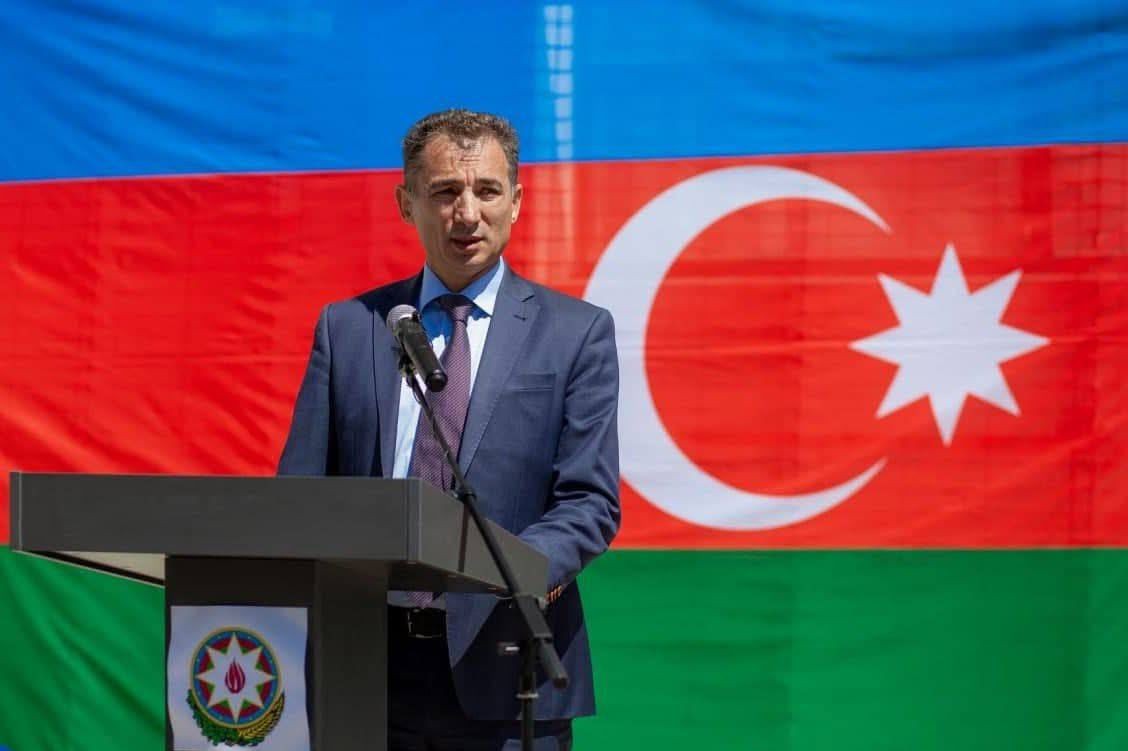 “Romania is a reliable friend and strategic partner of Azerbaijan, which has stood the test of time”
Ioana Cristea Drăgulin: Mr. Ambassador. It has already been a year since you came to Romania. Previously, you were ambassador to the Republic of Moldova. What are the impressions that Romanians and Romania made on you? What were the positive surprises and difficulties that you encountered in our country?
Gudsi Dursun oglu Osmanov: Ever since I worked in the Republic of Moldova, the Romanian people and their culture, historical tragedies and national character have aroused great interest in me. Honestly, there are many similar features between the Azerbaijani and Romanian people. For example, family values, endless respect for elders, devotion to traditions and hospitality. From the day I arrived in Bucharest, on January 10, 2024, as the newly appointed Ambassador of the Republic of Azerbaijan to Romania, I had the opportunity to feel the hospitality, attention and care of the Romanian state and the Romanian people. Thus, the support provided by both state officials and representatives of the ordinary Romanian people throughout my career has been unforgettable. The Romanian people are sincere, hard-working and industrious, with a charming and rich nature and a country with enormous economic potential. Most importantly, Romanians are rooted in their history and traditions and are deeply attached to religion. This means preserving national and spiritual values. I am sure that Romania has a promising future. The progress made by the Romanian economy in recent years is also an excellent example. In my opinion, Romania has not yet spoken its mind, and in the coming years it will undoubtedly become one of the main states within the European Union due to its political and economic weight.
Ioana Cristea Drăgulin: In 1998, the Romanian Embassy was opened in Baku, and in 2001, the Azerbaijani Embassy in Romania was opened. At that time, the Azerbaijani Embassy in Bucharest was considered the most important of all Azerbaijani diplomatic representations opened in Eastern Europe. In 2025, after so many years since its opening, in the current geopolitical context, what does Romania represent for Azerbaijan?
Gudsi Dursun oglu Osmanov: The historical roots of interstate relations between Azerbaijan and Romania date back to the 15th century. In 1473, the head of the Aggoyunlu state, Uzun Hasan, corresponded with the leaders of this region. These relations con-tinued during the Safavid period. It is believed that the first printed product in the Azerbaijani language appeared with the participation of the Romanian prince Dimitrie Cantemir. As you know, Romania was the second country in the world to recognize the independence of Azerbaijan after fraternal Turkey, on December 11, 1991, and the first in Europe. Diplomatic rela-tions between the two countries were established on June 19, 1992. Indeed, our embassy in Romania, established in 2001, was the first diplomatic representation of Azerbaijan in all of Eastern Europe, where the economic situation had not yet fully recovered after the crisis of the 1990s of the 20th century. This, in turn, was an indicator of the high attitude and importance that the national leader Heydar Aliyev, who was at the helm of Azerbaijan at that time, had towards Romania. In the past years, our bilateral relations have developed only on an upward trajectory, with Romania being Azerbaijan’s main partner in Southeastern Europe, and Azerbaijan being Romania’s main partner in the South Caucasus.
In this regard, the visit of President Ilham Aliyev to Romania in 2004 can be considered a significant event. During the visit, the President of the Republic of Azerbaijan, I. Aliyev, and the President of Romania, I. Iliescu, participated in the unveiling ceremony of the bust of the national leader, Heydar Aliyev, in Tei Park. It should be noted that, after the 1989 revol-ution, monuments were erected in Romania only to 3 foreign politicians – Charles de Gaulle, Mustafa Kemal Ataturk, and Heydar Aliyev.
During the next visit of President Ilham Aliyev to Romania, on Septem-ber 29, 2009, the “Joint Declaration on the Agreement on the Establish-ment of a Strategic Partnership bet-ween the Republic of Azerbaijan and Romania” was signed. Azerbaijan became the sixth country with which Romania signed such a document, after the USA, Italy, Great Britain, France and South Korea.
This document is considered the first such document on business and specific cooperation between the countries. This was the first strategic partnership agreement signed by Azerbaijan with a member state of the European Union. On April 18, 2011, the “Joint Action Plan on the Implementation of the Strategic Partnership between the Republic of Azerbaijan and Romania” was signed.
Currently, the draft “Joint Declaration on the Expanded Multidimensional Strategic Partnership between the Republic of Azerbaijan and Romania” is being considered by various official bodies of Romania. The issue of including the signing of the document in the program of one of the high-level visits planned for the upcoming period is being considered.
These facts are enough to demonstrate the level of relations between our countries: Romania is a reliable friend and a strategic partner of Azerbaijan, which has stood the test of time.
At the same time, the continuation of joint projects between the two countries in areas such as economy, trade, defense industry, education, humanitarian assistance and culture, as well as entering a new stage of cooperation with great potential between the regions of our countries, is of great importance.
Ioana Cristea Drăgulin: In a changing world facing new and exceptional challenges, it is essential, in our opinion, to strengthen and promote dialogue between peoples and nations. In this sense, cultural diplomacy represents one of the most evolved and articulated forms of soft power. By sharing and exchanging ideas, values and practices, the promotion of dialogue, respect for diversity and mutual understanding is encouraged, in support of a broader action of political and economic cooperation. In this context, how could the Azerbaijani embassy in Romania stimulate cultural ties between Romania and Azerbaijan?
Gudsi Dursun oglu Osmanov: I completely agree with you. Unfortunately, the Azerbaijani state has faced the occupation of its territories and military aggression since its foundation. This led to the fact that a significant part of our country’s resources were spent on eliminating the consequences of aggression and for defense purposes. As a result of the historic victory of the Azerbaijani Armed Forces in the 44-day Patriotic War, under the leadership of the Supreme Commander-in-Chief, President of the Republic of Azerbaijan Ilham Aliyev, new political realities emerged in the region, and the terms of the 4 resolutions adopted by the UN Security Council in 1993 on the withdrawal of Armenia from the occupied Azerbaijani territories were unilaterally implemented by us. Since 2023, our country has managed to restore sovereignty over all its territories for the first time. Currently, the measures taken in the normalization process, to clear our territories liberated from mines, carry out large-scale reconstruction and restoration work, and return internally displaced persons to their native lands are of particular importance.
Cultural diplomacy has always been of great importance. In this regard, I would like to emphasize the exceptional role of Mrs. Mehriban Aliyeva, First Vice-President of the Republic of Azerbaijan, President of the Heydar Aliyev Foundation, in organizing and implementing many international cultural and humanitarian projects in Azerbaijan. The Heydar Aliyev Foundation has made a significant contribution to protecting the national and cultural values of our people, promoting Azerbaijani culture in the world, and promoting our country through cultural projects implemented in many countries of the world, including Europe.
In order to raise bilateral relations to a higher level, it is important to also consider the potential of public diplomacy and cultural relations. In this regard, the organization of Romanian and Azerbaijani cultural days in Azerbaijan and Romania is of great importance.
In recent years, relevant agreements have been signed and events have been held between the two countries in the humanitarian and educational fields.
Since 2001, at the initiative of the Romanian-Azerbaijani Friendship Society and with the support of the embassies of Azerbaijan in Romania and Romania in Azerbaijan, approximately 70 books with outstanding examples of the literature of the two peoples in the Azerbaijani and Romanian languages have been published.
With the participation of the heads of state of Azerbaijan and Romania, busts of Heydar Aliyev were erected in Tei Park in Bucharest and of the famous Romanian composer George Enescu in Baku.
According to Article 5 of the draft “Cooperation Agreement between the Ministry of Education of the Republic of Azerbaijan and the Ministry of Education and Research of Romania” from 2004, the parties annually carry out mutual exchanges of students, master’s students and interns. Every year, dozens of students continue their studies at higher education institutions through special scholarships and student exchange programs. Currently, Romanian language courses are taught by guest professors from Romania at the Baku Slavic University.
At the end of 2024, a Memorandum of Understanding “On Cooperation in the Field of Public Service Provision between the State Agency for Public Services and Social Innovations under the President of the Republic of Azerbaijan and the General Secretariat of the Government of Romania” was signed. Speaking at the signing ceremony, the Secretary General of the Government of Romania emphasized the exceptional importance of the experience of the “ASAN service” and stated that they will benefit from the experience of our country for its development in Romania.
Today, former presidents of Romania repeatedly participate as guests of honor at the Baku International Humanitarian Forum, the Baku Global Forum and other state-level events organized in our country.
Ioana Cristea Drăgulin: We know that in the last three decades, bilateral ties have been strong. Romania was thus the first EU member state to conclude a strategic partnership document with Azerbaijan. Romania exercised the function of NATO Contact Point Embassy in Baku for four successive mandates between 2009-2016, several agreements were reached between the Government of Romania and the Government of the Republic of Azerbaijan regarding collaboration in the fields of science, education, culture and sports, and a Romania-Azerbaijan Inter-University Forum was held in Baku. Currently, there are over 30 inter-university and mobility agre-ements (Erasmus+) between higher education institutions in Romania and Azerbaijan in operation. And the examples can go on. However, I have the feeling that all these links are too little known to the general public. What do you think could be done so that both in Romania and in Azerbaijan, our peoples would be aware of how important bilateral links are?
Gudsi Dursun oglu Osmanov: Romania’s role in South-Eastern Europe is growing. Romania is a candidate to become the driving force of the European Union and NATO strategy in the Black Sea-Caspian region. From a geopolitical point of view, both Romania and Azerbaijan have significant opportunities.
I believe that the potential of Romanian-Azerbaijani economic relations is even greater. The fact that Romania, like Azerbaijan, has ancient oil traditions allows Azerbaijan to benefit from the rich petrochemical infrastructure here. Given that the Romanian market imports a certain part of this country’s food products, it is favorable for the implementation of joint projects in the non-oil sector of Azerbaijan, especially in the agricultural sector. Romania’s developed transport infrastructure is also of great interest. Through the Danube-Black Sea Canal, which passes through Romanian territory, it is possible to transport goods from the Far East and Central Asia, from the Caucasus and the Black Sea to the Danube River and then to the North Sea. Within the framework of this project, it may be advisable to restore and maintain direct ferry transport between the Black Sea ports of Georgia and Romania.
At the same time, the peace process established in the South Caucasus and the opening of transport routes will create new opportunities for the entire region.
Azerbaijan and Romania successfully cooperate within the framework of the UN, the Council of Europe, the OSCE, the Organization of the Black Sea Economic Cooperation and other international structures. Romania clearly expressed its position in accordance with international law when the problems of separatism and terrorism faced by Azerbaijan were discussed at the meetings of the UN General Assembly, the Council of Europe Parliament and the OSCE. The Azerbaijani state has always supported Bucharest on issues related to Romania’s interests in all international organizations. Azerbaijan highly appreciates the support provided by Romania within NATO and the European Union.
Currently, there are high-level relations between our countries. Now our goal is to ensure the expansion of these relations to the level of ordinary citizens. For this, the implementation of tourism and cultural exchanges and the growth of joint projects of small and medium-sized enterprises are of great importance. Better knowledge of our peoples, an increase in the number of trips and the mutual discovery of our cuisines and cultures will further strengthen the ties between our countries. As a result of the work done in this direction, for the first time in history, we organized the opening of direct flights Baku-Bucharest-Baku by AZAL. Although this experience was not long-lasting, it once again proved that there is great untapped potential in this area and revealed the need to resume these flights in the future.
I would like to share with you an interesting fact. Recently, I hiked to Heydar Aliyev Peak in the Guba region of Azerbaijan, together with Romanian officials. This event in itself has a very symbolic significance for our relations. While we were there, I met fifteen climbers from Romania who were heading to Bazarduzu Peak. During the conversation, it became clear that the Azerbaijani mountains are a very popular destination among Romanian travelers.
Ioana Cristea Drăgulin: In the current geopolitical context, Azerbaijan plays a very important role in regional energy security, thanks to its large oil and gas reserves, as well as its geographical position at the intersection of major transport routes. Romania wants to be both an economic platform and a cultural and civilizational one. What do you consider to be the priority projects that both sides should develop to bring Azerbaijan closer to Romania and the European Union?
Gudsi Dursun oglu OSMANOV: Azerbaijan, as a reliable partner, makes a significant contribution to Europe’s energy security. Azerbaijan is a strategic energy partner of the EU. The Southern Gas Corridor, put into operation at the end of 2020, plays a unique role in diversifying Europe’s energy routes and sources of supply. By signing the Memorandum of Understanding on the Strategic Partnership in Energy in July 2022, the EU and Azerbaijan committed to doubling the volume of gas transported through the Southern Gas Corridor by 2027 and to working together in the fields of renewable energy, energy efficiency, hydrogen and emission reduction. The Southern Gas Corridor (SGC) plays an important role in the development of energy cooperation between Azerbaijan and Romania. Azerbaijan highly appreciates Romania’s participation in the meetings of the SGC Advisory Board, as well as the country’s support for this project and its future expansion.
Romania was the only European participant in the transport corridor Europe-Caucasus-Asia (TRACECA), and the author of this project was our national leader, Heydar Aliyev.
Currently, one of the most important issues for Europe, including for Romania, is energy security. Ilham Aliyev’s official visit to Romania in 2004 and the signing of 12 documents covering various areas, including the “Joint Declaration of the President of the Republic of Azerbaijan and the President of the Republic of Romania”, within the framework of the visit, opened up ample opportunities for expanding relations.
The importance of implementing close cooperation between the relevant agencies of both countries was emphasized. SOCAR and Romgaz signed an agreement on the supply of gas from Azerbaijan to Romania starting from January 1, 2023. As for economic relations, suffice it to say that the trade turnover between the two countries, which was only 600 thousand US dollars in 1996, is now measured in hundreds of millions. But, of course, this is not enough, because the potential for the development of trade and economic relations is great, and more rapid progress in this area is possible in the coming years. Trade and economic relations between Azerbaijan and Romania are developing on an increasingly broad basis, and this is a very encouraging fact. The Azerbaijani oil company SOCAR has been operating in Romania for a long time and owns more than 70 gas stations and several fuel depots.
The oil and gas factor is not enough in the economic cooperation between Azerbaijan and Romania, and the country’s leadership emphasizes this in its statements. Romania is interested in cooperation in the fields of green energy, trade, investment, digitalization and agriculture, as well as green energy, and Azerbaijan is also interested in establishing and expanding cooperation in these areas.
Currently, Azerbaijan is starting to build a “green energy” bridge to Europe. Our country intends to become a significant supplier of electricity to Europe, mainly “green energy”. It is expected to produce 3 gigawatts of wind power and 1 gigawatt of solar power by 2027. 80% of this will be exported.
The signing of the “Strategic Partnership Agreement for the Development and Transmission of “Green Energy” between the Governments of the Republic of Azerbaijan, Georgia, Romania and Hungary” in Bucharest on 17 December 2022 is a clear example of this. The agreement will bring the European Union closer to its partners in the South Caucasus and help our regions achieve a transition to clean energy.
Another priority area of cooperation between the two countries is the transport sector. There are very good opportunities for deepening cooperation between the ports of Baku and Constanta. Following the Joint Declaration signed in Washington on August 8 this year, with the participation of the leaders of the United States, Azerbaijan and Armenia, achieving peace in the South Caucasus and launching the corridor through Armenia will further increase the capacities of the Middle Corridor and strengthen the role of Azerbaijan and Romania as two pillars of the transport corridor between East and West.
Ioana Cristea Drăgulin: In conclusion, I would like to return to cultural diplomacy as a vehicle for promoting the cultural heritage of our countries. For the first time in the history of political culture in Romania, a scientific journal hosts a series of articles and studies by specialists from Azerbaijan as a form of intercultural dialogue. The goal of this cultural project is to become increasingly closer, as peoples and states. For this, we must have an open and respectful exchange of opinions between people and groups with different ethnic, cultural, religious and linguistic origins and traditions. Freedom and the ability to express ourselves freely represent one of the greatest conquests of Western-style civilization. How can we multiply the channels of intercultural exchange on the Azerbaijan-Romania axis, so that the exchange of ideas, concepts, historical experiences, brings us closer, within the framework of a culture and a civilization founded on rights and dialogue?
Gudsi Dursun oglu Osmanov: If you were to ask me what is the most similar thing that unites Azerbaijan and Romania, I would answer without hesitation: “multiculturalism and tolerance”. Located at the crossroads of different civilizations, Azerbaijan has historically formed an environment of national and cultural diversity, where representatives of different nations and confessions live in peace and prosperity, mutual understanding and dialogue. The peculiarities of the historical development of Azerbaijan, its geographical location and the ethnic composition of its population have created conditions for the existence of different religions on this territory.
Neither the Azerbaijani nor the Romanian peoples are characterized by xenophobia, or religious and ethnic intolerance. This has historically led to free and mutual respect of communities of different religious and ethnic affiliations in our countries.
Romania’s policy in this area, in particular the quotas allocated to national and religious minorities in the state administration, serves as a model for many European countries. Violence and ethnic and religious discrimination are completely foreign to Romanian history.
In my opinion, multiculturalism and tolerance can be one of the main answers to your question. This is not only one of the aspects that spiritually brings Azerbaijan and Romania closer but can also be presented to the world as a unique and successful model in a world that is becoming radicalized and intolerant today.
Interview conducted by Ioana CRISTEA DRĂGULIN
Translated from Azerbaijani to Romanian by Fakhri KARIMLI
Translated from Romanian to English by Cătălin DRĂCȘINEANU