


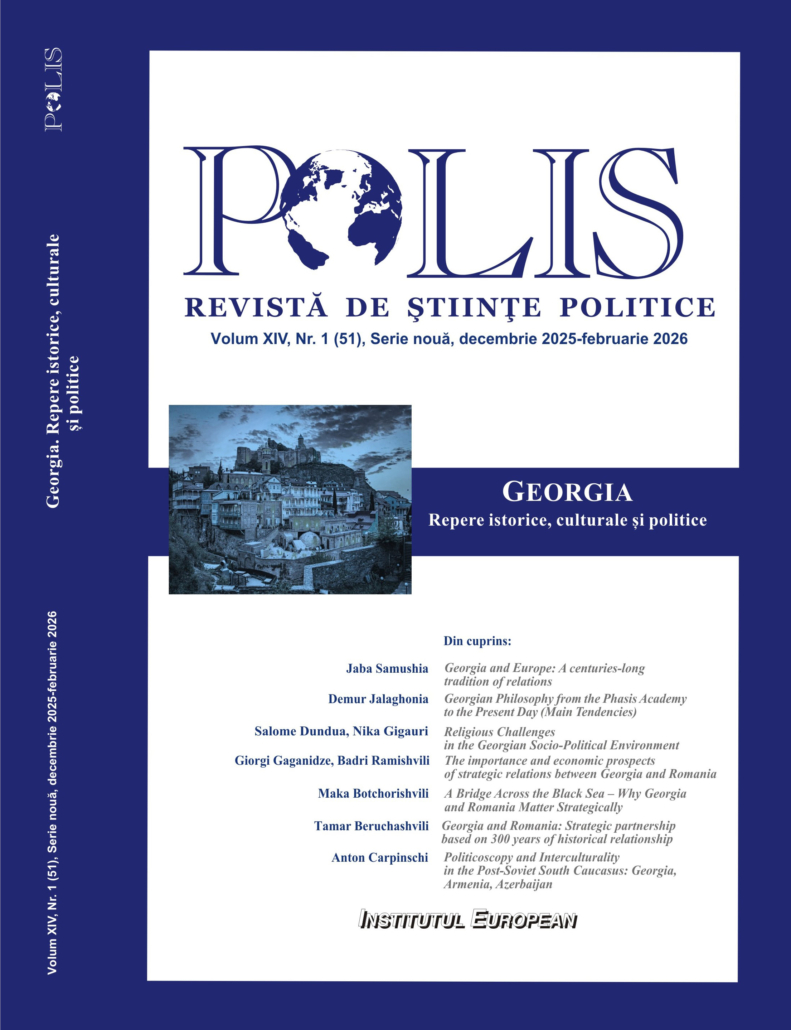
Coordonat de E.S. Tamar BERUCHASHVILI și Sabin DRĂGULIN
Volum XIV, Nr. 1 (51), Serie nouă, decembrie 2025-februarie 2026
 A Bridge Across the Black Sea – Why Georgia and Romania Matter Strategically
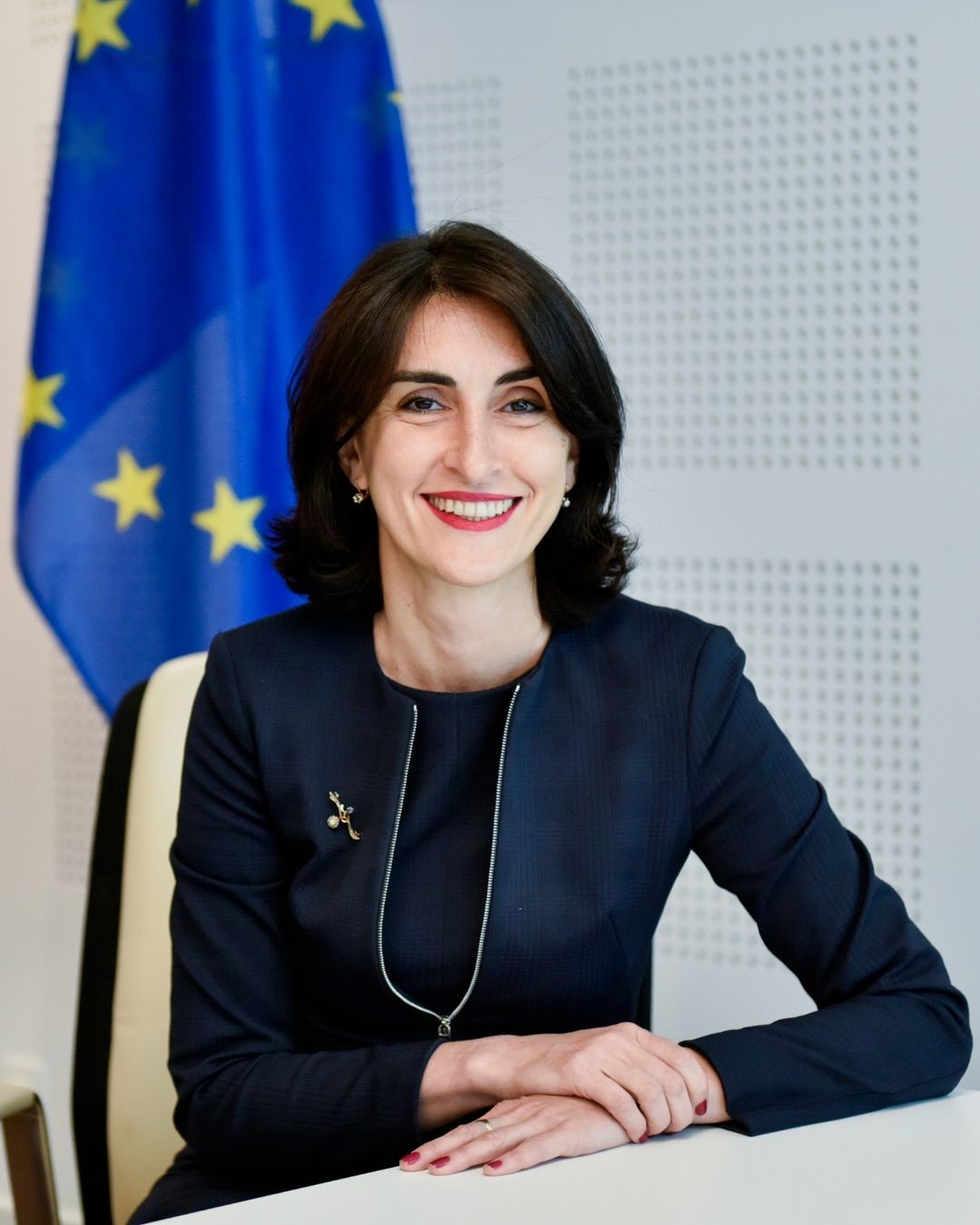
Minister for Foreign Affairs of Georgia, Maka Botchorishvili
Sabin Drăgulin: The Romanian state has been one of Georgia’s most constant friends for the past 33 years. The Black Sea brings us closer but at the same time separates us. What, in your opinion, should be done to intensify bilateral ties in as many areas as possible?
Maka Botchorishvili: Georgia and Romania have developed a solid partnership over time, grounded in shared European values and a common commitment to regional stability. In the context of today’s rapidly shifting geopolitical landscape, the relationship between Georgia and Romania carries growing strategic importance for both countries, as they navigate overlapping security, economic, and connectivity challenges and opportunities in the wider Black Sea region. The Black Sea should be seen not as a dividing line, but as a strategic bridge connecting the two countries. Romania serves as the western gateway of the Middle Corridor, while Georgia is a key transit hub linking the Black Sea with the Caspian region. Together, they form complementary pillars of an emerging East-West connectivity network. Strengthening maritime, rail, and port links between Constanța and Georgia’s ports would boost trade, secure supply chains, and unlock new economic opportunities – yet much of this potential remains untapped. Transport links, energy, digital infrastructure, and security must all work together to form a truly strategic partnership. The Black Sea Submarine Cable Project, connecting energy systems and creating a digital corridor, would integrate Georgia more closely into the European market, while Romania’s NATO experience can help strengthen regional security. Aligning connectivity, economic, and security initiatives ensures that growth and stability advance together, reinforcing the Black Sea as a zone of prosperity and resilience for both countries – and for entire Europe.
Sabin Drăgulin: We live in a global world, in which information reaches all citizens of the world in real time. In certain situations, it can be presented, interpreted, depending on several types of interests. We know that the Georgian people have been greatly tested by the vicissitudes of history and by the misfortune of having very powerful neighbors. However, Georgians have a strong cultural and civilizational vocation of the Western type. What do you consider to be the ways, methods, etc., for this country’s objective to be achieved?
Maka Botchorishvili: We live in an age of instant information, where narratives circulate globally and are often weaponized for political purposes. Georgia faces sustained disinformation campaigns aimed at undermining our sovereignty, national interests, and European aspirations. These efforts seek to distort facts, sow division, and weaken public trust, yet our commitment to Western values remains steadfast. This resilience is rooted in centuries of history. From ancient Iberia and Colchis – with the Golden Fleece legend and ties to the Roman and Byzantine worlds – through the early adoption of Christianity and the cultural heights of the medieval Georgian renaissance, to one of the most progressive constitutions of the early twentieth century, Georgia’s place within European civilization runs deep. These experiences continue to shape the values, identity, and outlook of the modern Georgian state. Today, this historical conviction is reflected in clear political choices. European Union membership is Georgia’s central foreign policy objective, enshrined in the constitution and supported by an overwhelming majority of the population. Georgia seeks not only to join the European project, but also to contribute to its security and stability from the Union’s eastern frontier. Our government remains committed to peace, sovereignty, and the peaceful restoration of territorial integrity, even as parts of the country remain under Russian occupation. At the same time, partnership must rest on mutual respect – European integration cannot be used as a tool for political pressure or interference in Georgia’s internal affairs.
Sabin Drăgulin: Geography and history have positioned Georgian state in a place where the Caucasus and the Black Sea meet. Obviously, the entire region is in the attention of the world’s major political actors. Can you tell us how Georgia considers it should position itself on the great chessboard of geopolitics between the European Union, the Russian Federation, Turkey, China and the United States of America?
Maka Botchorishvili: Geography has never given Georgia the luxury of indifference. We are located between the Black Sea and the Caucasus, at the crossroads of Europe and Asia, and throughout history we have had to manage the ambitions of larger powers. That reality has not changed. What has changed is our ability to respond strategically. For Georgia, the question is not whether to choose geography, but how to use it wisely. Our long-term political and civilizational choice is clear: anchoring Georgia firmly within Europe. At the same time, we approach the broader geopolitical environment with realism, not ideology. We pursue pragmatic, economy – and connectivity-driven engagement with regional and global partners. Georgia’s role as a connectivity hub is central to this approach. As a transit country for eight landlocked states, we are investing in transport, energy, and digital infrastructure to strengthen the Middle Corridor linking Asia and Europe. Our goal is to serve as a platform for cooperation rather than confrontation, supporting diversified and secure trade routes. Relations with Russia remain constrained by hard realities. Twenty percent of Georgia’s territory is under Russian occupation, and the security threat is real. Under these conditions, our priority is to preserve peace, avoid escalation, and protect our long-term national interests – without compromising sovereignty or our strategic direction. Georgia does not seek to be a pawn or an arena for geopolitical rivalry. We seek to be a reliable partner – open to cooperation and committed to stability in one of the world’s most sensitive regions.
Sabin Drăgulin: Mutual knowledge is fundamental to understanding who we are about each other. When I refer to knowledge, this is both between our peoples and countries and between Georgia and other cultural and political spaces. In history, there are moments when national political elites had to position themselves to decide which path(s) should be followed for their own people to enjoy prosperity and peace. Romania faced such situations in 1859, when the national elites decided to create the modern nation-state, in 1877, when Romania participated in the war of independence, in 1916, when it was decided to enter the war in the First World War, or in the contemporary period when, following a major social and political crisis, the Snagov Declaration” (1995) was adopted, which demonstrated the will of all relevant political forces to follow the necessary steps to prepare for accession to the European Union. Each time there was a negotiation process between the different political forces and power groups, which had different visions. But what always took precedence was the desire to reconnect to the European cultural and civilizational space, even if the modalities proposed by each side were different. During this period, a process is observed in which new balances of power are discussed in different areas of the world. What are, in your opinion, the political actions that the different political options in your country should undertake in order for the desire of the Georgian people to be connected to the space of Western culture and civilization to be realized?
Maka Botchorishvili: Since restoring independence, Georgia has pursued its European path with consistency and purpose. As an Associated Partner since 2014, we have implemented far-reaching reforms to strengthen democracy, the rule of law, and economic resilience, while safeguarding fundamental rights and freedoms. These efforts have produced tangible results. Georgia now ranks first in Eastern Europe and Central Asia in the Rule of Law Index and leads the region in key areas such as the absence of corruption and open government. This strong institutional foundation is also reflected in our economic performance: Georgia ranks 35th globally and 20th in Europe in the Index of Economic Freedom, ahead of several EU member and candidate states. As Prime Minister Irakli Kobakhidze has stated on multiple occasions, we firmly believe that “by 2030, Georgia will be the most prepared among the candidate countries to become a full-fledged member of the European Union.” Against this background, the current difficulties in relations with the European Union are deeply regrettable. The lack of meaningful dialogue between Brussels and Tbilisi risks eroding trust and obscuring the progress achieved together over many years. From Georgia’s perspective, this situation is neither fair nor productive. We have repeatedly signaled our readiness for open and constructive engagement with EU institutions and member states on all outstanding issues. There remains a strong belief in Tbilisi that strategic thinking will ultimately prevail in European capitals. At a time when Europe faces growing pressure on its eastern flank, a reform-driven and reliable Georgia should be seen not as a problem to be managed, but as a partner to be embraced.
Sabin Drăgulin: Madam Minister, you have a rich and solid diplomatic experience in international relations. Over the years, you have worked both at the Ministry of Foreign Affairs of Georgia and as the country’s representative in Belgium, Austria and in international organizations. For more than a year, you have held the portfolio of Minister for Foreign Affairs. What do you consider to be the main objectives of Georgia in terms of cultural diplomacy?
Maka Botchorishvili: Georgia’s rich cultural and civilizational heritage is one of its greatest strategic assets – and one that naturally aligns the country with Europe. Despite centuries of external pressures and the presence of powerful neighbors, Georgian identity has remained anchored in values deeply European in character: respect for human dignity, tolerance, creativity, and openness to dialogue. Georgia’s contribution to Europe is not only political or strategic but also profoundly cultural. This culture reflects a longstanding connection to the European space, from early Christianity and medieval literature to enduring traditions of art, music, and coexistence. It demonstrates that Georgia’s European orientation is not a recent political choice, but a historical reality. Georgian culture enriches Europe by adding diversity and depth, particularly at a time when Europe is redefining itself in a rapidly changing world. By investing in education, cultural institutions, and international cultural cooperation, Georgia ensures that its Western vocation is not only preserved but actively shared. In this sense, Georgia’s culture is not merely a legacy of the past – it is a living bridge between Europe and the wider region, and a meaningful asset for Europe’s future.
Interview conducted by
Sabin DRĂGULIN