


Coordonat de E.S. Tamar BERUCHASHVILI și Sabin DRĂGULIN
Volum XIV, Nr. 1 (51), Serie nouă, decembrie 2025-februarie 2026
Geopolitical risks and insecurity in the South Caucasus.
The role of geographical constraints in the case of Georgia
Ciprian IFTIMOAEI
Vicențiu Robert GABOR
Abstract: The South Caucasus region is characterised by a high level of geopolitical instability, determined by the overlapping of frozen conflicts, competition between regional and extra-regional actors, and the structural vulnerabilities of the states in the area. In this context, the article analyses the role of geographical constraints in generating and perpetuating insecurity, taking Georgia as a case study. The premise from which the analysis starts is that geography is not a simple passive framework of international relations, but an essential explanatory variable that shapes the strategic options, foreign policy behaviour and security vulnerability of small states. The research uses a qualitative exploratory approach, based on geopolitical analysis, documentation and cartographic processing. Georgia’s geographical positioning, territorial fragmentation and exposure to external pressures converge in a model of structural insecurity, which limits the state’s ability to diversify its geopolitical options. The article contributes to the regional security literature by highlighting geography as a determinant of geopolitical risk in the South Caucasus and the wider Black Sea region.
Keywords: geopolitics, security, geographical constraints, Georgia, South Caucasus, Black Sea Extended Region.
Introduction
The South Caucasus region is one of the most volatile geopolitical areas in the wider European neighbourhood, characterised by the existence of ‘frozen conflicts’, competition between global actors (United States of America, European Union, Russian Federation) and persistent structural vulnerabilities of the states in the region (Georgia, Armenia, Azerbaijan). Located at the crossroads between Europe and Asia, between the Black Sea and the Caspian Sea, this region is a focus of divergent strategic interests, being simultaneously an energy transit zone, a transport corridor and a geopolitical buffer between competing spheres of influence. The discovery of energy resources in the Caspian Sea has intensified competition between state actors in the region, as well as between global strategic actors (USA and the Russian Federation) for the exploitation and transport of hydrocarbons to countries in Europe or Asia1.
The state of security in the South Caucasus is caused by the interaction of historical, military, geographical and ethno-cultural factors. Among the states of the South Caucasus, Georgia stands out due to its problematic geographical position, caught between constant military pressure from the Russian Federation and the need to cultivate peaceful relations with its other neighbours (Turkey, Armenia, Azerbaijan). Although Georgia is part of the so-called Black Sea Extended Region, being a coastal state of this sea, it has rather limited access to strategic manoeuvring space. The conflicts in the separatist regions (South Ossetia and Abkhazia) maintained by the Russian Federation create multiple vulnerabilities in terms of national security. In this context, the geography of Georgia and the entire region becomes a source of geopolitical risks and insecurity.
In general, the South Caucasus is analysed from the perspective of “frozen conflicts” (Abkhazia, South Ossetia, Nagorno-Karabakh), competition between Russia, Turkey, EU, NATO and other extra-regional actors, as well as energy security. According to O. Milevschi and S. Secrieru, a “frozen conflict” is an administratively disputed territory where military confrontation has ceased but for which no sustainable political solution acceptable to all parties involved has been found, fuelling a fragile security environment2.
In areas where frozen conflicts exist, violence and armed confrontation can erupt at any time. Georgia is already a classic example of a country that „hosts” two frozen conflicts (Abkhazia and South Ossetia), reactivated by the outbreak of Russian-Georgian hostilities in 2008. In this landscape dominated by military conflicts and fierce competition for energy and transport corridors, the role of geography as an explanatory variable in shaping insecurity is often treated superficially.
This study starts from the premise that geography is not just a passive backdrop to geopolitical dynamics, but a structural constraint that shapes the strategic choices, foreign policy behaviour and security vulnerabilities of small states. In other words, the geography of the South Caucasus is a predictor of geopolitical risks and insecurity in this region, which has been disputed at certain times in history.
The main objective of the article is to analyse how geographical constraints contribute to the generation and perpetuation of geopolitical risks in the South Caucasus, through a case study focused on Georgia. The central research question concerns the extent to which Georgia’s geographical position and territorial configuration limit its ability to ensure its security and diversify its geopolitical options. In this sense, the article aims to highlight the link between geography, insecurity and the strategic options of a small state in a tense regional space.
Based on the general objective of the paper, the investigative approach is structured around the following research questions:
- To what extent does Georgia’s geographical position contribute to the configuration of a model of structural insecurity in the South Caucasus?
- What are the main geographical constraints (lack of strategic depth, territorial fragmentation, geopolitical neighbourhood) that limit Georgia’s ability to manage its security risks?
- How does geography influence Georgia’s foreign and security policy options in a regional context marked by power asymmetries and strategic competition?
- How does Georgia’s status as a transit state (for energy and transport) transform its geographical position into a simultaneous source of geopolitical opportunity and security vulnerability?
- To what extent do geographical constraints reduce Georgia’s strategic autonomy and condition its Euro-Atlantic orientation?
Literature review
The analysis of geopolitical risks and insecurity in the South Caucasus requires a theoretical approach that goes beyond strictly political-institutional or military explanations and integrates geography as a structural factor in power relations. In this sense, the theoretical section combines contributions from political geography, classical and critical geopolitics, as well as security studies, to substantiate the role of geographical constraints in producing regional insecurity.
Political geography starts from the premise that space is not politically neutral, but influences the distribution of power, the behaviour of states and the architecture of security systems. Geographical positioning, access to resources, border configuration and regional neighbourhoods generate opportunities, but also structural constraints that limit the room for manoeuvre of state actors. In this logic, geography functions as a relatively stable variable with long-term effects on security and foreign policy. In regions characterised by chronic instability, such as the South Caucasus, these constraints are amplified by the overlapping geopolitical interests of the major powers and the institutional fragility of local states. Thus, geography does not fully explain aspects of insecurity, but it does provide clues about strategic options.
Classical geopolitics attributed a decisive role to geography in explaining the behaviour of states, emphasising the importance of strategic position, territorial size and control of space in the configuration of political power. In the tradition inaugurated by Friedrich Ratzel (1897), the state was conceptualised as an organism dependent on vital space, while Halford J. Mackinder (1904) demonstrated that geographical positioning in the “pivot of history” influences the global balance of power. Although these approaches were later criticised for their spatial determinism, critical geopolitics (Agnew, 2003; Ó Tuathail, 1996) recognises the continuing relevance of geographical factors, especially in geopolitical border regions such as the South Caucasus, where positional constraints, territorial fragmentation and lack of strategic depth shape states’ foreign and security policy options3.
Critical geopolitics has nuanced the deterministic perspective of the classical tradition, arguing that geography does not generate mechanical effects on state behaviour, but is mediated through representations, discourses and political practices. In this vein, Gearóid Ó Tuathail (1996) demonstrated that geopolitical space is discursively produced and reproduced in the form of narratives on regional and international security issues. Similarly, Simon Dalby (1990) and John Agnew (2003) have emphasised that mental maps, territorial representations and geopolitical interpretations of elites shape the definition of interests and threats. From this perspective, geographical constraints are not immutable, but are interpreted and instrumentalised by political elites according to their strategic projects. In regions marked by geopolitical competition, such as the South Caucasus, geography becomes both a material reality (relief, neighbourhoods, transport routes, energy corridors) and a central element of competing narratives on security, defence and foreign policy4.
The literature on regional security shows that insecurity is not evenly distributed, but tends to be concentrated in certain areas where conflictual interactions, historical rivalries and power asymmetries are self-perpetuating. In this regard, Barry Buzan and Ole Wæver develop the concept of a “regional security complex”, showing that threats are more intense within geographical areas characterised by security interdependence5.
The concept of the “security dilemma”, originally formulated by John H. Herz (1950) and later systematised by Robert Jervis (1978), is central to this theoretical framework: a state’s defensive measures are interpreted as potential threats by other actors, generating counterbalancing reactions that amplify general insecurity.
In the absence of mutual trust and robust institutional mechanisms, the spiral of insecurity becomes difficult to control6. In the wider Black Sea region, which includes the riparian countries (Romania, Bulgaria, Turkey, Georgia, Ukraine, Russian Federation), the countries of the South Caucasus (Armenia and Azerbaijan) and the Republic of Moldova, there is a security dilemma (security versus energy). At present, the Prut River, which forms the eastern border of Romania, European Union and NATO, separates two geopolitical areas: the Euro-Atlantic space, which includes countries with competitive market economies that provide security in the region, and the post-Soviet space (the former USSR or Commonwealth of Independent States), which includes countries that have energy resources and/or are transit areas for energy pipelines and need security7.
In the South Caucasus, insecurity is exacerbated by the proximity of major regional actors (Russian Federation, Turkey, Iran), the existence of frozen conflicts (Abkhazia, South Ossetia, Nagorno-Karabakh) and the lack of functional collective security arrangements. In terms of regional security complex theory, the Caucasus functions as a subsystem in which negative interdependencies prevail. Geography contributes directly to this configuration: territorial fragmentation, lack of strategic depth, and exposure to energy corridors and transit routes reduce the capacity of states, especially Georgia, to autonomously neutralise risks and increase vulnerability to external pressures.
A relevant theoretical contribution to the analysis of structural insecurity is provided by the approach to small states in the international system. David Vital (1967) showed that the vulnerability of small states derives from their reduced capacity to influence the strategic environment and their dependence on the great powers. Subsequently, Robert O. Keohane (1969) emphasised that the status of a “small state” should be understood not only in demographic or territorial terms, but also in relation to the distribution of power and the limited margin of external autonomy8.
For small states (e.g. Georgia) in tense regions (South Caucasus), strategic options are often limited to a few dominant alternatives: alignment with a major actor, integration into broader security structures, or acceptance of a state of chronic insecurity. The choice of one of these options is not exclusively the result of political preferences, but also of geographical and structural constraints. Based on these theoretical contributions, this article treats geography as a central explanatory variable in the analysis of geopolitical insecurity. Geographical constraints are not understood as absolute determinants of the security, but as structural elements that act through mediating mechanisms: power asymmetries, the security dilemma, and the militarisation of regional space.
Research methodology
The methodological approach is based on a descriptive-exploratory analysis that combines geopolitical analysis, based on cartographic tools, with a comparative analysis of composite indices. The article is structured as follows: the first part contextualises the architecture of geopolitical risks in the South Caucasus, while the second part analyses the specific geographical constraints of Georgia and their implications for its insecurity and strategic options.
For the comparative analysis of geopolitical risks and the level of insecurity in the South Caucasus, we have selected a series of composite indices used internationally (Table 1): Human Development Index, Democracy Index, Global Peace Index, Militarisation Index and State Fragility Index. All these indices allow for a systematic and comparable assessment of the position of Georgia, Armenia and Azerbaijan in the security architecture of the South Caucasus.
Table 1. Composite indices used in the comparative analysis
| Index | What It Measures | Type of Indicator |
| Human Development Index (HDI) | Socio-economic development | Development |
| Democracy Index | Quality of the political regime | Political |
| Global Peace Index (GPI) | Level of security and peace | Security |
| Global Militarisation Index (GMI) | Degree of militarisation | Military |
| Fragile States Index (FSI) | State stability and vulnerability | Stability |
The Human Development Index (HDI), developed by the United Nations Development Programme, measures the level of development by integrating three fundamental dimensions: health (expressed through life expectancy), education (average and expected years of schooling) and standard of living (gross national income per capita). This index reflects a state’s capacity to ensure general conditions of well-being and represents an alternative to exclusively economic indicators, such as gross domestic product9.
The political dimension is captured by the Democracy Index, developed by the Economist Intelligence Unit, which assesses the degree of democratisation based on five criteria: the electoral process, government functioning, political participation, political culture and respect for civil liberties. The scores obtained allow political regimes to be classified as consolidated democracies, imperfect democracies, hybrid regimes and authoritarian regimes, thus providing a synthetic measure of the stability and legitimacy of political institutions10.
The level of security and conflict is analysed using the Global Peace Index (GPI), developed by the Institute for Economics and Peace, which includes indicators relating to internal and external conflicts, societal security and the degree of militarisation. This index reflects the exposure of states to security risks and provides a comparative assessment of the level of regional and international stability11. Complementary to this, the Global Militarisation Index (GMI), developed by the Bonn International Centre for Conflict Studies, measures the military sector’s share in society using indicators such as military expenditure, armed forces and military equipment, thus highlighting the state’s strategic priorities and perception of external threats12.
The Fragile States Index (FSI), developed by the Fund for Peace, provides a comprehensive assessment of state vulnerabilities based on indicators covering demographic pressures, political legitimacy, economic performance and external interventions. This index is widely used to analyse states’ capacity to maintain internal stability and cope with political and security risks13. Overall, the use of these indices allows for an analysis of the relationship between development, governance and security, providing a solid empirical framework for the comparative assessment of geopolitical risks in the South Caucasus.
Geography, geopolitical risks and regional security
The literature on regional security and geopolitics converges on the idea that geography is a structural factor in international relations, influencing both the distribution of power and the typology of geopolitical risks and the level of insecurity of states. In the South Caucasus, this relationship is particularly relevant, given the nature of the region as a geopolitical and civilisational frontier (majority Christianity in the Russian Federation, Georgia and Armenia versus Islamism in Turkey and Azerbaijan), marked by competition between major powers and persistent instability.
Classical geopolitics established the idea that geographical positioning and spatial configuration condition the behaviour of states and their vulnerability. Halford J. Mackinder showed that certain geographical spaces generate lasting strategic advantages, while others produce vulnerability and exposure, especially in areas of contact between centres of power14.
Geography is the most important “stable factor” on which a nation’s power depends, argues Hans J. Morgenthau, along with natural resources and raw materials. Added to these are relative factors such as population, political leadership, military, and economic capacity15. Developing this geographical approach, Nicholas J. Spykman emphasised the role of rimlands as areas of intense geopolitical competition where insecurity is structural and recurrent16. Robert D. Kaplan also shares Spykman’s approach, considering that the struggle for space (geography) has never ceased throughout human history. Geographical maps are spatial representations of human divisions, and geography is the backdrop to history itself, Kaplan argues. A state’s position on the map is much more important than the philosophy of those who govern it17.
Applied to the South Caucasus, this perspective suggests that the region’s position between Europe and Asia, between the Black Sea and the Caspian Sea, generates objective constraints that limit the strategic autonomy of local states and expose them to external pressures. However, the implicit determinism of classical geopolitics was later nuanced by critical approaches.
From the perspective of critical geopolitics, Gearóid Ó Tuathail argues that geography does not produce mechanical effects, but is mediated by political discourses and securitisation processes, through which space is transformed into an object of strategic competition18. Simon Dalby takes a similar line, highlighting the fact that insecurity is the result of the interaction between the material realities of space and political practices with geopolitical significance19.
Between geography and insecurity lie geopolitical risks, defined as forms of uncertainty and vulnerability generated by power competition in a given space. Robert D. Kaplan describes these spaces as „areas of geopolitical friction,” where geography amplifies political and military tensions, turning risk into a permanent feature of the security environment20.
An essential theoretical framework for analysing these dynamics is the theory of regional security complexes, formulated by Barry Buzan and later developed together with Ole Wæver. According to this perspective, insecurity is structured regionally, and security risks are more intense between actors in geographical proximity21. In the South Caucasus, frozen conflicts, historical rivalries and power asymmetries contribute to the consolidation of such a regional security complex.
Recurring geopolitical risks translate, over time, into a state of structural insecurity, conceptualised in security literature through the lens of the security dilemma. John H. Herz has shown that, in the absence of trust and effective collective security mechanisms, one state’s defensive measures are perceived as threats by others, generating a vicious circle of insecurity22. This logic was further developed by Robert Jervis, who demonstrated that insecurity is often unintended but deeply structured by the international environment23.
In regions characterised by frozen conflicts and the lack of a stable security architecture, insecurity tends to become persistent. David Lake points out that, in the absence of a stabilising regional authority, states remain captive in an environment of self-reproducing insecurity24. This perspective is consistent with Barry Buzan’s analysis, which defines regional insecurity as the result of the interaction between structure, perceptions and capabilities25.
Regional comparative analysis is an essential tool for understanding how the three Caucasian countries manage their vulnerabilities and build resilience in an environment characterised by strategic competition and frozen conflicts. In this regard, the simultaneous assessment of human development indicators, the quality of democratic governance, the level of militarisation, internal stability and security provides an integrated perspective on the balance between development and insecurity.
The comparative table below (Table 2) highlights these differences and convergences, revealing that relatively similar socio-economic performances coexist with different levels of democratic consolidation and exposure to security risks. At the same time, the indicators analysed suggest that insecurity in the South Caucasus is not exclusively the result of territorial conflicts, but reflects a combination of structural, institutional and geopolitical factors that influence the capacity of states to ensure long-term stability.
Table 2. Comparative analysis of the main indicators
of development in Georgia, Azerbaijan and Armenia
The analysis of comparative indicators highlights a region characterised by contrasts between the level of socio-economic development and political and security dynamics. In terms of human development, all three states score relatively high, but Georgia and Armenia stand out as being in the ‘very high’ development category, reflecting more consistent progress in education, health and overall living conditions. Azerbaijan is slightly below this threshold, but still remains in the ‘high’ category, which can be explained by its significant economic dependence on the energy sector and the uneven distribution of the benefits of economic growth.
The differences become more evident at the political level. Azerbaijan’s low score on the Democracy Index indicates a highly centralised political system and limited political competition, while Georgia and Armenia are classified as hybrid regimes, where electoral mechanisms function but democratic consolidation processes remain incomplete. Armenia scores slightly above Georgia, suggesting a more favourable evolution of political reforms in recent years, although institutional vulnerabilities and internal tensions continue to influence the political stability of both states.
Security indicators confirm the sensitive nature of the regional geopolitical environment. Moderate levels on the Global Peace Index reflect persistent conflicts and geopolitical tensions, particularly in the context of territorial disputes in the region. At the same time, high values on the Militarisation Index for Armenia and Azerbaijan indicate a strong focus on the defence sector, while Georgia shows a more moderate level of militarisation. The State Fragility Index places all three states in the medium fragility zone, suggesting the existence of functional institutions that remain exposed to socio-economic and political pressures.
Georgia’s geographical constraints and vulnerabilities in the South Caucasus security environment
Georgia is a state located in the South Caucasus, at the crossroads of Eastern Europe and Western Asia, its geographical position giving it a geopolitical role as an interface between the Euro-Atlantic space, the Caspian region and the Near East. These geographical characteristics are not just elements of the physical environment, but generate structural constraints that limit the state’s strategic depth and increase its security vulnerability 26.
The configuration of the relief directly influences the geopolitical structure of the territory. The Greater Caucasus mountain range, located to the north, forms a strong natural barrier against Russia and limits communications to a few strategic corridors, including the Darial Gorge and the Roki Tunnel, which are of major importance for transport, security and military mobility27. In the south, the Lesser Caucasus Mountains separate Georgia from Armenia and Turkey and contribute to the territorial individualisation of the state, controlling access to the transregional corridors of Anatolia and the Armenian Plateau28.
Between the two mountain ranges lie the main internal transport routes and areas of demographic and economic concentration, namely the Kura (Mtkvari) river basin in the east and the Colchis Plain in the west, regions that constitute the functional core of the state29. The opening to the Black Sea provides access to international maritime routes and strengthens Georgia’s role as a transit state for the energy and transport corridors connecting the Caspian region to European markets30.
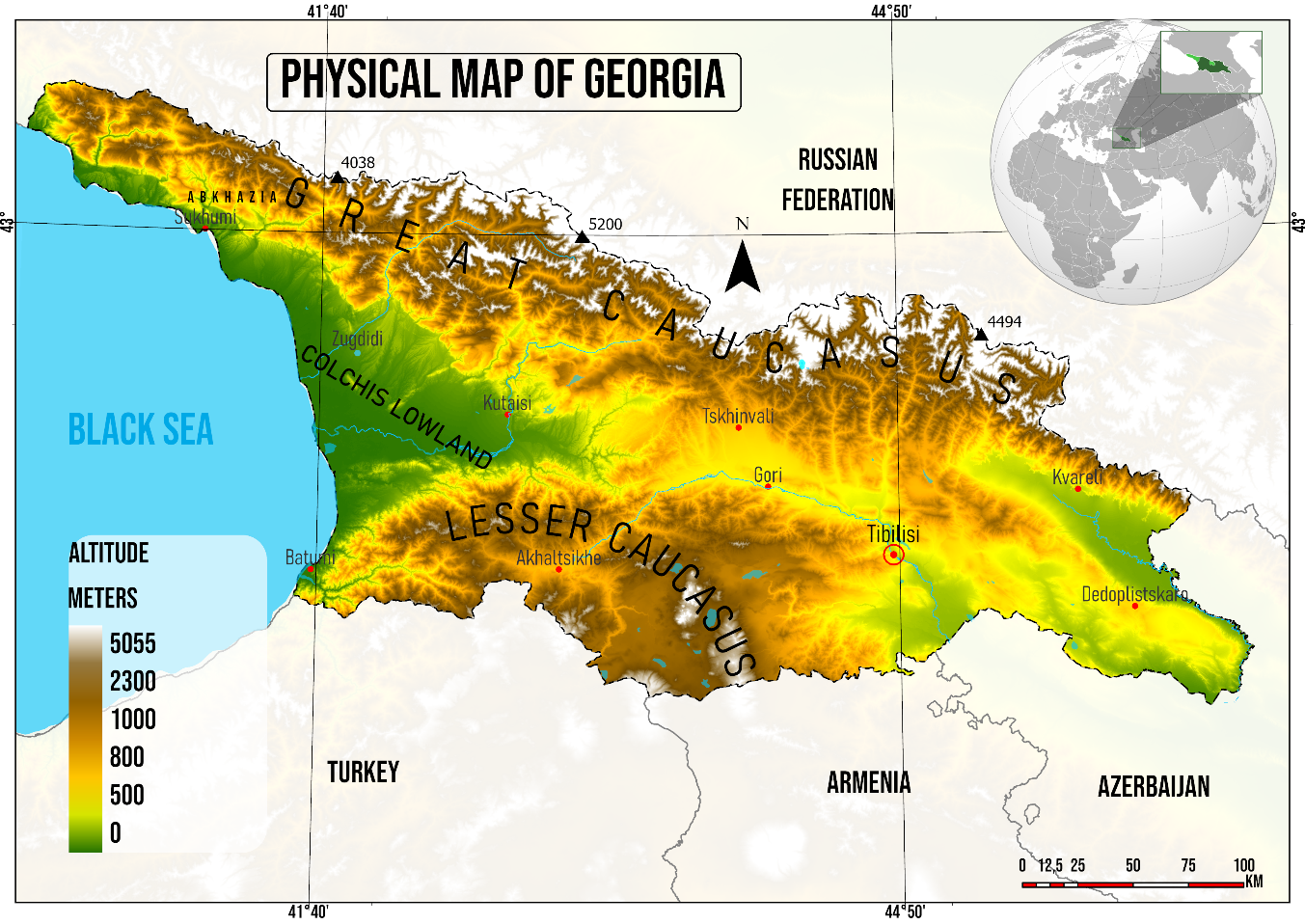
Figure 1. Physical and geographical framework of Georgia and main landforms
From a geopolitical point of view, Georgia borders the Russian Federation to the north, Azerbaijan to the east, Armenia and Turkey to the south, and has access to the Black Sea to the west31. This location at the crossroads of areas of major strategic interest amplifies the country’s importance as a regional transport hub and, at the same time, generates geopolitical vulnerabilities, especially in the mountainous border areas, where control of access corridors and transport infrastructure has a direct relevance for state security and the functioning of regional corridors32.
During the existence of the Soviet Union, Georgia functioned as a strategic outpost on the southern border of the socialist bloc, directly exposed to Western influence due to its proximity to Turkey, which led to a policy of Russification and, paradoxically, fuelled the consolidation of Georgian nationalism. After gaining independence in 1991, the victory of nationalist forces generated profound internal instability, manifested in the conflict between the ultra-nationalist and reformist currents, as well as in the outbreak of separatist movements in Abkhazia and South Ossetia. These were indirectly supported by Russia, which used the secessions as a tool of geopolitical pressure and as a means of maintaining strategic control over key points, such as the Black Sea coast and the Caucasian communication corridors. In exchange for relative stabilisation and reduced support for the separatists, Georgia agreed to join the Commonwealth of Independent States and accept the presence of Russian military bases, which limited its strategic autonomy33.
Samuel P. Huntington takes a similar view, highlighting Georgia’s historical oscillation between independence and subordination to Russia. Although Georgia had periods of autonomy, such as the period prior to the annexation of 1801 and the brief independence after the Russian Revolution, it was forcibly reintegrated into the Russian sphere of control. After the collapse of the Soviet Union (1991), Georgia’s newly regained independence was weakened by internal conflicts and external pressures. During Eduard Shevardnadze’s presidency, Georgia faced separatist movements in Abkhazia, supported by Russia, which led to major concessions. According to S.P. Huntington, Russia’s intervention had a dual function: initially to destabilise Georgian authority and subsequently to keep Georgia within its sphere of influence, thereby limiting the state’s real autonomy and confirming the geopolitical constraints that define Georgia’s position in the post-Soviet space34.
Post-Soviet Georgia has evolved towards instability, marked by ethno-territorial conflicts and competition between various foreign policy options35. Georgia’s declared orientation towards Euro-Atlantic integration has been confronted with the specific security realities of the Caucasus, where the reorganisation of borders after the collapse of the USSR was accompanied by identity tensions, territorial claims and frozen conflicts36.
In the South Caucasus, the Armenia-Azerbaijan conflict over Nagorno-Karabakh had a first phase of war (1988-1994), followed by renewed hostilities and major changes to the status quo, including Azerbaijan regaining control in 2023 and the resumption of peace negotiations in 2024-2025. In the north, Georgia indirectly borders several federal entities of the Russian Federation in the North Caucasus. These are mainly organised as national republics, each corresponding to dominant ethnic groups, with autonomous status within the Russian Federation and distinct demographic, economic and political characteristics.
The North Caucasus region has historically been marked by political instability and armed conflict. The Republic of Chechnya was the epicentre of the most violent post-Soviet clashes, and the Republic of Dagestan and the Republic of Ingushetia have also experienced recurrent episodes of insecurity. In contrast, the Republic of North Ossetia-Alania, the Republic of Kabardino-Balkaria and the Republic of Karachay-Cherkessia are considered relatively stable, although they too were affected by ethnic tensions and insurgent incidents in the 1990s and early 2000s37.
The border between Georgia and the Russian Federation is, from a geopolitical point of view, the most sensitive border of the Georgian state, even if we ignore the North Caucasian republics. The situation is mainly determined by the consequences of the 2008 Russian-Georgian conflict and the existence of de facto separation lines within the internationally recognised territory of Georgia. Currently, a significant part of the border sector is associated with the separatist regions of Abkhazia and South Ossetia, where the Russian Federation maintains a military presence and effectively controls the demarcation lines. These lines are not internationally recognised as state borders, but function as militarily controlled boundaries, with severe restrictions on movement and periodic incidents related to the detention of persons, patrols or changes to the route of security fences. This situation reduces Georgia’s ability to exercise full control over its northern borders and represents one of the state’s main strategic vulnerabilities.
In the sector under the direct control of the Georgian authorities, the mountain border is relatively stable and sparsely populated, characterised by a small number of crossing points, the most important of which is in the Kazbegi-Verkhny Lars area, the main road link between the two states. Due to the difficult terrain and mountain climate, accessibility is limited, and the strategic importance of these crossing points is high both from an economic point of view and in terms of military mobility.
Currently, the Russian-Georgian border is not the scene of open armed conflict, but it remains a heavily militarised and politicised border, where the lack of a definitive solution for the separatist regions maintains a high level of latent geopolitical tension and constantly influences Georgia’s security environment.
Georgia’s most stable border is with Turkey, which functions primarily as an area of economic cooperation and regional transit, crossed by major transport and energy infrastructure corridors. Among the most important examples are the Baku-Tbilisi-Ceyhan oil pipeline, which transports oil from the Caspian region to Turkish ports on the Mediterranean Sea, and the Baku-Tbilisi-Erzurum gas pipeline, part of the southern energy corridor linking Azerbaijan to European markets. Similarly, the Baku-Tbilisi-Kars railway line reinforces the role of the Georgian-Turkish border as a major Eurasian transport axis, facilitating trade flows between Central Asia, the Caucasus and Europe38.
The proximity to Armenia and Azerbaijan was a potential risk factor during the conflict between the two states, when episodes of military confrontation raised fears of spreading instability and possible refugee flows into Georgian territory. Following military developments in 2020-2023 and the resumption of bilateral negotiations, the risk of the conflict spreading has been significantly reduced, although the regional situation continues to be closely monitored.
Georgia’s access to the Black Sea is one of the country’s most important geopolitical advantages, as it reduces the isolation caused by its location in a mountainous and strategically complex region and provides a direct connection to European markets. Through its seaports and associated transport infrastructure, Georgia maintains direct commercial and logistical links with Europe, without being exclusively dependent on regional land routes, which are often affected by geopolitical tensions.
Table 3. Georgia’s relations with its neighbours
| Neighbour | Type of Relationship | Risk Level | Strategic Importance |
| Russia | Conflictual | Very high | Shapes the national security agenda |
| Turkey | Strategic cooperation | Low | Access to NATO & trade corridors |
| Armenia | Prudent cooperation | Moderate | Regional stability factor |
| Azerbaijan | Energy partnership | Low | Energy corridor to Europe |
Domestically, ethno-territorial conflicts were one of the main obstacles to the consolidation of the Georgian state after the collapse of the Soviet Union, affecting territorial control, political stability and the institutional capacity of the state. In the early stages of independence, the weakening of central authority, the fragmentation of political elites and identity-based rivalries fostered the emergence of separatist movements in several peripheral regions.
Abkhazia became one of the most important conflict zones in the early 1990s, with tensions between Georgian authorities and local political elites escalating into armed clashes in 1992-1993. The conflict ended with Georgia losing effective control over the region and a significant part of the Georgian population being displaced, profoundly altering the local demographic structure. In the following years, Abkhazia functioned as a de facto separate entity, supported politically, economically and militarily by the Russian Federation. After the 2008 Russian-Georgian conflict, Russia officially recognised the region’s independence, thus consolidating its de facto separation from the Georgian state.
South Ossetia followed a similar path, with ethno-political tensions turning into armed clashes as early as 1991-1992. After a period of calm (“frozen conflict”), the region again became the scene of military clashes in 2008, in the context of escalating Russian-Georgian relations. The Russian Federation’s military intervention led to the consolidation of Russia’s military presence in the region and the maintenance of de facto separation from the Georgian authorities.
Adjara was a distinct case, as it did not evolve into formal secession, but was characterised in the 1990s and early 2000s by a high degree of de facto autonomy under the leadership of local leader Aslan Abashidze. He consolidated a personalised regional political system, supported by his own security structures and control over local economic resources, limiting the influence of the central authorities in Tbilisi. The 2004 political crisis in which unfolded against the backdrop of internal transformations generated by the Rose Revolution and the consolidation of Georgian state authority, led to Abashidze’s removal from power and the region’s full reintegration into the state administrative system without major armed confrontation.
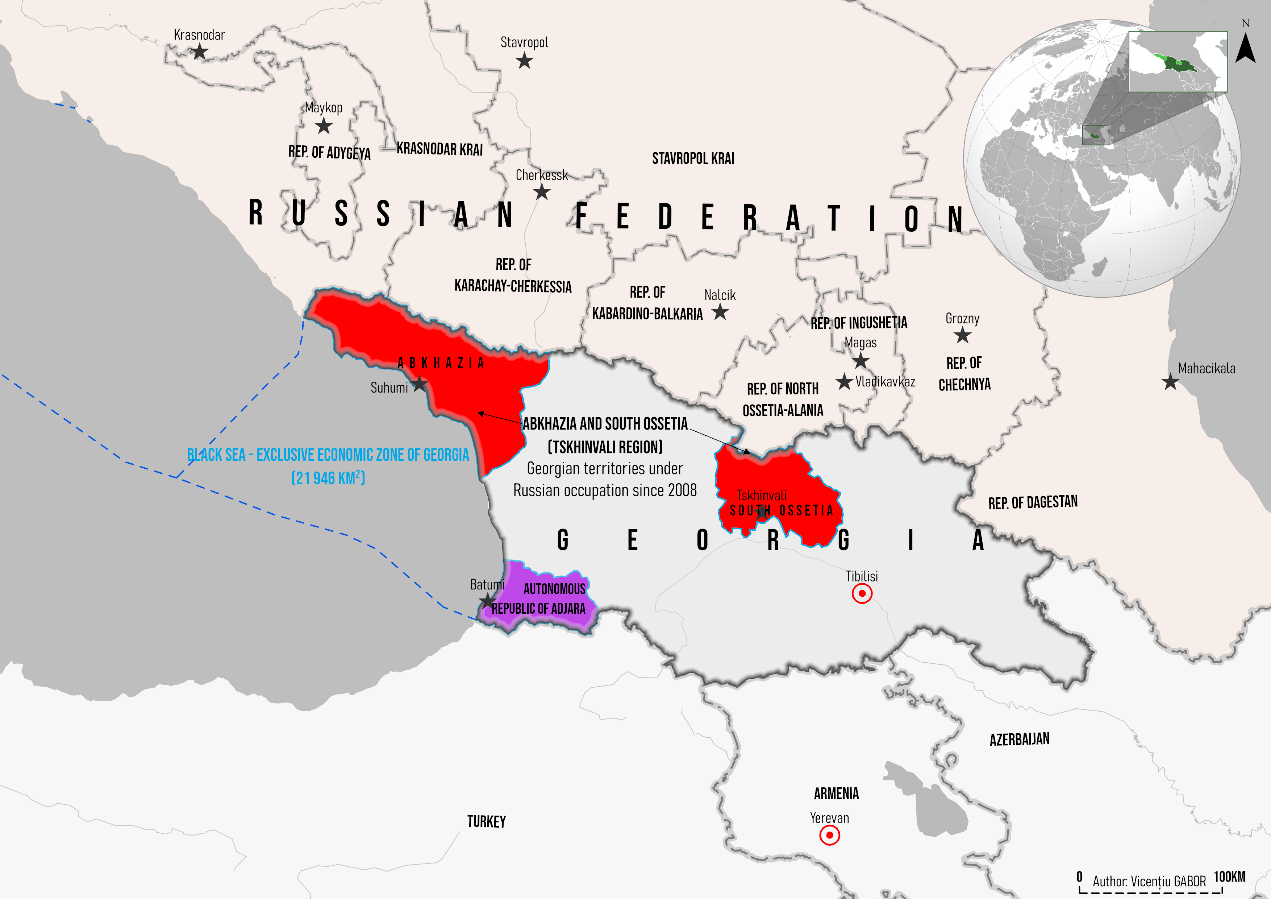
Figure 2. Georgia’s neighbours, borders and separatist regions
In the territories under the effective control of the Georgian state, the ethnic structure is relatively stable, but includes several regional minorities concentrated in specific areas, with political and socio-economic relevance. Georgians represent the majority of the population, approximately 85-87%, dominating the political, administrative and institutional structure of the state, while ethnic minorities are concentrated mainly in certain border regions.
The largest minority is the Azerbaijani minority, concentrated mainly in the Kvemo Kartli region in the south-east of the country, near the border with Azerbaijan. The community is predominantly rural, and the main difficulties have been associated with linguistic integration and political participation, but overall the region is stable and shows no separatist or h al tendencies. The Armenian community is concentrated in the Samtskhe-Javakheti region in the south, on the border with Armenia. Although there were fears of possible autonomist claims in the 1990s, these did not materialise. The current situation is considered stable, even if differences in economic development and challenges related to linguistic and infrastructural integration persist.
Other ethnic groups, such as Russians, Greeks, Kists (Georgian Chechens) and other smaller communities, are scattered across the territory and have not caused any major geopolitical problems in the post-Soviet period. In this context, Georgia’s main ethno-territorial tensions are not associated with minorities under state control, but with the separatist regions of Abkhazia and South Ossetia, which are not under the effective administration of the Georgian authorities39.
In the regions controlled by Tbilisi, inter-ethnic relations are generally stable, and the existing challenges are mainly socio-economic and administrative in nature, not separatist. Essentially, Georgia remains a state defined by its geographical position in the Black Sea Extended Region. The mountains offer it protection, but also isolate it. The sea gives it access to the world, but does not completely remove it from the strategic competition of the great powers. And its location between Russia, Turkey and the Caspian region indicates that, regardless of its size, Georgia will continue to play an important role in the geopolitics of the Caucasus.
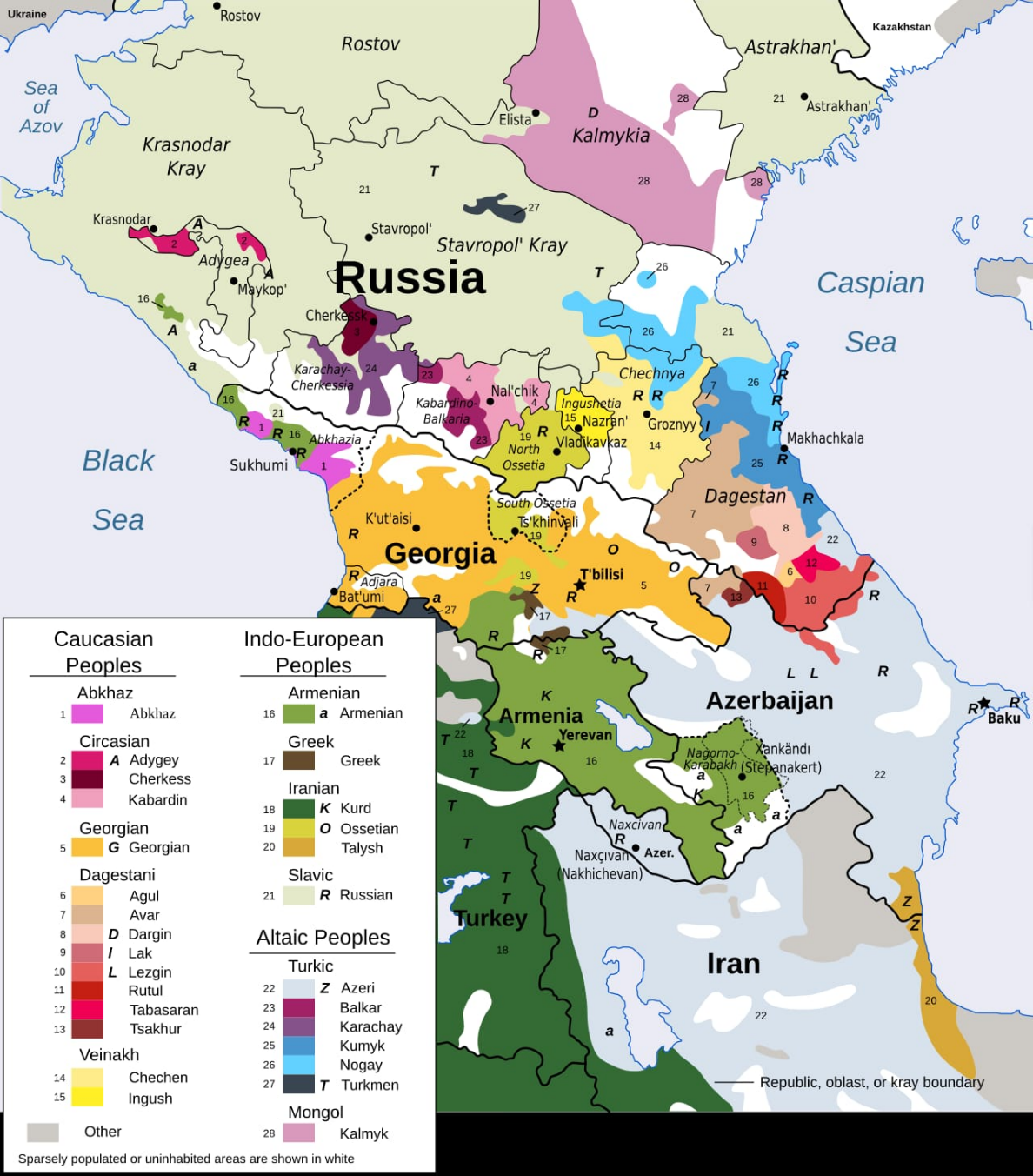
Figure 3. Ethnic configuration of the Caucasus region.
(Source: U.S. Central Intelligence Agency, 2004)
Its position at the intersection of the Euro-Atlantic space, the Caspian region and the Near East gives Georgia a strategic hub role, but at the same time exposes it to competition between powers. The Greater and Lesser Caucasus mountain ranges offer natural protection, but limit strategic depth and concentrate mobility in a few critical corridors, making transport infrastructure a target with direct security relevance.
The proximity to the Russian Federation and the existence of the separatist regions of Abkhazia and South Ossetia maintain a state of latent geopolitical tension. The northern border remains militarised and politicised, and the lack of a definitive solution to the frozen conflicts reduces the state’s ability to exercise full control over its territory. This reality places Georgia in a situation of permanent structural vulnerability, even in the absence of direct armed confrontation. In contrast, the southern and western borders – particularly the relationship with Turkey and access to the Black Sea – function as strategic balancing factors. Energy and transport corridors (BTC, BTE, Baku–Tbilisi-Kars) strengthen Georgia’s geopolitical relevance and offer it alternatives for external connectivity, reducing the risk of isolation.
A recent European Commission report (2024) shows that Georgia is going through a period of internal political and strategic insecurity, characterised by deep political polarisation, democratic regression and a deterioration in its relationship with the European Union. These developments generate an indirect geopolitical risk by weakening the state’s Euro-Atlantic anchoring. The adoption of legislation on “transparency of foreign influence”, regression in the rule of law and the limitation of civic space are assessed as backsliding and have effectively blocked the path to EU accession40.
From a national security perspective, the European Commission emphasises that the low level of alignment with the Common Foreign and Security Policy (49%), partial adherence to European sanctions against the Russian Federation, which invaded Ukraine (2022), and the intensification of air connections with Russia amplify Georgia’s geopolitical vulnerability. Domestically, deficiencies in the electoral process, intimidation of political and civic actors, and weak democratic oversight of the security services, as noted by the OSCE, contribute to a profile of institutional insecurity, with a direct impact on the state’s ability to manage external and hybrid risks41.
Cooperation between NATO and Georgia takes place at both the political and military levels. Georgia has consistently participated in NATO-led operations, including the Kosovo Force (1999-2008). Georgia has distinguished itself as one of the most important non-NAT s to the International Security Assistance Force and the Resolute Support Mission. At the same time, Georgia supports NATO maritime operations in the Mediterranean (Active Endeavour and, since 2016, Sea Guardian), strengthening cooperation in the field of maritime security42.
Beyond the military dimension, the partnership with NATO includes Trust Fund projects for the destruction of ammunition and the reduction of security risks, as well as the development of crisis management capabilities through cooperation with the Euro-Atlantic Disaster Response Coordination Centre. Georgia’s ongoing involvement in NATO’s Science for Peace and Security Programme extends cooperation to areas such as cyber security, CBRN, energy and the Women, Peace and Security agenda. Overall, these contributions support Georgia’s status as an active security provider and confirm the substantial nature of its rapprochement with NATO in a regional context marked by structural insecurity43. Table 4 summarises the most important milestones in the partnership between NATO and Georgia
Table 4. Milestones in NATO-Georgia cooperation
| Dimension | Main Milestones | Significance for Georgia’s Positioning |
| Maritime operations | Operation Active Endeavour; Operation Sea Guardian (since 2016) | Integration into NATO’s maritime security architecture |
| Stabilisation operations | Kosovo Force (KFOR), 1999–2008 | Early interoperability with NATO multinational forces |
| Combat and training missions | International Security Assistance Force (ISAF); Resolute Support Mission | Strongest indicator of strategic commitment and operational credibility |
| Physical security | Trust Fund projects – ammunition disposal, mine and UXO clearance (Skra depot) | Reduction of internal security risks and post-Soviet military modernisation |
| Crisis management | Cooperation with the Euro-Atlantic Disaster Response Coordination Centre (EADRCC) | Enhanced national resilience and crisis-response interoperability |
| Science and security | NATO Science for Peace and Security Programme (since 1994) | Expansion of cooperation into cyber defence, CBRN protection, energy security and Women, Peace and Security agenda |
Analyses published by the Carnegie Endowment for International Peace and the International Crisis Group converge on the idea that Georgia plays a pivotal role in the South Caucasus, being both a border state of the Euro-Atlantic area and a buffer zone between Russia and the Caspian region. From the perspective of the Carnegie Endowment for International Peace, Tbilisi is the main pro-Western partner in the region, with a strategic function in the energy and transport corridor linking the Caspian Sea to the Black Sea and the European market, reducing the EU’s dependence on routes controlled by Moscow44.
However, reports provided by the International Crisis Group highlight the structural vulnerability of the Georgian state, marked by frozen conflicts in Abkhazia and South Ossetia, which limit its regional projection capacity and strengthen Russia’s influence45. The analyses of these think tanks show that Georgia is a regional actor with systemic relevance but limited strategic autonomy. In conclusion, internally, the main risks to Georgian security do not come from minorities under the control of the authorities in Tbilisi, where inter-ethnic relations are relatively stable, but from territories outside the effective control of the state. Georgian insecurity should be understood as a product of geographical constraints and regional dynamics, not just as an effect of episodic political crises.
Conclusions
Our study confirms the hypothesis that started the investigation: geography is not simply a backdrop to international relations, but a structural explanatory variable in the configuration of geopolitical risks and regional insecurity. In the South Caucasus, the positioning of countries at the intersection of Europe and Asia, between the Black Sea and the Caspian Sea, generates a framework of persistent geopolitical competition, in which small states operate with a limited margin of strategic autonomy.
From a theoretical point of view, the article integrates contributions from political geography, classical and critical geopolitics, and the theory of regional security complexes, demonstrating that structural insecurity results from the interaction between geographical constraints, power asymmetries, and securitisation processes. Geography acts through mediated mechanisms – border militarisation, control of energy corridors, territorial fragmentation – rather than through mechanical determinism. Thus, space becomes both a material reality and a strategic construct.
At the regional level, the South Caucasus functions as a regional complex of insecurity, characterised by „frozen conflicts”, negative interdependencies and the absence of a stable collective security architecture. Competition between the Russian Federation, Turkey, the European Union and other extra-regional actors amplifies the structural vulnerabilities of the states in the area. Geopolitical risks are not circumstantial but recurrent, and geographical proximity intensifies the security dilemma.
Applied to the case of Georgia, the analysis highlights a pattern of geographically determined structural insecurity. Its position between Russia and the Euro-Atlantic space, territorial fragmentation and lack of strategic depth limit the country’s ability to manage security risks autonomously. The existence of the separatist regions of Abkhazia and South Ossetia, the militarisation of the northern border and dependence on a few strategic transit corridors make geography a permanent factor of vulnerability.
Its status as an energy transit and transport country gives Georgia a geopolitical relevance that is disproportionate to its size. Energy corridors and access to the Black Sea represent both strategic opportunities and vulnerabilities. Thus, its geographical position creates a strategic paradox: it increases the country’s external importance but reduces its decision-making autonomy. Internally, the conclusions show that Georgian insecurity is not fuelled primarily by active inter-ethnic dynamics in the territories controlled by Tbilisi, but by the loss of control over externally supported separatist regions. Therefore, the main vulnerability is geopolitical-territorial in nature, not internal ethno-social.
Notes
- Paul Dobrescu, Geopolitică, Editura Comunicare.ro, București, 2003, secțiunea „Butoiul de pulbere al Caucazului”, p. 301.
- Octavian Milevschi și Stanislav Secrieru, „Conflictele înghețate în spațiul postsovietic” în Daniel Biró (coord.), Relațiile internaționale contemporane. Teme centrale în politica mondială, Editura Polirom, Iași, 2013, pp. 162-184.
- See the works: John Agnew, Geopolitics: Re-visioning World Politics, 2nd ed., Routledge, London, 2003; Halford J. Mackinder, “The Geographical Pivot of History”, The Geographical Journal 23, no. 4 (1904): 421-437; Gearóid Ó Tuathail, Critical Geopolitics: The Politics of Writing Global Space, University of Minnesota Press, Minneapolis, 1996; Friedrich Ratzel, Politische Geographie, Oldenbourg, Munich, 1897.
- Klaus Dodds, Geopolitics: A Very Short Introduction, Oxford University Press, 2007.
- Barry Buzan and Ole Wæver, Regions and Powers: The Structure of International Security, University Press, Cambridge, 2003.
- John H. Herz, “Idealist Internationalism and the Security Dilemma”, World Politics, 2, no. 2 (1950): 157-180; Robert Jervis, “Cooperation under the Security Dilemma”, World Politics, Vol. 30, no. 2 (1978): pp. 167-214.
- Ciprian Iftimoaei, Despre securitate, consolidare democratică și bună guvernare. România în context regional, Editura Lumen, Iași, 2015, pp. 11-41.
- Robert O. Keohane, “Lilliputians’ Dilemmas: Small States in International Politics,” International Organisation 23, no. 2 (1969), pp. 291-310; David Vital, The Inequality of States: A Study of the Small Power in International Relations, Oxford University Press, 1967.
- United Nations Development Programme, Human Development Report 2023/ 2024. Breaking the Gridlock: Reimagining Cooperation in a Polarised World, New York: UNDP, 2024, pp. 288-291.
- Economist Intelligence Unit, Democracy Index 2023: Age of Conflict, London: EIU, 2024, pp. 55-60.
- Institute for Economics and Peace, Global Peace Index 2024: Measuring Peace in a Complex World, Sydney: IEP, 2024, pp. 2-5.
- Bonn International Centre for Conflict Studies, Global Militarisation Index 2023, BICC, Bonn, 2023, pp. 6-9.
- Fund for Peace, Fragile States Index Annual Report 2024, DC: Fund for Peace, Washington, 2024, pp. 10-15.
- Halford J. Mackinder, Democratic Ideals and Reality, Constable, London, 1919, pp. 25-47.
- Hans J. Morgenthau, Politica între națiuni, Lupta pentru putere și lupta pentru pace, Editura Polirom, Iași, 2007, Cap. 9 – Elementele puterii naționale. Geografia, pp. 150-153.
- Nicholas J. Spykman, America’s Strategy in World Politics, New York, Harcourt, Brace and Company, 1942, pp. 41-65.
- Robert D. Kaplan, Răzbunarea geografiei. Ce ne spune harta despre conflictele viitoare și lupta împotriva destinului, Editura Litera, București, 2012, pp. 65-66.
- Gearóid Ó Tuathail, cit., pp. 1-22.
- Simon Dalby, Creating the Second Cold War, Pinter Publishers, London, 1990, pp. 3–19.
- Robert D. Kaplan, cit., pp. 3-28.
- Barry Buzan, Ole Wæver, Regions and Powers: The Structure of International Security, cit, pp. 40-73.
- John H. Herz, cit., pp. 157-180.
- Robert Jervis, Perception and Misperception in International Politics, Princeton University Press, 1976, pp. 58-113.
- David A. Lake, “Regional Security Complexes: A Systems Approach”, Journal of Conflict Resolution, vol. 45, no. 6, 2001, pp. 689-706.
- Barry Buzan, Popoarele, statele și frica. O agendă pentru studii de securitate internațională în epoca de după Războiul Rece, Editura Cartier, Chișinău, 2014, pp. 192-231.
- Charles King, The Ghost of Freedom: A History of the Caucasus, Oxford University Press, Oxford, 2008; Svante E. Cornell, The International Politics of the Caucasus, Routledge, London, 2015.
- Thomas de Waal, The Caucasus: An Introduction, Oxford University Press, Oxford, 2010.
- Charles King, cit.
- Svante E. Cornell, cit.
- Vladimir Socor, The Southern Gas Corridor and Europe’s Energy Security, Jamestown Foundation, Washington DC, 2017.
- Svante E. Cornell, Small Nations and Great Powers: A Study of Ethnopolitical Conflict in the Caucasus, Curzon, Richmond, 2001.
- Thomas de Waal, cit.
- Aymeric Chauprade, Francois Thual, Dicționar de geopolitică, Grupul editorial Corint, București, 2003, pp. 129-132.
- Samuel P. Huntington, Ciocinirea civilizațiilor și refacerea ordinii mondiale, Editura Antet, București, 1998, p. 242.
- Christoph Zürcher, The Post-Soviet Wars: Rebellion, Ethnic Conflict, and Nationhood in the Caucasus, New York University Press, New York, 2007; Svante E. Cornell, Small Nations and Great Powers: A Study of Ethnopolitical Conflict in the Caucasus, Curzon, Richmond, 2001.
- Gerard Toal, Near Abroad: Putin, the West and the Contest over Ukraine and the Caucasus, Oxford University Press, Oxford, 2017.
- Christoph Zürcher, cit.
- Vladimir Socor, cit.
- Charles King, cit.
- European Commission (2024). Georgia Report 2024, General publications, https://enlargement.ec.europa.eu/document/download/7b6ed47c-ecde-41a2-99ea-41683dc2d1bd_en?filename=G-eorgia%20Report%202024.pdf, last accessed February 2026.
- NATO (2024). Relations with Georgia, https://www.nato.int/en/what-we-do/p-artnerships-and-cooperation/relations-with-georgia, last accessed February 2026.
- Carnegie Endowment for International Peace. (2023–2025). Georgia. Russia and Eurasia Program – Country Analysis, https://carnegieendowment.org/russia-eurasia/regions/georgia, last accessed February 2026.
- International Crisis Group. (2022). Georgia’s Abkhazia and South Ossetia: Time to Talk Trade. Europe Report No. 268, https://www.crisisgroup.org/europe-c-entral-asia/caucasus/georgia/268-abk-hazia-and-south-ossetia-time-talk-tra-de, last accessed February 2026.
Bibliography
Books
AGNEW, JOHN, Geopolitics: Re-visioning World Politics, 2nd ed. London: Routledge, 2003.
BIRÓ, DANIEL (coord.), Relațiile internaționale contemporane. Teme centrale în politica mondială, Editura Polirom, Iași, 2013.
BUZAN, BARRY, Popoarele, statele și frica. O agendă pentru studii de securitate internațională în epoca de după Războiul Rece, Editura Cartier, Chișinău, 2014.
BUZAN, BARRY & WÆVER, OLE, Regions and Powers: The Structure of International Security. Cambridge: Cambridge University Press, 2003.
CHAUPRADE, AYMERIC & THUAL, FRANCOIS, Dicționar de geopolitică, Grupul editorial Corint, București, 2003.
CORNELL, SVANTE E., The International Politics of the Caucasus, Routledge, London, 2015.
CORNELL, SVANTE E., Small Nations and Great Powers: A Study of Ethnopolitical Conflict in the Caucasus, Curzon, Richmond, 2001.
DALBY, SIMON, Creating the Second Cold War: The Discourse of Politics. London: Pinter Publishers, 1990.
DE WAAL, THOMAS, The Caucasus: An Introduction, Oxford University Press, Oxford, 2010.
DOBRESCU, PAUL, Geopolitică, Editura Comunicare.ro, București, 2003.
DODDS, KLAUS, Geopolitics: A Very Short Introduction, Oxford University Press, 2007.
HALFORD J. MACKINDER, Democratic Ideals and Reality. London: Constable, 1919.
IFTIMOAEI, CIPRIAN, Despre democrație, securitate și bună guvernare. România în context regional, Editura Lumen, Iași, 2015.
JERVIS, ROBERT, Perception and Misperception in International Politics. Princeton: Princeton University Press, 1976.
KAPLAN, ROBERT D., Răzbunarea geografiei. Ce ne spune harta despre conflictele viitoare și lupta împotriva destinului, Editura Litera, București, 2012.
KATZENSTEIN, PETER J., Small States in World Markets: Industrial Policy in Europe. Ithaca: Cornell University Press, 1985.
KING, CHARLES, The Ghost of Freedom: A History of the Caucasus, Oxford University Press, Oxford, 2008.
MACKINDER, HALFORD J., Democratic Ideals and Reality: A Study in the Politics of Reconstruction. London: Constable, 1919.
Ó TUATHAIL, GEARÓID, Critical Geopolitics: The Politics of Writing Global Space. Minneapolis: University of Minnesota Press, 1996.
RATZEL, FRIEDRICH, Politische Geographie, Munich: Oldenbourg, 1897.
SPYKMAN, NICHOLAS J., America’s Strategy in World Politics: The United States and the Balance of Power. New York: Harcourt, Brace and Company, 1942.
SOCOR, VLADIMIR, The Southern Gas Corridor and Europe’s Energy Security, Jamestown Foundation, Washington DC, 2017.
TOAL, GERARD, Near Abroad: Putin, the West and the Contest over Ukraine and the Caucasus, Oxford University Press, Oxford, 2017.
ZÜRCHER, CHRISTOPH, The Post-Soviet Wars: Rebellion, Ethnic Conflict, and Nationhood in the Caucasus, New York University Press, New York, 2007.
Articles and studies
HERZ, JOHN H. „Idealist Internationalism and the Security Dilemma”. World Politics, vol. 2, nr. 2, 1950, pp. 157-180.
KEOHANE, ROBERT O., “Lilliputians’ Dilemmas: Small States in International Politics,” International Organization 23, no. 2 (1969): 291-310.
LAKE, DAVID A. „Regional Security Complexes: A Systems Approach”. Journal of Conflict Resolution, vol. 45, nr. 6, 2001, pp. 689-706.
MACKINDER, HALFORD J. “The Geographical Pivot of History,” The Geographical Journal 23, no. 4 (1904), pp. 421-437.
MILEVSCHI, OCTAVIAN & SECRIERU, STANISLAV, „Conflictele înghețate în spațiul postsovietic” în volumul coord. Daniel Biró, Relațiile internaționale contemporane. Teme centrale în politica mondială, Editura Polirom, Iași, 2013, pp. 162-184.
VITAL, DAVID, „The Inequality of States: A Study of the Small Power”, International Relations, Oxford University Press, 1967.
Electronic resources (websites and platforms)
BONN INTERNATIONAL CENTRE FOR CONFLICT STUDIES, Global Militarisation Index 2023, Bonn: BICC, 2023, pp. 6-9, https://gmi.bicc.de, ultima accesare februarie 2026.
CARNEGIE ENDOWMENT FOR INTERNATIONAL PEACE. (2023-2025). Georgia. Russia and Eurasia Program – Country Analysis, https://carnegieendowment.org/russia-eurasia/regions/georgia, ultima accesare februarie 2026.
ECONOMIST INTELLIGENCE UNIT, Democracy Index 2023: Age of Conflict, London: EIU, 2024, https://www.eiu.com, ultima accesare februarie 2026.
EUROPEAN COMMISION, Georgia Report 2024, General publications, https://enlargement.ec.europa.eu/document/download/7b6ed47c-ecde-41a2-99-ea-41683dc2d1bd_en?filename=Geor-gia%20Report%202024.pdf, ultima ac-cesare februarie 2026.
FUND FOR PEACE, Fragile States Index Annual Report 2024, Washington, DC: Fund for Peace, 2024, pp. 10-15.
INSTITUTE FOR ECONOMICS AND PEACE, Global Peace Index 2024: Measuring Peace in a Complex World, Sydney: IEP, 2024, pp. 2-5, https://www.visionofhumanity.org, ultima accesare februarie 2026.
INTERNATIONAL CRISIS GROUP. (2022). Georgia’s Abkhazia and South Ossetia: Time to Talk Trade. Europe Report No. 268, https://www.crisisgroup.org/europe-ce-ntral-asia/caucasus/georgia/268-abkh-azia-and-south-ossetia-time-talk-trade, ultima accesare februarie 2026.
NATO, Relations with Georgia, 2024, https://www.nato.int/en/what-we-do/p-artnerships-and-cooperation/relations-with-georgia, ultima accesare februarie 2026.
UNITED NATIONS DEVELOPMENT PROGRAMME, Human Development Report 2023/2024. Breaking the Gridlock: Reimagining Cooperation in a Polarized World, New York: UNDP, 2024, pp. 288-291, https://hdr.undp.org/ content/human-development-report-20-23-24, ultima accesare februarie 2026.