


Coordonat de E.S. Gudsi Dursun oglu OSMANOV și Sabin DRĂGULIN
Volum XIII, Nr. 3 (49), Serie nouă, iunie-august 2025
The Emergence, Development, and Subsequent Fate of the Nabucco Project
Namig KARIMOV
Abstract: Economic development in Europe has inherently led to a growing demand for energy. In the early 2000s, alternative energy sources (such as wind, solar, and others) had not yet gained sufficient relevance, and as a result, the demand for natural gas remained significantly high. Russia held a monopolistic position in supplying natural gas to meet the energy needs of the European Union (EU), maintaining a substantial share in the EU’s gas imports. In response to Russia’s use of energy as a political pressure tool, the EU began supporting various projects aimed at diversifying energy sources and transportation routes. One such project was the Nabucco pipeline. This article explores Azerbaijan’s position and policy toward the Nabucco project, in which the country was viewed as one of the principal suppliers. The study also examines the underlying necessity for the project’s initiation, its supply sources, the challenges it faced, and the attitudes of leading states toward its implementation. Azerbaijan has a strategic interest in diversifying its oil and gas export routes. The EU, on the other hand, views the transportation of natural gas from the Middle East and Caspian Basin-bypassing Russia-as a critical component of its energy security strategy. The examination of such projects, especially against the backdrop of Azerbaijan’s increasingly active role in Europe’s energy security, and the historical-political analysis of the reasons behind the failure of some of these initiatives, enhances the relevance and significance of this research.
The study is based primarily on historical-analytical and comparative methods. A wide range of sources were used in the research, including academic articles, monographs, and official documents in various languages.
Keywords: Azerbaijan, Nabucco Project, gas reserves, gas pipeline, energy demand, supply.
Introduction
As the number of member states within the European Union (EU) increased, the Union’s dependence on external energy sources also grew significantly. This development, particularly in the pre-Ukraine war period, rendered the EU more vulnerable to energy monopolization by Russia, which held a dominant position in the supply of oil and natural gas. Among the newly admitted Eastern European member states, dependency on Russian energy was particularly acute, not only in terms of oil and gas supplies but also with respect to political pressure exerted by official Moscow.
In the 1990s, the EU launched the TACIS (Technical Assistance to the Commonwealth of Independent States) program, aimed at supporting the development of the South Caucasus and other former Soviet republics. Subsequently, the EU introduced the TRACECA (Transport Corridor Europe-Caucasus-Asia) and INOGATE (Interstate Oil and Gas Transport to Europe) programs, designed to facilitate the development of energy transportation routes from the South Caucasus, coordinate investment projects related to pipeline infrastructure, and address other relevant objectives.
In this context, the EU supported three main routes for the transportation of hydrocarbon resources from the South Caucasus-primarily from Azerbaijan: the Baku–Supsa pipeline, the Baku–Tbilisi–Ceyhan pipeline, and the South Caucasus Pipeline. However, the EU’s support during this period remained largely technical in nature. In the 1990s, the EU’s policy toward the South Caucasus had not yet fully crystallized, and the region was still predominantly regarded as part of Russia’s “near abroad.” Any significant expansion of EU influence in the region would have risked direct confrontation with Moscow-an undesirable scenario for the EU, especially given its reliance on Russian energy resources.
By the early 2000s, however, the situation began to change. First, the EU’s consumption of oil and gas continued to rise, and its dependency on Russian energy supplies increased accordingly. At the same time, Russia’s strategic use of energy as a geopolitical tool underscored the urgent need to diversify energy sources. The desire to reduce dependence on Russia’s monopolistic energy position prompted the EU to adopt the “Energy Security and Solidarity Action Plan” in 2007.
This Action Plan outlined key priorities, including the liberalization of the internal energy market, diversification of supply sources, and the promotion of a competitive energy policy aimed at improving overall efficiency. Among its objectives, the plan also envisaged the implementation of essential measures to promote the Southern Gas Corridor. This strategic corridor encompassed several key pipeline projects, including the Interconnector Turkey–Greece–Italy (ITGI), the Trans-Adriatic Pipeline (TAP), and the Nabucco Gas Pipeline Project.
The Emergence of the Nabucco Project: It was within such a geopolitical and energy-dependent context that the European Union (EU) began to seek alternative energy sources and reliable oil and gas pipeline routes that would bypass Russia and ensure the uninterrupted and secure delivery of liquid and natural gas to Europe.
From both geo-economic and geopolitical perspectives, the EU had a particular interest in the transportation of oil and gas resources from the Caspian Sea region and Central Asia to the European continent via routes that circumvented Russian territory. Within the framework of the “Shah Deniz II” project, several pipeline proposals were put forward to facilitate the export of natural gas to Europe, including the “Nabucco” (often referred to as “Nabucco West” or “Greater Nabucco”), the Trans-Adriatic Pipeline (TAP), the Interconnector Turkey–Greece–Italy (ITGI), and the South East Europe Pipeline (SEEP). Among these, the “Greater Nabucco” project received the strongest backing from both the United States and the European Union.
It is worth noting that the origins of the Nabucco project date back to 2002. However, negotiations regarding the creation of the project had already been underway prior to this date, and preliminary agreements had even been reached. As early as 2001, discussions had begun on the necessity of securing alternative pipeline routes and energy sources to meet Europe’s growing demand for natural gas. In February 2002, the Nabucco project was formally proposed1.
The name of the project was derived from the opera Nabucco (short for Nabucodonosor), composed by the renowned Italian composer Giuseppe Verdi, with a libretto by Temistocle Solera. The naming of the project is symbolically linked to the opera’s narrative: in the second part of the final act, the Babylonian king Nabucco allows the marriage of Fenena-a young girl from the north who overcomes various obstacles for the sake of love-and Ismaele, a distinguished ambassador of the Kingdom of Judah in Babylon, representing the south2. The project’s name was thus interpreted as a metaphor for overcoming barriers and fostering the union of East and West through cultural convergence and cooperation. In this symbolic framework, the Nabucco project was conceived not only as an energy corridor but also as a bridge of partnership between the Eastern world and Europe.
The decision to name the project “Nabucco” is particularly intriguing from a historical and symbolic standpoint, as it reflects an effort to create a meaningful connection between past and present. The attempt to link the territories once ruled by the Babylonian king Nebuchadnezzar with modern Europe through a transcontinental gas pipeline can be interpreted as a conscious effort to invoke a sense of historical continuity and identity. In this context, the project envisioned the transportation of natural gas extracted from the northeastern Caspian region and the Middle East to European markets via Turkey.
In 2002, discussions were held between Austria’s energy company OMV and Turkey’s BOTAŞ regarding the construction of a pipeline that would carry natural gas from the Caspian region through Turkey, Romania, and Hungary to Austria, and from there to Western European countries. On October 10 of the same year, during negotiations in Vienna concerning the technical and economic feasibility of the project, representatives of “BulgarGaz” (Bulgaria), “BOTAŞ” (Turkey), “Transgaz” (Romania), “OMV” (Austria), and “MOL” (Hungary) reportedly attended a performance of Giuseppe Verdi’s Nabucco opera and collectively agreed to name the pipeline project after the work3.
On that very day (October 10, 2002), the aforementioned companies signed an agreement to initiate a joint technical and economic feasibility study for the project. According to 2005 estimates, the planned 3 300-kilometer pipeline would require a financial investment of approximately €4.6 billion. The pipeline was expected to transport around 31 billion cubic meters of natural gas annually4. Due to rising costs in subsequent years, the project’s total estimated cost increased to €8 billion5. The European Investment Bank, the European Bank for Reconstruction and Development, and the Nabucco International Company expressed their willingness to finance the project through credit lines.
For the first time within the framework of this initiative, the national gas networks of Turkey, the European Union, and Southeast European countries were to be interconnected. The pipeline was designed to pass through the territories of Turkey, Bulgaria, Romania, and Hungary, ultimately reaching the Central European Gas Hub near Vienna, Austria6. Importantly, the pipeline was intended to include off-take points in each transit country, allowing gas access at various stages along the route.
One of the most significant indicators of the EU’s commitment to the Nabucco project was its inclusion in the Trans-European Networks for Energy (TEN-E) program in 2003, where it was classified as a priority project7. Following the 2006 gas crisis between Russia and Ukraine, the Nabucco pipeline was identified as a critical component of the EU’s “Energy Policy for Europe” framework introduced in 2007 and regarded as one of the Union’s most strategically important gas corridors8.
In 2004, the Nabucco Gas Pipeline Company was established to manage the construction, operation, and administration of the proposed pipeline. The consortium initially comprised six companies:
- RWE (Germany)
- BulgarGaz (Bulgaria)
- BOTAŞ (Turkey)
- Transgaz (Romania)
- OMV (Austria)
- MOL (Hungary)9.
Regarding project financing, it was agreed that 30% of the total construction cost would be provided by the six participating companies, with the remaining 70% to be funded through external loans. Subsequently, on June 24, 2004, the project participants signed a “Partnership Agreement” establishing the legal entity Nabucco Company Study Pipeline GmbH. This marked an important step in expanding the project’s technical and financial capacities.
On June 28, 2005, with the aim of securing financial resources and attracting investments, Nabucco Company Study Pipeline GmbH was transformed into the Nabucco Gas Pipeline International Company. For the preparation of engineering and technical documentation, an agreement was concluded with the London-based consultancy firm Penspen10.
In total, European financial institutions expressed their willingness to invest €4 billion in the Nabucco pipeline project. Of this amount, €2 billion—half of the total-was expected to be provided directly by the European Investment Bank. An additional €1.2 billion was to be allocated by the European Bank for Reconstruction and Development (EBRD), while the remaining €800 million was to be covered by the International Finance Corporation (IFC). The outstanding portion of the project’s financing was to be secured by the consortium members and private investors11.
Конец формы
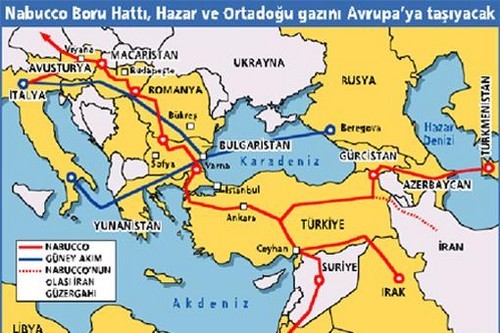
The Nabucco Gas Pipeline Project
The signing of the Intergovernmental Agreement on the Nabucco project on July 13, 2009, in Ankara by Turkey, Romania, Bulgaria, Hungary, and Austria was not only considered a major milestone in the realization of the project but also played a crucial role in establishing its legal foundation12. The agreement was subsequently ratified by the parliaments of the signatory states by March 2010. This document holds particular significance as it represents the first energy agreement concluded between Turkey and European Union member states13.
Despite the steps taken toward the realization of the Nabucco project—such as the signing of a memorandum of understanding among the participating states and the selection of the UK-based engineering firm Penspen to conduct the technical and economic feasibility studies-the project encountered several substantial challenges during its implementation phase.
Another key development occurred in June 2011 in the city of Kayseri, Turkey, where a Project Support Agreement (PSA) was signed. In addition to representatives of the Nabucco Gas Pipeline International GmbH consortium, the event was attended by Günther Oettinger, the European Commissioner for Energy, Richard Morningstar, the U.S. Special Envoy for Eurasian Energy, as well as officials from the European Investment Bank and the European Bank for Reconstruction and Development14. The PSA addressed several critical aspects of the project, including the establishment of a favorable transit regime and legal protections against potential discriminatory changes in national legislation that could affect the pipeline’s operation.
The PSA was also instrumental in attracting international financial institutions to support the project, as such agreements are typically regarded as vital for ensuring stable transit tariffs and shielding the project from future regulatory or legal uncertainties. For this reason, investors placed particular emphasis on the existence of such a framework.
Construction of the Nabucco pipeline was initially scheduled to begin in 2013, with the delivery of natural gas from the Caspian and the Near and Middle East to the Central European Gas Hub in Austria projected for 201715.
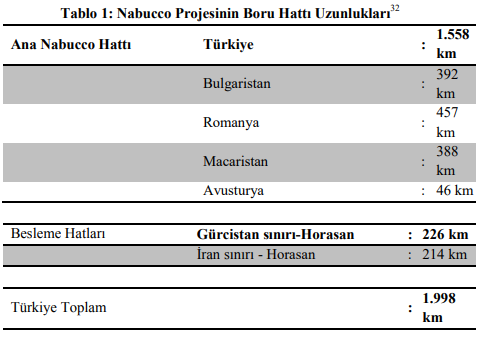
http://www/botaş. gov. tr/index.asp
Supply Sources: During the project preparation phase, supplier countries were envisaged to be states from the Middle East and the Caspian basin. Among the countries expected to supply natural gas to the Nabucco pipeline, Iraq held significant importance. The Prime Minister of Iraq, Nouri al-Maliki, declared their readiness to supply the mentioned pipeline with 15 billion cubic meters of natural gas annually16. Under such circumstances, approximately 50% of the planned annual transmission capacity of 31 billion cubic meters of the Nabucco pipeline was allocated to Iraq.
Iraq possesses natural gas reserves estimated at 3.2 trillion cubic meters, ranking it as the tenth-largest holder of blue fuel reserves worldwide. Despite its abundant reserves, only about 0.04% of the existing capacity is currently extracted annually due to the underdeveloped infrastructure. Present gas production primarily comes from fields located in the southeastern part of the country, including Nahr bin Umar, Majnun, Nasiriyah, Rumaila, West Qurna, and Zubair, where gas is extracted alongside oil. Additionally, there are relatively smaller gas fields in Kirkuk, such as Bai Hassan, Ajil, Jambur, Chemchemal, Kormor, and Al Mansouriyah. The principal challenges in production and export of existing gas reserves are the weak infrastructure, lack of storage facilities, and, naturally, political instability.
Before the First Gulf War, official Baghdad utilized a 169-kilometer pipeline leading to Kuwait’s Ahmadi Gas Production Station with a daily transmission capacity of 11.33 million cubic meters for gas exports; however, this capacity was insufficient to meet demand. The Iraqi central government regards Europe as the optimal market for its natural gas reserves. To access the European market, two major projects were proposed. The first involves exporting Iraqi natural gas via the Arab Gas Pipeline through Syria and Lebanon to Europe. The second project envisages bypassing Syria and Lebanon, delivering gas directly to Turkey, where it would connect to the Nabucco project. Informally, it was planned to transport natural gas via pipeline from the aforementioned area to the village of Bismil near Diyarbakir, and from there integrate it into Nabucco17.
Egypt, officially the Arab Republic of Egypt, could also partially serve as a supplier, facilitated by the newly completed Trans-Arabian pipeline. This Trans-Arabian pipeline system links the energy networks of Egypt, Jordan, Syria, and Turkey18. Since the Nabucco project overall aimed to transport natural gas from the Caspian basin and the Middle East to European markets, Turkmenistan and Kazakhstan were also considered as supplier states; however, the practical reality painted a different picture.
Azerbaijan emerged as the main supplier country for Nabucco. The confirmed blue fuel reserves of Azerbaijan amount to approximately 2.6 trillion cubic meters, with the primary resources concentrated in the Shah Deniz (currently operational), Absheron, and Umid fields. Additionally, natural gas is also extracted alongside crude oil from fields known primarily for oil production, such as Azeri, Chirag, and Gunashli. Azerbaijan’s estimated natural gas reserves are valued at about 6 trillion cubic meters. The largest gas field, Shah Deniz, is located approximately 70 kilometers south-southeast of Baku. The first phase of its development was completed by 2006. In this phase, in 2001, Azerbaijan signed an agreement for the transportation of its gas to Turkey via the Baku-Tbilisi-Erzurum pipeline19.
Turkmenistan, possessing vast gas fields, was also considered one of the supplier states. With 144 identified oil and gas fields within its territory, Turkmenistan’s proven natural gas reserves reportedly exceed 25 trillion cubic meters. Turkmenistan produces over 75 billion cubic meters of gas annually, of which 60 billion cubic meters are exported. The country aims to increase gas production to 230 billion cubic meters by 2030. At first glance, Turkmenistan appeared to be a prime candidate as a main supplier; however, several obstacles existed that will be analyzed below.
Among the Caspian littoral states, Kazakhstan, holding the largest share, has confirmed natural gas reserves estimated at approximately 3 trillion cubic meters. The most promising field in terms of reserves, Karachaganak, is located in northwestern Kazakhstan near the Russian border. Experts estimate its reserves at around 1.3 trillion cubic meters.
After sanctions are lifted in the future, Iran is also expected to play a significant role among the supplier countries. Iran possesses 34 trillion cubic meters of gas reserves, enabling it to share first and second place globally with Russia. Approximately 18.2% of the world’s natural gas reserves are attributed to Iran. Its productive gas fields are concentrated in the Persian Gulf and southern border regions, while gas reserves in the Caspian Sea region are relatively limited. The Sardar-Jangal field, discovered in the Caspian in 2012, is considered comparatively promising20.
Challenges in the realization of the Nabucco project
Foremost among these was the prevailing political instability in the Middle Eastern countries designated as suppliers for the planned pipeline, specifically the lack of definitive assessments regarding the annual volume of natural gas these countries could reliably supply. Additional obstacles included financing difficulties and Russia’s perception of the project as a competitor, all of which constituted significant challenges as outlined above.
Although Iraq’s Prime Minister Nouri al-Maliki expressed readiness to supply half of the required natural gas, the reality was different. At that time, U.S. forces maintained a presence in Iraq. Despite statements by President Barack Obama regarding the withdrawal of U.S. military contingents from Iraqi territory, this had not yet materialized, and instability continued in Iraq.
Another critical issue concerns the administration of gas fields such as Chemchemal and Kormor, which are located in the region governed by the Kurdistan Regional Government (KRG) of northern Iraq. From an international legal perspective, these territories belong to the Iraqi state. Given Turkey’s stringent operations against Kurdish terrorist groups in all domains, any form of agreement or cooperation with this administration would create serious complications. However, it is notable that Austria’s OMV, a member of the Nabucco consortium, acquired a 20% stake in Pearl Petroleum, a company operating in the region. Furthermore, OMV and Dana Gas, a company based in the UAE, signed agreements for natural gas production in KRG-controlled areas, formalizing the arrangements by contract. Similarly, Germany’s RWE, another Nabucco partner, established a joint venture with the KRG and signed a contract for the purchase of 20 billion cubic meters of gas. These agreements were declared illegal by the official Baghdad government and deemed contrary to international law21. The unresolved political and economic disputes between Baghdad and the KRG, including the status of Kirkuk and revenue-sharing disagreements, prevented Iraq from acting as a primary supplier country.
The Trans-Caspian pipeline project, aimed at transporting gas from Turkmenistan and Kazakhstan—both identified as supplier countries—was initially intended for realization in the early 1990s. However, the project gradually acquired a predominantly political rather than economic character. Under Western sanctions and unwilling to cede its dominant position in European gas markets, Russia emphasized that the Caspian Sea’s final legal status remained undetermined and raised ecological concerns. Moscow argued that any pipeline construction along the Caspian seabed required the unanimous consent of all five littoral states.
The signing of an agreement for Russia to purchase 500 million cubic meters of gas annually from Azerbaijan further strengthened Moscow’s position. Despite significant supply challenges faced by Nabucco, Russia’s symbolic acquisition of this volume from Azerbaijan increased the psychological pressure on the project.
One of the most critical issues facing the Nabucco pipeline project was the absence of any signed agreements with supplier countries to provide natural gas. Approaching the problem logically, a supplier state had to be identified first, followed by solutions to transportation challenges. However, the failure to secure a supplier country emerged as the primary and most significant obstacle to the project.
Another notable challenge was securing a foothold in the European gas market. At the time the project was under discussion, the global economy was experiencing a financial crisis, with Europe particularly affected. The economic downturn led to a noticeable decline in gas consumption, which consequently reduced interest in the project to some extent. Furthermore, the transit countries along the pipeline route had not reached full consensus on transit tariffs.
Among the factors negatively impacting the project’s realization, the rising costs and significant financial difficulties should be emphasized. Independent experts estimated that the total completion costs could escalate to as much as 15 billion US dollars. Attempts to resolve the funding problem by attracting private investors were also hindered by obstacles, such as the absence of a clear and comprehensive legal framework to guarantee investment protections.
Another adverse trend was related to changes in the European gas market dynamics. Previously underestimated, shale gas rapidly began to penetrate European markets and was considered commercially attractive. This development undoubtedly diminished private investors’ interest in the Nabucco project22.
Due to the aforementioned challenges, doubts about the realization of the Nabucco project increased daily. In this context, positive progress in negotiations between Azerbaijan and Turkey regarding the transportation of gas produced under the Shah Deniz-2 field in the Azerbaijani sector of the Caspian Sea via the Trans-Anatolian Natural Gas Pipeline (TANAP) prompted the Nabucco consortium to propose a new initiative. Recognizing that the original “Greater Nabucco” was not feasible in reality, they instead proposed.
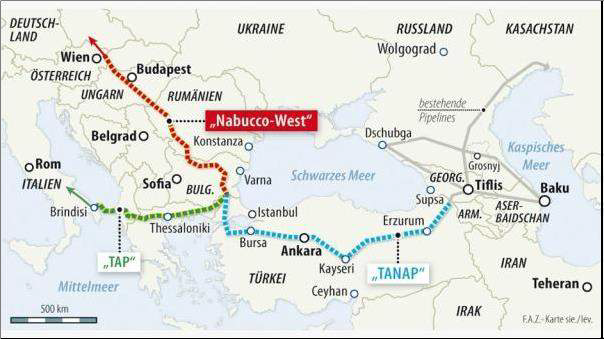
“Nabucco West” project
The Azerbaijani government no longer wished to act as the sole energy supplier. The oil and gas projects it had implemented had granted official Baku significant advantages both in terms of experience and financial capacity. Moreover, the Azerbaijani government was determined not only to retain ownership of its natural gas resources but also to control their transportation as a principal stakeholder—a position that was non-negotiable during the talks. Consequently, Azerbaijan, with a firm stance, did not want to be excluded from this major project and proposed that the gas extracted in the Shah Deniz-2 phase be transported to Europe via Turkey through the construction of an approximately 1,300-kilometer pipeline associated with the “Nabucco West” project.
Briefly, the “Nabucco West” pipeline project, approximately 1,300 kilometers in length, was planned to start at the Turkey-Bulgaria border and traverse Bulgaria, Romania, and Hungary before reaching Austria. The pipeline was intended to be constructed in two phases: the first phase with a transmission capacity of 10 billion cubic meters (bcm) per year, and the second phase increasing the capacity to 23 bcm per year. The financial costs of the project were estimated at around 8 billion euros. The Azerbaijani government responded positively to this proposal.
Through this pipeline, natural gas reserves from Iraq, Iran, and Middle Eastern countries were expected to be transported via Turkey, Bulgaria, and Romania to Austria, from where it would be distributed to other European countries through a network of distributors. Essentially, there is a proportional relationship between Azerbaijan’s balanced foreign policy, the “TANAP” project it proposed, and its acceptance of the “Nabucco West” project.
While Russia possesses vast gas reserves, it also maintains an insistence on preserving its monopolistic position by controlling its territory as the principal transit route for Central Asian and Caspian gas resources to Europe. The original “Greater Nabucco” project conflicted with Russia’s interests and consequently faced Moscow’s opposition from the outset.
Russia’s signing of agreements to purchase part of Azerbaijan’s gas, as well as renewing contracts with Central Asian countries for gas trade, in our view, aimed to deprive the Nabucco pipeline of potential gas supplies. Azerbaijan’s refusal to support the “Greater Nabucco” project simultaneously served to “calm” Moscow and reduce its opposition to the “TANAP” project, which is largely recognized as a joint Azerbaijani-Turkish initiative. Since “Nabucco West” constitutes only a segment of the “Greater Nabucco” project, Russia’s stance towards it was less confrontational.
Furthermore, the realization of TANAP occurred in the context of ongoing negotiations between Russia and Turkey regarding the “South Stream” pipeline project, which was later replaced by the “TurkStream” project.
The Position of Major Powers Regarding the Nabucco Project
Although officials claimed that Nabucco was not a rival to the South Stream pipeline, an analysis of Russia’s energy policy—particularly regarding natural gas—makes it clear that Russia seeks to maintain its monopolistic position in exporting blue fuel to the European market. By controlling both the sources and transit routes, Russia gained additional leverage amid political tensions with Europe. Since Nabucco was designed to transport natural gas from Central Asia, the Middle East, and the South Caucasus to European markets bypassing Russia23, it naturally conflicted with Russian interests. Thus, despite assertions that Nabucco did not compete with South Stream, it was evident that this was not the case24. Russia perceived Nabucco as a threat to its monopoly in European gas markets.
To realize the South Stream pipeline, official Moscow signed agreements with Bulgaria, Serbia, and Hungary. This move was not only intended to obstruct Nabucco but also aimed at preventing the establishment of a unified energy policy within the European Union25.
Contracts signed with Turkmenistan and Kazakhstan for natural gas delivery, which involved Russia purchasing a significant portion of the gas required by the Nabucco pipeline, further complicated the realization of the project, which already faced substantial supply challenges. Notably, according to the agreements, Turkmenistan committed to selling Russia 6 billion cubic meters of gas in 2004, increasing to 10 billion cubic meters by 2006, and reaching 70 billion cubic meters annually after 2009. To facilitate gas transport stipulated in these contracts, the parties also agreed on the construction of a new pipeline passing through Turkmenistan and Kazakhstan to Russia. Naturally, all these developments depleted the potential gas sources for Nabucco and diminished hopes for its implementation26.
On May 12, 2007, Russia signed a contract with Kazakhstan and Turkmenistan under which both states undertook to transport a portion of their produced gas via the Central Asia–Center Gas Pipeline, thereby reducing their likelihood of serving as gas suppliers for Nabucco, as previously noted. Analysis shows that as the probability of Turkmen and Kazakh gas serving as sources for Nabucco decreased, Iran—due to imposed sanctions—was also unable to assume the status of a reliable supplier. Although Azerbaijan indicated it could supply up to 8 billion cubic meters annually at best, the identities of the providers for the remaining large share of 23 billion cubic meters remained uncertain.
During the relevant period, Turkmenistan was engaged in intensive negotiations with China for natural gas exports and favored this option over the Nabucco project27. Turkmenistan’s simultaneous supply commitments to Russia, China, and Iran significantly weakened its position as a primary gas supplier for Nabucco28.
Among the two major European Union states, Germany (alongside France) did not view the Nabucco project favorably, which at least hindered its progression to an operational phase. Firstly, Germany, the EU’s strongest economy, deepened its cooperation with Russia in the natural gas sector by initiating the Nord Stream 1 and subsequently Nord Stream 2 projects. This development contributed to European financial institutions’ reluctance to allocate sufficient credit to Nabucco. Additionally, Russia’s “new Red Army,” Gazprom, counted Germany as its largest partner, and former Chancellor Gerhard Schröder’s role within Gazprom’s leadership further underscored this alignment. The global economic crisis also negatively impacted the prospects for Nabucco’s realization and cannot be overlooked.
Moreover, the support for Nabucco from other major European powers such as the United Kingdom and France was not fully apparent in the context of reducing Europe’s dependence on Russian gas. The transportation of hydrocarbon resources from Central Asia and the Middle East via Turkish territory would strengthen Ankara’s economic and political position29. Consequently, the foreign policies of these states toward the Middle East, closely tied to the region through history, culture, religion, and other spiritual values, faced strong opposition from Turkey, as evidenced by recent events in Syria, Iraq, and Libya.
The interest of Austria’s OMV in Nabucco also waned, especially after selling 50% of its gas storage capacity in Europe to the Russian giant Gazprom. Additionally, Wintershall-a subsidiary of Germany’s BASF and a participant in the Nabucco project-cooperates with Gazprom on both the Nord Stream 2 and South Stream projects, while France’s energy giant EDF also appeared inclined towards similar directions. This dynamic can be interpreted as a decline in the EU’s overall enthusiasm for Nabucco. It must be acknowledged that uncertainties surrounding Nabucco allowed Turkey to reach agreements with Russia on more concrete energy projects such as South Stream and Blue Stream, which undoubtedly negatively affected Nabucco’s realization30.
On June 23, 2007, Russia signed agreements with Italy’s ENI and subsequently with Hungary, Bulgaria, and Austria concerning the South Stream project31. This can be seen as a strategic move to diminish these countries’ interest in Nabucco.
Within Turkish academic circles, discussions on the Nabucco pipeline highlighted that if gas from Central Asia and Azerbaijan were to be transported through Turkey utilizing the South Caucasus Pipeline (SCP), significant problems would arise in securing reliable gas supplies. If Turkmenistan and Kazakhstan were also to be used as source suppliers, the SCP would need to be expanded through the construction of a parallel line.
As noted above, Turkmenistan was frequently mentioned among the potential source countries for supplying the Nabucco pipeline. Although Turkmenistan declared its ability to export 10 billion cubic meters of gas annually32, the lack of an adequate pipeline infrastructure posed a significant challenge. The Trans-Caspian project, which envisaged laying a pipeline beneath the Caspian Sea and had been under discussion since the early 1990s, did not seem likely to materialize in the near term. Primarily, during the period from 2010 to 2013, the final legal status of the Caspian Sea remained unresolved, and there were disagreements between Turkmenistan and Azerbaijan, particularly concerning ownership of the Kapaz (Serdar) gas field. Although following the determination of the Caspian Sea’s legal status, Azerbaijan and Turkmenistan signed an agreement on joint development of the Kapaz field, serious obstacles to constructing the Trans-Caspian pipeline persisted. The final convention signed in Aktau on August 13, 2018, allowed the laying of pipelines on the seabed subject to unanimous consent of the littoral states, citing environmental concerns. Undoubtedly, Russia and Iran are likely to exploit these environmental concerns as a pretext to obstruct the pipeline’s construction by all means possible.
During discussions of the Nabucco project, the position of Turkey-a brotherly country aiming to become a hub in energy trade-was also significant. From a broad perspective, Turkey’s key geographic position as a transit country for natural gas from the energy-rich Middle East, Caspian Basin, and Russia to Europe, which is the primary consumer of blue fuel, provided an opportunity to maximize its advantage. Official Ankara aimed not only to serve as a transit state but also to become an energy hub. Turkey’s aspiration to purchase natural gas itself and resell it to Europe, reflecting the strategic visions of Azerbaijani President Ilham Aliyev and Turkish Prime Minister Recep Tayyip Erdoğan, led to a swift resolution of related challenges.
Conclusion
Against the backdrop of increasing energy demand in the European Union and the desire to overcome Russia’s monopolistic position, the Nabucco project entered the political agenda in the early 2000s. Although the Nabucco pipeline was included among the EU’s priority energy projects, it ultimately failed to be realized. Based on the conducted research, the primary reason for the project’s failure was the inability to secure reliable supplier countries. The resource potential of each prospective supplier was analyzed in detail, and after a comprehensive examination of the challenges each faced, it was concluded that the problem of securing natural gas supplies for Nabucco remained unresolved. Furthermore, the project’s significant financial scale and the inability to attract adequate investors-exacerbated by legislative gaps-negatively impacted its feasibility.
The stances and approaches of major powers toward the project were also analyzed. Russia was the strongest opponent of Nabucco, vehemently rejecting any loss of Gazprom’s monopolistic position in the European market. Germany and France likewise failed to provide sufficient support. At that time, Germany had already implemented Nord Stream 1 and was negotiating the construction of a parallel second pipeline. The EU’s chilly relations with Turkey also had a negative impact. Additionally, the global economic crisis and the emergence of commercially attractive shale gas in Europe diminished investors’ interest in Nabucco.
Against this backdrop, Azerbaijan, considered the primary supplier country, chose to cooperate with Turkey on the TANAP and TAP projects for transporting its gas to European markets.
Notes
- Ə. Mehdiyev, „Enerji resurslarının nəqlində Azərbaycan Türkiyə əməkdaşlığı: “Nabukko”dan “Cənub Qaz Dəhlizi”nə”, Atatürk Araştırma Merkezi Dergisi, 2018, 34 (1), p. 97; Nabucco Gas Pipeline International GmbH (NIC), “Proje”, (Çevrimiçi), http://www.nabuccopipeline.com/portal/page/portal/tr/Home/the_project, 01 Ağustos 2011, p. 244.
- Nabucco Gas Pipeline International GmbH (NIC), cit.,p.1.; Ç. İleri, „Dünden bugüne Nabucco projesi. İKV Degerlendirme notu”, Aralık, 2011/44, İktisadi Kalkınma Vakfı, www. ikv. org. Tr, p. 1.
- Üstün, M. Pazarbaşı, “Verdi Yerine Bende Can”, Milliyet Gazetesi, 14 Temmuz, 2009, p.7 ; A. Yalçınkaya, NABUCCO’dan TANAP’a Türkiye ve boru hatları, Marmara Üniversitesi, Siyasal Bilgiler Fakültesi. Elektron resurs file:///C:/Users/User/Downloa-ds/Alaeddin%20Yalcinkaya,%20Nabucco’dan%20TANAP’a%20Balkanlarda%20sosyal%20bilimler%20kongresi.pdf
- “The Nabucco Gas Pipeline: A Chance for the EU to push for change in Turkmenistan”, cit., pp. 6-7.
- Uluatam, “Nabucco Doğalgaz Boru Hattı Projesi Sürecinin Neresindeyiz?”, Ekonomik Forum Dergisi, Ankara, Temmuz, 2010 sayı:247, p. 67.
- Reinhard Mitschek, „Nabucco: A pioneering pipeline project”, 20th World Petroleum Congress, https://firstforum.org/wp-content/uplo-ads/2021/05/Publication_00584.pdf., pp. 72-73; Nabucco Gas Pipeline International GmbH (NIC), “Proje”, (Çevrimiçi) http://www.nabuccopipeline.com/portal/page/portal/tr/Home/the_project, 01 Ağustos 2011, p. 72.
- Agata Łoskot-Strachota, „Nabucco vs. South Stream-Rivalry over Balkan Gas Pipelines. CES. Commentary”, Centre for eastern studies, Issue 3, 19.03. 2008, p. 6, https://www.files.ethz.ch/ isn/55482/commentary_03.pdf.; D. Langton, D. A. Roberts, “To FEED or Not to FEED?”, Petrofac Engineering-Construction & Roberts Contracts and Claims Consultants Ltd., 8 April 2009, (Çevrimiçi) http://www. Construction contractsandclaims.com/petrofac-rccc-l-presentation.pdf, 01 Eylül 2011, p. 6.
- Ibidem.
- К. П. Евгеньевич, Современное стратегическое сотрудничество Российской Федерации с Турцией в сфере энергетики, Ддиссертация на соискание ученой степени канд-идата исторических наук. Иркутс-кий Государственный Университет, Иркутск, 2014, p. 70.
- Langton, D.A. Roberts, “To FEED or Not to FEED, op. cit.; J. Kusznir, „The Nabucco Gas Pipeline Project and its Impact on EU Energy Policy in the South Caucasus”, Caucasus Analytical Digest, nr. 33, 12 December 2011, pp. 9-12.
- С. А. Кондаков, „Ттрубо-проводная дипломатия России”, Международные отношения, nr. 1, 2012, https://nbpublish. com/libra-ry_get_pdf.php?id=21312, pp. 10-11.
- M Ağayev, Nabukko qaz kəməri layihəsi. “Kültür Evreni”, Universe of Culture – Вселенная Культуры. Uluslararası Hakemli Sosyal Bilimler Dergisi. Ankara, 2010, sayı 5, pp. 162-163; İoannis N. Qriqoriadis, The Nabucco Project: Implications for the EU Strategic Energy Review, Part II-Energy and climate change challenges, Research Fellow, ELIAMEP, p. 62.
- Reinhard Mitschek, cit.; Nabucco Gas Pipeline International GmbH (NIC), op. cit., p. 72.
- Özkan, “Enerji Arz Güvenliği ve Yeni Büyük Oyun Bağlamında Nabucco Projesi”, Akademik Araştırmalar Dergisi, 2010, 12 (45), s.31-46; Nabuccoda destek imzaları atıldı.Akşam gazetesi 8. 06. 2011. W e b . 1 2 . 1 0 . 2 0 1 1 . < h t t p : / / w w w . a k s a m . c o m . t r / n a b u c c o d a - d e s t e k - i m z a l a r i - a t i l d i - - 4 6 4 0 1 h . h t m l >, p. 73.
- Reinhard Mitschek, cit.; Nabucco Gas Pipeline International GmbH (NIC), “Proje”, (Çevrimiçi), op. cit., p. 73.
- İoannis N. Qriqoriadis, cit.; Ç. İleri, op.cit., pp. 63-64.
- Doğan, „Nabucco’ nun arka üzü. Ekovitrin”, Agustos 2009, pp. 74-81, https://www.doganaydal.com/CmsFiles/FaaliyetGalerisi/92/10 Uluslararası EKOVITRIN_AGUSTOS_2009_NABUCCONUN_ARKA_YUZU.pdf.; Agata Łoskot-Strachota, op. cit.,p. 78.
- İoannis N. Qriqoriadis, cit.; Ç. İleri, op. cit., pp. 63-64.
- [1]Ə. Kərimov, Xəzər dənizinin hüquqi statusu və sahilyanı dövlətlərin maraqları, “Mütərcüm”, Bakı, 2023, p. 90; C. İşık, O.İşık, AB-Türkiye ilişkilerinde yeni adım: Nabucco, 2012, https://www.researchgate.net/ publication/268743968_AB_Turkiye_Iliskisinde_Yeni_Adim_NABUCCO S.7., p. 21.
- Ə. Kərimov, op. cit., pp. 84-85.
- Doğan, op. cit.
- Kusznir, op. cit.; C.A. Кондаков, op. cit., p. 3.
- Koçaslan, Avrupa Birliği’nin Doğalgaz Politikasi ve bu eksende Türkiye’nin önemi, vol. 61, 2011, pp. 248–249; N.Ə. Kərimov, Xəzər dənizinin hüquqi statusu və sahilyanı dövlətlərin maraqları, “Mütərcüm”, Bakı, 2023, p. 320.
- К. П. Евгеньевич, cit.; Enerji A. Doğan„ Nabucco gerçekten yüzyılın projesi mi?, Ekovitrin Ekim, 2010. https://www.doganaydal.com/CmsFiles/FaaliyetGalerisi/92/16Uluslararasi_EKOVITRIN_EKIM_2010_Nukleer_Nabucco_Ruzgar.pdf, p. 71.
- Agata Łoskot-Strachota, cit.; D. Langton, D.A. Roberts, op.cit, p. 6.
- İşık, O. İşık, op. cit.; İoannis N. Qriqoriadis, op. cit., p. 7.
- Г. Выгон , В. Ермаков , М. Белова , Е. Колбикова, «Турецкий поток»: сценарии обхода Украины и барье-ров Европейской Комиссии, VYGON Consulting, Москва, 2015, p. 17.
- С. А. Кондаков, cit.; G. Koçaslan, op. cit., p. 133.
- Özkan, op. cit.; Reinhard Mitschek, op. cit., pp. 37-38.
- Sandıkli, Doğalgaz boru hatları projelerinde Büyük Oyun: Nabucco, Güney Akım, SEEP ve TANAP, BİLGESAM, İstanbul, 20 Haziran, 2012, https://www.tuicakademi.org/ dogalgaz-boru-hatlari-projelerinde-bu-yuk-oyun-nabucco-guney-akim-seep-ve-tanap/.
- T Gökhan, V. Tatar, Türk Dış Politikasında Enerjinin Konumu: Nabucco Doğal Gaz Boru Hattı Projesi Çerçevesinde Bir Değerlen-dirme, İstanbul Üniversitesi, Siyasal Bilgiler Fakültesi, Uluslararası İlişkiler Bölümü, http://acikerisim.kirklareli.edu.tr:8080/xmlui/bitstream/handle/20.500.11857/184/20115smpz.html.pdf?sequence =1&isAllowed=y, pp. 89-107; К. П. Евгеньевич, op. cit., pp. 99.
- Doğan, op.cit., p. 74.
Bibliography
Books
ВЫГОН, Г., ЕРМАКОВ, В., БЕЛОВА, М., КОЛБИКОВА, Е., «Турецкий поток»: сценарии обхода Украины и барьеров Европейской Комиссии, VYGON Consulting, Москва, 2015.
ЕВГЕНЬЕВИЧ, К. П., Современное стратегическое сотрудничество Российской Федерации с Турцией в сфере энергетики, Ддиссертация на соискание ученой степени кандидата исторических наук, Иркутский Государственный Университет, Иркутск, 2014.
KƏRİMOV, N.Ə., Xəzər dənizinin hüquqi statusu və sahilyanı dövlətlərin maraqları, “Mütərcüm”, Bakı, 2023.
KOÇASLAN, G., Avrupa Birliği’nin Doğalgaz Politikasi ve bu eksende Türkiye’nin önemi, vol.61, 2011.
Articles and studies
AĞAYEV, R. M., „Nabukko qaz kəməri layihəsi, “Kültür Evreni”, Universe of Culture – Вселенная Культуры”, Uluslararası Hakemli Sosyal Bilimler Dergisi, sayı 5, Ankara, 2010, pp. 158-168.
İLERİ, Ç., „Dünden bugüne Nabucco projesi. İKV Degerlendirme notu”, Aralık, 2011/44, İktisadi Kalkınma Vakfı, www. ikv. org. Tr, p. 1.
MEHİDYEV, Ə.B., „Enerji resurslarının nəqlində Azərbaycan Türkiyə əməkdaşlığı: “Nabukko”dan “Cənub Qaz Dəhlizi”nə”, Atatürk Araştırma Merkezi Dergisi, 2018; 34 (1), p. 97.
“The Nabucco Gas Pipeline: A Chance for the EU to push for change in Turkmenistan”, The Quaker Council for European Affairs, Aralık, 2009, pp. 6-7.
ÖZKAN, G. “Enerji Arz Güvenliği ve Yeni Büyük Oyun Bağlamında Nabucco Projesi”, Akademik Araştırmalar Dergisi, 2010, 12 (45), pp.31-46.
ULUATAM, E., “Nabucco Doğalgaz Boru Hattı Projesi Sürecinin Neresindeyiz?”, Ekonomik Forum Dergisi, Ankara, Temmuz 2010, pp. 66-69.
ÜSTÜN, G., Pazarbaşı, M., “Verdi Yerine Bende Can”, Milliyet Gazetesi, 14 Temmuz, 2009.
Online resources
DOĞAN, A., „Nabucco’ nun arka üzü. Ekovitrin”, Agustos 2009, pp.74-81, https://www.doganaydal.com/CmsFiles/FaaliyetGalerisi/92/10 Uluslararası EKOVITRIN_AGUSTOS_2009_NABUCCONUN_ARKA_YUZU.pdf.
IDEM, „Enerji Nabucco gerçekten yüzyılın projesi mi?”, Ekovitrin Ekim, 2010, https://www.doganaydal.com/CmsFiles/FaaliyetGalerisi/92/16Uluslararasi_EKOVITRIN_EKIM_2010_Nukleer_Nabucco_Ruzgar.pdf.
GÖKHAN, N.T, Tatar V., Türk Dış Politikasında Enerjinin Konumu: Nabucco Doğal Gaz Boru Hattı Projesi Çerçevesinde Bir Değerlendirme, İstanbul Üniversitesi, Siyasal Bilgiler Fakültesi, Uluslararası İlişkiler Bölümü, http://acikerisim.kirklareli.edu.tr:8080/xmlui/bitstream/handle/20.500.11857/184/20115smpz.html.pdf?sequence=1&i-sAllowed=y
İŞIK, C, İŞIK, O., AB-Türkiye ilişkilerin-de yeni adım: Nabucco, 2012, https://www.researchgate.net/publica-tion/268743968_AB_Turkiye_Iliskisinde_Yeni_Adim_NABUCCO.
КОНДАКОВ С. А., „Ттрубопроводная дипломатия России. Междуна-родные отношения. №1, 2012 cс.128-138. Elektron resurs: https://nbpublish. com/library_get_pdf.php?id=21312.
LANGTON, D, ROBERTS D. A., “To FEED or Not to FEED?”, Petrofac Engineering-Construction & Roberts Contracts and Claims Consultants Ltd., 8 April 2009, (Çevrimiçi) http://www. Construction contractsandclaims.com/petrofac-rcccl-presentation.pdf, 01 Eylül 2011.
Nabucco Gas Pipeline International GmbH (NIC), “Proje”, (Çevrimiçi) http://www.nabuccopipeline.com/portal/page/portal/tr/Home/the_project, 01 Ağustos 2011.
Nabuccoda destek imzaları atıldı.Akşam gazetesi 8. 06. 2011. W e b. 1 2. 1 0. 2 0 1 1. < h t t p : / / w w w . a k s a m . c o m . t r / n a b u c c o d a - d e s t e k - i m z a l a r i - a t i l d i - - 4 6 4 0 1 h. h t m l >.
REINHARD, Mitschek, Nabucco: A pioneering pipeline project. 20th World Petroleum Congress, https://firstforum.org/wp-content/up-loads/2021/05/Publication_00584.pdf.
SANDIKLİ A., Doğalgaz boru hatları projelerinde Büyük Oyun: Nabucco, Güney Akım, SEEP ve TANAP. BİLGESAM, İstanbul, 20 Haziran, 2012, https://www.tuicakademi.org/ dogalgaz-boru-hatlari-projelerinde-buy-uk-oyun-nabucco-guney-akim-seep-ve-tanap/.
QRIQORIADIS, N. İoannis, The Nabucco Project: Implications for the EU Strategic Energy Review. Research Fellow, ELIAMEP, Part II-Energy and climate change challenges, https://www.eliamep.gr/wp-content/up-loads/2010/03/TGAE2010
YALÇINKAYA, A., NABUCCO’dan TANAP’a Türkiye ve boru hatları, Marmara Üniversitesi, Siyasal Bilgiler Fakültesi, file:///C:/Users/User/Downloads/Alaeddin%20Yalcinkaya,%20Nabucco’dan%20TANAP’a%20Balkanlarda%20sosyal%20bilimler%20kongresi.pdf